

Manufacturing, agric sector to suffer shocks in Q2 due to Ukraine war: LCCI

The Lagos Chamber of Commerce and Industry says the persistent Russia-Ukraine war will trigger shocks in Nigeria’s manufacturing and agricultural sectors in the second quarter of 2022.
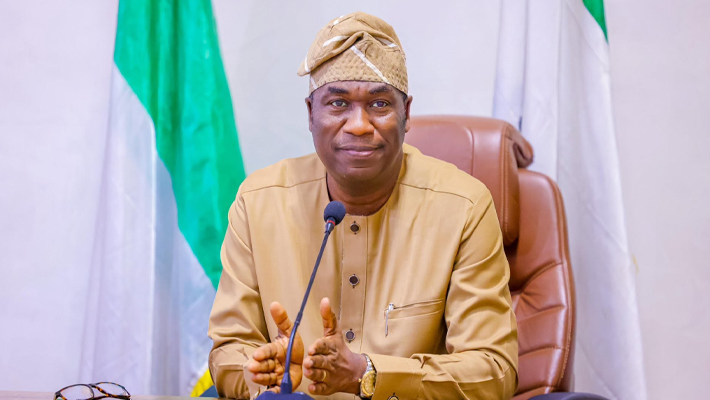
Michael Olawale-Cole, the president of LCCI, said this at the industry’s quarterly press conference on the state of the Nigerian economy on Tuesday in Lagos.
He said the ongoing war triggered a positive oil price shock with spillover effects on operating costs, raw materials, and inflation in countries not directly engaged in the war.
“Going into the second quarter of 2022, the manufacturing sector will likely suffer some shocks from the rising cost of diesel, logistics, foreign exchange illiquidity, domestic inflationary pressure, weakening purchasing power, poor public infrastructure and port-related challenges,” he said.
Mr Olawale-Cole pointed out that Nigeria was not an exception as prices of goods and services were moving northwards with the potential implication of shrinking production of goods and services.
The LCCI president stressed that should the conditions persist, production volumes would be impacted by the raw materials supply chain disruptions, the rising cost of diesel, and other internal security crises.
“Job losses are also very likely due to constrained production and disrupted supply chains, and all of these will likely depress growth potential in Q2 2022.
“These may continue to present as headwinds to the sector’s performance,” he stated.
He also noted that the ongoing war had affected supply chains of raw materials such as wheat, corn, soybeans, etc.
He said Nigerians should expect headline inflation to remain elevated when looking forward to the second quarter.
Mr Olawale-Cole urged the government to adopt the most sustainable solution of boosting local production of food staples to levels that met local demands.
In addition, the industrialist tasked the government to resolve the lingering fuel supply crises by increasing importation to meet growing demand, putting pressure on diesel and fuel prices.
In the energy sector, the LCCI president noted that the national grid could not continue to supply sufficient power to meet the country’s electricity demand.
To this, Mr Olawale-Cole recommended that the government invests more in technology to fight pipeline vandalism and fund critical infrastructure and special purpose intervention in the power sector.
(NAN)

We have recently deactivated our website's comment provider in favour of other channels of distribution and commentary. We encourage you to join the conversation on our stories via our Facebook, Twitter and other social media pages.

More from Peoples Gazette

Agriculture
FG tasks ECOWAS on leveraging financing strategies for agroecology
The federal government has urged stakeholders in the agriculture and finance sectors in the West Africa region to leverage financing strategies to enhance agroecology practices

Politics
Katsina youths pledge to deliver over 2 million votes to Atiku
“Katsina State is Atiku’s political base because it is his second home.”

Heading 2
Kano begins second round of maternal, neonatal tetanus elimination campaign
He said the teams vaccinated 1,339,871 women out of the 1,388,396 targeted.

Abuja
FRSC launches operation ‘Sauka Lafiya’ to curb road crashes in FCT, Niger
FRSC deployed 3,339 personnel, 69 patrol vehicles, 18 ambulances, four tow trucks and 24 motorcycles.

Lagos
Lagos council inducts 156 financial inclusion experts
The chairman urged the inductees to use the digital devices provided to them with integrity.

Heading 1
FCCPC resumes implementation of digital lending regulations
WASPAN had challenged the Commission’s authority to issue and implement the DEON Regulations.
Heading 5
Lagos seeks stronger ties with Turkey to boost investment opportunities
Mr Hamzat described the longstanding relationship between Lagos and Turkish firms as productive.

NationWide
FG, NASS reiterate commitment to support roles of electricity regulators
Mr Babalola said the Electricity Act decentralises aspects of governance.


