

Market failures prevent one billion Nigerians, others from having eyeglasses, hearing aids, prostheses: Report
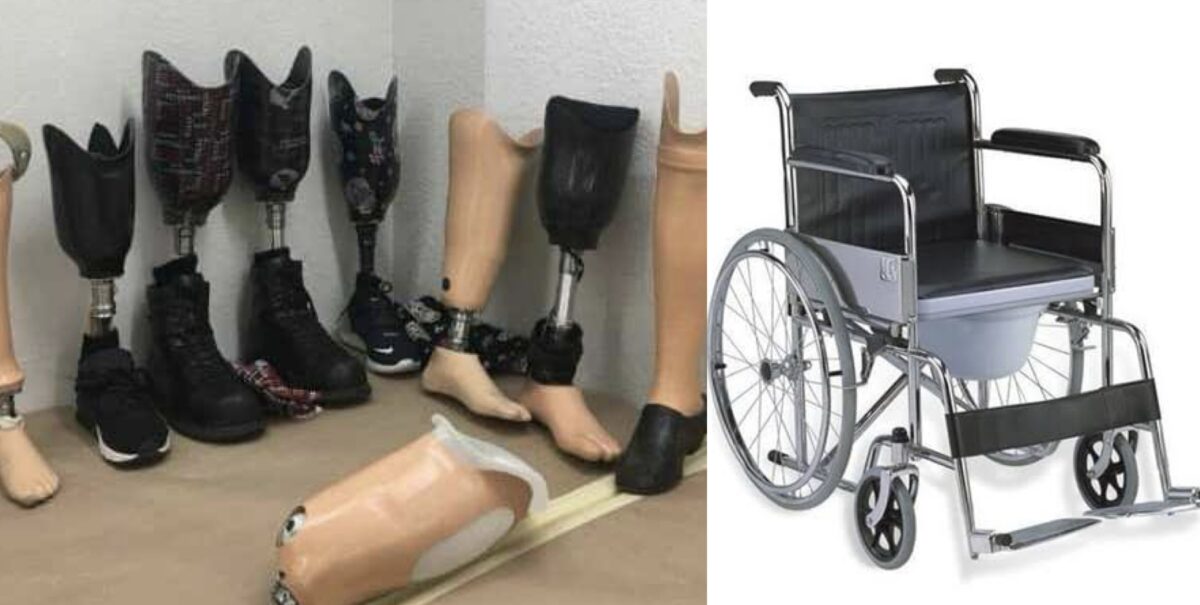
Market failures prevent almost one billion people from accessing the assistive products they need, including eyeglasses, hearing aids, prostheses, wheelchairs, and digital technology.
However, a new report by ATscale, the Global Partnership for Assistive Technology, together with the Clinton Health Access Initiative (CHAI), helps to address some of these failures by presenting a one-stop guide to assistive products for buyers, donors, and policymakers.
“Market failures mean that relatively simple technologies – such as eyeglasses or wheelchairs – are way too expensive for too many people in low- and middle-income countries,” says Pascal Bijleveld, CEO of ATscale.
“In terms of the wasted opportunity and the collective failure to connect a billion people into our societies and economies, the human cost is enormous,” he adds.
Launched on 4 June, the first ever World Day for Assistive Technology, the report aims to help enhance the availability of affordable, high-quality assistive products in low- and middle-income countries.
It consolidates a significant amount of market information in one place, providing procurement officials in low- and middle-income countries with information about the availability of assistive products, including their technical specifications, prices, and key manufacturers.
By providing the information, the report empowers and enables these buyers to make better informed procurement decisions. The report also points out market failures such as monopoly power, trade barriers, technological inequalities, inefficient supply chains, and lack of information.
These market failures cause high prices and explain why assistive products are available in low income countries for just 10 percent of the people that need them. In high-income countries, this figure is closer to 90 percent.
The report also provides actionable insights on the most dynamic AT markets: drop trade tariffs, reduce transport costs, support ATscale, UNICEF and other non-profit interventions, and adopt national guidelines in line with WHO recommendations.
This first report highlights the following:
- Of the billions of people who need eyeglasses, just 36 percent can access them. Some 90 percent of the unmet need for eyeglasses is in low- and middle-income countries. Consumer prices are too high for many but can often be brought down by reducing import taxes, logistical costs, and distributor or retail margins.
- Hearing aids are available to just 20 percent ofthe hundreds of millions of people with hearing loss. Most of these people live in low- and middle-income countries, where costs are the major barrier. Hearing aids vary a lot, however, and so do their prices. Adopt WHO recommendations on specifications and quality. Work with ATscale and UNICEF on procurement.
- Prostheses are available to just 20 percent of the roughly 65 million people who need them. Demand is expected to double by 2050, linked to the growth of traumas and non-communicable diseases, especially diabetes. More affordable solutions are emerging, but the ambiguity of quality standards remains a concern.
- Screen readers are software applications which convert digital text and visual information into synthesised speech or braille output. They can therefore support the nearly 340 million people who are blind or with limited vision. Further research will shine more light on his rapidly growing market segment.
- Smartphones can act as assistive devices in multiple ways, but people with visual or communication impairments in low- and middle-income countries are less likely to have access. A lack of connectivity compounds this issue. Smartphone ownership is around 76 percent in high-income countries but as low as 21 percent in sub-Saharan Africa. People with disabilities in low- and middle-income countries are even less likely to own a smartphone.
- Wheelchairs are available for just 5 to 35 percent of the 80 million people who need them. Of these 65 million are in low- and middle-income countries. Key barriers are high costs and lack of local manufacturers. ATscale, UNICEF and others are working to make wheelchairs more widely available.
This assistive products market report and future versions have an ambitious mandate to explore cutting edge solutions, pricing, and data in more detail, including at national levels. It welcomes future inputs from suppliers, who are interested to contribute information and insights for future reports.
Liberia’s Minister of Health, Dr. Wilhelmina Jallah, said: “I have seen how AT in other countries significantly improves the lives of those in need, and I believe all these things are possible in Liberia as well to support the disabled community in realizing their independent living.”
Cambodia’s Director General for Social Policy in the Ministry of Social Affairs, Veterans, and Youth Rehabilitation (MOSVY), Malyno Yeap, said: “By working with donors, manufacturers, and trade partners, we can collectively work to ensure that no one is left behind.”

We have recently deactivated our website's comment provider in favour of other channels of distribution and commentary. We encourage you to join the conversation on our stories via our Facebook, Twitter and other social media pages.

More from Peoples Gazette

States
Independence: NBA urges Nigerians to expect better future
The NBA said that ordinary Nigerians should be deriving benefit from the subsidy removal rather than hardship.

Agriculture
FG tasks ECOWAS on leveraging financing strategies for agroecology
The federal government has urged stakeholders in the agriculture and finance sectors in the West Africa region to leverage financing strategies to enhance agroecology practices

Politics
Katsina youths pledge to deliver over 2 million votes to Atiku
“Katsina State is Atiku’s political base because it is his second home.”

Africa
Uganda begins five-day nationwide free measles vaccination drive
Measles outbreaks have been confirmed in 20 districts, with 12 deaths recorded.

NationWide
Independence: NYCN tasks youths on nation-building
Mr Adigun urged youths to take initiative rather than wait for others to shape their future.

Africa
Algeria parliament approves death penalty for arson, kidnapping
Algeria has not carried out an execution since 1993.

World
AMR killing one million people yearly, says WHO
Experts warned that without a coordinated global response, annual direct AMR deaths could reach nearly 10 million by 2050.

NationWide
Independence: Obi vows to make governance measurable, accountable if elected president in 2027
Mr Obi also promised to move Nigeria from a consumption-driven economy to a productive economy.

World
UN chief advocates commitment to intergenerational solidarity as aging population rises
Mr Guterres said elders played a vital role in families, communities and economies.


