

‘Miracle Centres’: Kogi, Nasarawa, Niger stakeholders hail rise of CBT facilities
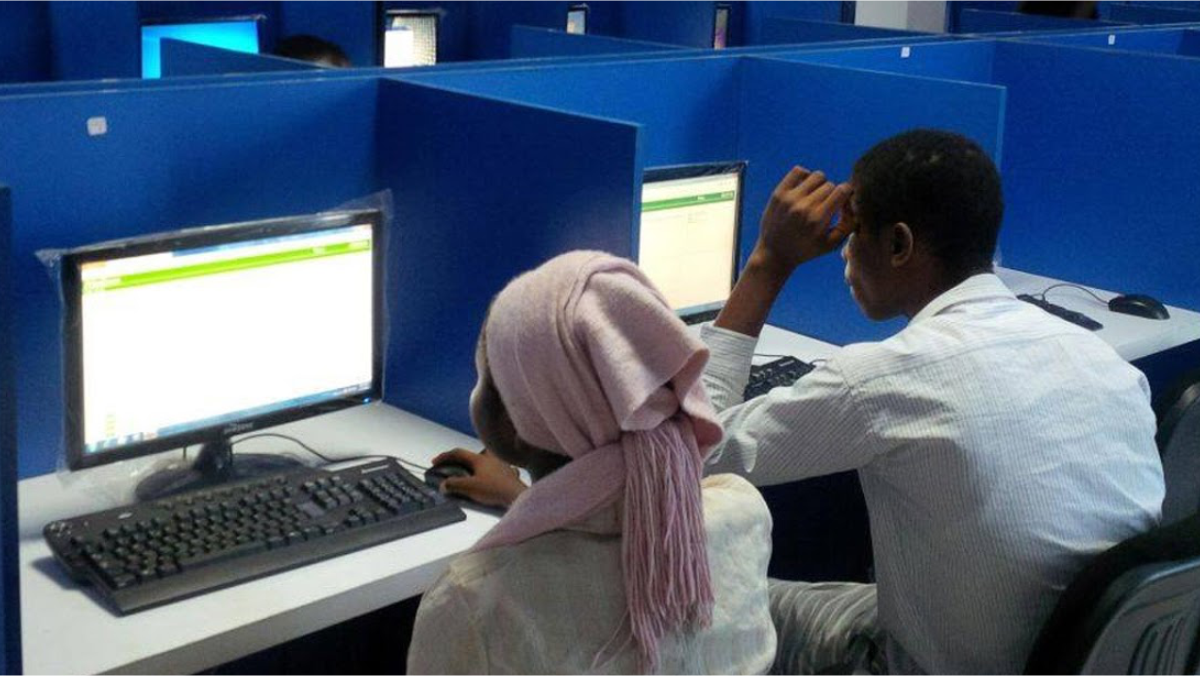
Education stakeholders in Kogi, Nasarawa and Niger have expressed optimism that the planned adoption of computer-based testing by the West African Examinations Council (WAEC) and the National Examinations Council will significantly reduce examination malpractice and the activities of so-called ‘miracle centres’.
The stakeholders, however, cautioned that CBT alone might not completely eradicate examination malpractice, stressing the need to address poor learning environments, inadequate teaching personnel, poor student preparation, parental pressure and infrastructural deficiencies.
They spoke in separate interviews on Monday during a survey on the activities of examination ‘miracle centres’ and the possible impact of CBT on exam malpractice.
A ‘miracle centre’ is regarded as an exam centre where candidates are assisted through fraudulent means to obtain high grades in public examinations.
In Kogi, Stephen Ojapa, principal of Government Science Secondary School, Lokoja, said the location of some schools, overcrowded classrooms, inadequate teaching personnel and pressure to produce good results could contribute to the emergence of miracle centres.
Mr Ojapa said schools located far from urban centres were particularly vulnerable due to difficulties associated with effective monitoring.
He said some school proprietors and principals believed that impressive examination results would attract more students, while some parents pressured schools to ensure that their wards passed examinations at all costs.
Mr Ojapa said some teachers could also become involved when money contributed by candidates for examination malpractice was shared among supervisors and teachers. He, however, said his school regularly sensitised students on the dangers and consequences of examination malpractice through seminars and classroom discussions.
The principal expressed optimism that CBT would reduce malpractice but identified electricity supply, inadequate computers, and a shortage of computer-skilled workforce as potential challenges.
Mr Ojapa suggested using solar power to support CBT centres, especially large schools that could serve as examination centres.
A parent, Ramat Ahmed, said the cost of registration, recommendations from relatives and friends and fear of failure could influence some parents to register their children at miracle centres.
She said some parents prioritised examination results over integrity because they feared that poor grades could limit their children’s future opportunities.
Ms Ahmed said CBT could reduce some forms of examination malpractice but would not eliminate the problem. She urged parents to teach their children that honesty was more important than high grades, lead by example and encourage them to seek assistance when they encountered difficulties in their studies.
Emmanuel Adebolawe, a student, said inadequate preparation, laziness and societal influence were among factors encouraging students to patronise miracle centres.
Mr Adebolawe said he had once been encouraged to register at a miracle centre but declined, adding that the widespread activities of such centres had affected some students’ belief in their ability to pass examinations through hard work. He said CBT, particularly the system used by the Joint Admissions and Matriculation Board (JAMB), could help reduce malpractice by testing candidates’ individual abilities.
He, however, identified inadequate time, system failures and examination anxiety as possible challenges, and urged students to be consistent, persistent and hardworking.
Similarly, Aruwa Enyo-Ojo, who recently completed Senior Secondary II, said some students patronised miracle centres because they regarded them as an easy means of passing examinations without putting in the required effort.
Ms Enyo-Ojo described CBT as a technologically advanced approach to examinations but expressed concern over power outages and inadequate computer facilities.
Fatima Ahmed, another education stakeholder, identified parental influence, poor preparation, inadequate teaching, overcrowded classrooms and poor study habits as factors sustaining examination malpractice.
She also cited the misuse of smartphones, messaging applications, hidden earpieces and social media as means through which candidates could share answers during examinations.
Ms Ahmed said miracle centres had survived because of the demand for guaranteed examination success, with some students and parents willing to pay for high grades.
She warned that examination malpractice could produce graduates whose certificates did not reflect their actual knowledge and skills, reduce public confidence in examination results and discourage hard-working students.
She advocated that CBT should be complemented with biometric verification, CCTV surveillance, restrictions on external devices and internet access, improved teacher training and provision of adequate learning materials.
An official of an examination body, who requested anonymity, described miracle centres as schools primarily interested in helping candidates pass examinations through fraudulent means rather than merit.
He said schools found engaging in malpractice faced sanctions ranging from fines to blacklisting, which could prevent them from presenting candidates for external examinations for between three and five years.
The official said CBT would significantly reduce malpractice because candidates would access questions simultaneously, making it more difficult to leak questions or smuggle answer scripts out of examination halls.
He, however, identified poor electricity supply, inadequate computer literacy among some candidates and insufficient computer facilities as major obstacles to the full implementation of CBT.
A long-serving WAEC examiner and team leader, who also requested anonymity, said methods used in miracle centres included teachers writing answers on boards, the use of mobile phones and AI, and access to examination questions before scheduled dates.
The examiner attributed the persistence of malpractice to parental pressure, schools’ desire to maintain high pass rates, poor study habits and the involvement of some examination officials.
He advocated wider deployment of CBT, CCTV surveillance, reduced involvement of schools in examination administration and the use of multiple versions of examination questions.
In Nasarawa, David Anyuabuga, Nasarawa chairman of the National Parent Teacher Association of Nigeria (NAPTAN), called for decisive government action against miracle centres, saying their proliferation was destroying the reading culture and producing graduates who could not defend their certificates.
Mr Anyuabuga said many parents now preferred to pay for “expo” rather than invest in extra lessons that could help their children prepare academically.
A retired principal, Peter Daniel, identified poverty, poor remuneration of teachers and weak supervision by examination bodies as factors fuelling miracle centres.
Mr Daniel recommended unannounced monitoring, installation of CCTV cameras in examination halls and blacklisting of schools caught engaging in malpractice.
In Niger, stakeholders called for concerted efforts by examination bodies, government, schools, parents and other stakeholders to eradicate miracle centres and restore the credibility of public examinations.
Muhammad Bashar Nuhu, a former commissioner for tertiary education in Niger, said the emergence of miracle centres had negatively affected the growth and development of tertiary institutions.
He described the situation as “garbage in, garbage out”, whereby students with poor academic foundations gained admission into tertiary institutions through results they could not defend.
Mr Nuhu said technology, particularly CBT, could help reduce malpractice by improving monitoring, information gathering and the security of examination processes. He recommended wireless surveillance cameras linked to control rooms at examination bodies’ headquarters, a reward system for whistle-blowers and strict disciplinary measures against offenders.
Mr Nuhu also called for increased public awareness to discourage parents and candidates from cheating. He advocated stronger vocational and technical education to provide alternative pathways for students with practical skills and reduce undue pressure to pursue conventional university education.
Salihu Ibrahim, Niger chairman of the Academic Staff Union of Secondary Schools (ASUSS), attributed the proliferation of miracle centres largely to inadequacies in the education sector. Mr Ibrahim called for improved infrastructure, adequate teaching staff and better motivation of teachers and examination officials.
He said many secondary schools lacked laboratories and other practical equipment needed to adequately prepare students for the West African Senior School Certificate Examination (WASSCE) and NECO examinations.
Mr Ibrahim cautioned against relying solely on CBT, saying the system could have limitations, particularly in examinations requiring candidates to express themselves in essay-based questions.
Abdullahi Jabi, an education expert, urged WAEC and NECO to intensify monitoring of examination centres and strengthen accreditation and supervision, particularly in difficult-to-access areas. Mr Jabi said CBT could help address some challenges associated with miracle centres but stressed the need for adequate infrastructure for its effective implementation.
Rukayya Mikail, proprietor of First El Shabab School, called for stronger collaboration among parents, schools and examination bodies to discourage candidates from seeking undue assistance. She advocated improved teaching and learning conditions, effective monitoring, adequate learning facilities and greater emphasis on skills acquisition.
Mike Baba, proprietor of Latter-Rain High School, Bida, described examination malpractice as a major national challenge that undermined the integrity of examinations and the quality of graduates produced by the education system.
Mr Baba said the government needed to enforce existing laws against individuals and schools involved in malpractice, adding that technology, including CBT, could strengthen monitoring and help curb the menace.
The stakeholders generally agreed that while CBT would make examination malpractice more difficult, its success would depend on reliable electricity, adequate computers, digital literacy, strong monitoring, effective sanctions and improved teaching and learning conditions.
They also called for greater parental responsibility, improved teacher welfare and a shift from the pursuit of examination grades to the acquisition of knowledge, skills and integrity.
(NAN)
Rising operating costs challenging private sector productivity – Entrepreneur
Productivity in Nigeria’s private sector is being challenged by rising operating costs, tighter profit margins and the pressure to make decisions faster, said entrepreneur Tayo Babatunde.
In a statement in Lagos on Monday, Ms Babatunde also said that managing distributed teams’ complexity equally challenged productivity in the private sector.
Mr Babatunde is the managing director of Radiant diGiLog, a technology company which recently introduced an artificial intelligence-powered workforce management and employee productivity platform, also called Radiant diGiLog.
The managing director said that organisations’ operational visibility had moved beyond being a back-office metric and become a critical leadership capability.
“For years, organisations have invested in hiring talented people, improving customer experience and expanding into new markets.
“However, one challenge continues to surface across businesses of every size: leaders struggle to answer what should be simple operational questions,” she said.
According to Ms Babatunde, the questions include those about which employee is available, which task has been completed, which teams need support, and where delays happen.
The managing director said that the speed with which leaders could answer the questions would increasingly determine how effectively organisations would compete.
“As companies grow, work becomes more distributed. Teams operate across multiple locations, shifts, projects and even countries.
“Managers rely on meetings, phone calls, spreadsheets, emails and messaging platforms to put together information before they can act.
“It is rare that people are not working hard. The issue is that more often, leaders lack timely visibility into what is happening across their operations,” she said.
In the past few months, Radiant diGiLog engaged with organisations across logistics, hospitality, manufacturing, professional services and retail services.
“While each business is unique, the conversations reveal a consistent pattern: the challenge is not access to information but bringing the right information together at the right time so that managers can act with confidence,” she said.
The managing director said that Radiant diGiLog was designed to help businesses to eliminate manual record-keeping, streamline task execution, and improve operational visibility.
According to Ms Babatunde, when operational visibility improves, communication becomes clearer, accountability becomes easier, and managers spend less time getting updates and more time supporting their teams.
She said that improved visibility would also help employees to understand expectations from them, shifting operational conversations from reactive to proactive.
“Technology alone does not create these outcomes. People do, but technology gives people the clarity they need to make better decisions, collaborate more effectively and focus on the work that creates value,” she emphasised.
Ms Babatunde urged that operational visibility should not be taken as surveillance, saying that real operational visibility would give leaders the confidence to make timely decisions and give employees the clarity to do their work well.
”This is why we approach workforce management as a connected operating system rather than a collection of isolated tools through our digital platform, Radiant diGiLog.
“Scheduling should connect with attendance, and attendance should connect with task execution, while field activities should connect with live location visibility where appropriate.
“Communication should happen in the same operational environment where work is being planned and delivered. Leave requests, approvals, forms and reporting should all contribute to a single view of how the organisation is operating,” she said.
Ms Babatunde said that when an organisation’s activities remain disconnected, its leaders spend much time searching for information; when they are connected, leaders spend more time leading.
(NAN)

We have recently deactivated our website's comment provider in favour of other channels of distribution and commentary. We encourage you to join the conversation on our stories via our Facebook, Twitter and other social media pages.

More from Peoples Gazette

States
Independence: NBA urges Nigerians to expect better future
The NBA said that ordinary Nigerians should be deriving benefit from the subsidy removal rather than hardship.

Agriculture
FG tasks ECOWAS on leveraging financing strategies for agroecology
The federal government has urged stakeholders in the agriculture and finance sectors in the West Africa region to leverage financing strategies to enhance agroecology practices

Politics
Katsina youths pledge to deliver over 2 million votes to Atiku
“Katsina State is Atiku’s political base because it is his second home.”

Anti-Corruption
Nine suspects arrested in FBI’s latest operation against Yahoo Boys in Nigeria
The FBI boss made the disclosure on Sunday.

NationWide
Nigeria edge Uganda by 1 run to win Cricket World Cup Africa qualifier
Nigeria scored 148 runs in 19.4 overs before restricting Uganda to 147 for nine in 20 overs at the Nigeria Cricket Federation (NCF) Oval 1 on Sunday.

Heading 1
NiMet predicts three-day dust haze, thunderstorms nationwide from Monday
For Wednesday, the agency forecast sunny and hazy conditions across the northern region throughout the day.

Health
Ebola: Kebbi intensifies surveillance at airport, border
Mr Abubakar stressed the state government’s commitment to protecting residents through proactive disease surveillance.

NationWide
Osoba celebrates veteran journalist Bonuola at 80
Mr Osoba described Mr Bonuola as a serious minded intellectual.

NationWide
SDP presidential candidate seeks balanced media coverage of political parties
Mr Adebayo urged political parties to present clear policy proposals to address the country’s challenges.


