

Mixed reactions trail proposed scrapping of JSS-SSS separation policy
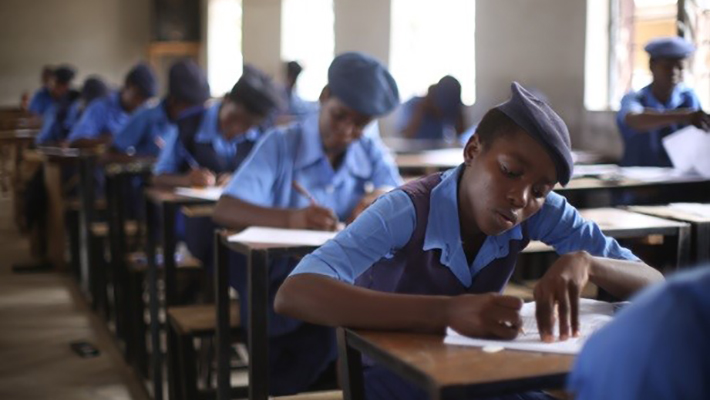
Education stakeholders have expressed mixed reactions to the federal government’s proposal to phase out the separation between junior secondary school (JSS) and senior secondary school (SSS).
The stakeholders who spoke in separate interviews on Wednesday in Abuja said the success of the reform would depend largely on effective implementation and addressing the root causes of school dropout.
The federal government recently announced plans to scrap the JSS-SSS transition policy, describing it as a failed reform that had contributed to millions of students dropping out before completing secondary education.
Reacting to the development, education analyst, Nathanial Adamu, said the proposal could improve learners’ progression if properly implemented.
According to him, many students drop out after completing JSS due to financial constraints, poor access to schools and weak transition mechanisms.
“If the policy removes unnecessary barriers and ensures that learners progress seamlessly to senior secondary school, it could help improve retention,” he said.
Mr Adamu, however, stressed that the reform must be backed by adequate funding, improved infrastructure, recruitment of more teachers and extensive stakeholder consultations.
He urged the federal government to work closely with state governments, school administrators and parents to ensure effective implementation of the policy.
“It is easy to make such a policy, but implementing it in schools across the country will require close monitoring,” he said.
Also speaking, the proprietress of Triumph Academy, Suleja, Maryam Abubakar, said the transition from JSS to SSS was not the major reason many children dropped out of school.
According to her, poverty, rising school costs, insecurity and the inability of many parents to pay school fees remain the biggest factors responsible for children leaving school before completing their secondary education.
“I don’t think removing the transition between JSS and SSS will automatically reduce the number of out-of-school children.
“Many students who stopped after JSS did so because their parents could not afford to keep them in school.
“Unless those economic challenges are addressed, changing the structure alone may not produce the desired result,” she said.
Ms Abubakar also expressed concern over overcrowded classrooms and inadequate teaching personnel in many public schools.
“Many schools, especially government-owned ones, are overcrowded. Students barely have seats to listen to lessons properly. I think that should be addressed first,” she said.
She urged the federal government to prioritise increased funding for education, improve learning facilities, recruit more teachers and expand support for indigent students before embarking on major structural reforms.
On his part, the National President of the National Parent Teacher Association of Nigeria (NAPTAN), Boniface Odeh, said the association welcomed the proposal announced by the Minister of Education.
Mr Odeh described it as a reform capable of addressing longstanding challenges in the education sector.
He said the proposal would restructure the nation’s education system from the current 6-3-3-4 model to a 6-6-4 structure.
Mr Odeh said the proposed six-year uninterrupted secondary education would help reduce the high rate of student dropouts that usually occur after Junior Secondary School (JSS) 3.
According to him, many students are unable to continue to senior secondary school due to placement challenges, transition costs and limited admission spaces.
He said that eliminating the transition between junior and senior secondary education would keep more children in school until completion.
The NAPTAN president also said the proposed structure would enhance academic continuity by allowing better curriculum implementation, deeper subject mastery and more time for vocational skills acquisition and science, technology, engineering and mathematics (STEM) education.
He added that the reform would produce graduates better prepared for higher education and the world of work.
Mr Odeh further proposed a National Secondary School Commission to oversee the six-year secondary education, alongside the Universal Basic Education Commission (UBEC) for the primary level.
He noted that the arrangement would also improve parental engagement by providing clearer institutional responsibilities.
According to him, the proposed model will reduce the financial and psychological burden on families by eliminating one stage of school transition, thereby reducing the costs associated with new admissions, uniforms and other expenses.
Mr Odeh urged the Federal Ministry of Education to ensure broad stakeholder consultations involving parents, teachers, school proprietors and state governments before implementing the reform.
He also called for teacher retraining, infrastructure assessment and a phased implementation process to ensure the success of the policy.
A retired director in the Department of Quality Assurance of the Federal Capital Territory (FCT) Education Secretariat, Salihu Yahaya, urged the federal government to address the underlying causes of school dropouts before implementing the proposed 6-6-4 education structure.
Mr Yahaya described the announcement as a policy intention rather than a final decision, noting that it was still subject to approval by the appropriate authorities.
According to him, while improving the transition from junior to senior secondary education is a legitimate concern, the real cause of school dropouts is the sharp increase in the cost of education at the senior secondary level.
“The statistics may show that many students who complete Junior Secondary School do not immediately proceed to Senior Secondary School, but we need to understand why.
“Many parents enjoy relatively low-cost education up to JSS3. The moment their children are admitted into SS1, the financial burden rises significantly, and many families are unable to cope.
“If this policy simply merges junior and senior secondary education without addressing the cost implication, it may only shift the financial burden to an earlier stage and could even worsen the dropout situation,” he said.
He urged the government to evolve measures that would make secondary education more affordable if it hoped to improve school retention.
He also warned that implementing the proposed structure without considering existing administrative arrangements in states could create fresh challenges.
According to him, education remains on the concurrent legislative list, allowing states to operate systems that suit their peculiar circumstances.
He explained that in many states, including the FCT, junior secondary schools are managed by the Universal Basic Education Board, while senior secondary schools are under separate secondary education boards.
“The management, funding and administrative structures are already well established.
“If government decides to merge the system, there must be clarity on which agency will manage the schools and how existing structures will be harmonised,” he said.
Mr Yahaya noted that several states and private schools already operated different models of secondary education, with some schools running continuous JSS1 to SS3 programmes, while others maintained separate junior and senior secondary schools.
He said states should be allowed flexibility in implementing the policy in line with their educational realities.
Mr Yahaya stated, “The fundamental issue remains the affordability of senior secondary education. The problem is not merely the separation of junior and senior secondary schools. If government addresses that challenge, the transition rate will improve naturally.”
(NAN)

We have recently deactivated our website's comment provider in favour of other channels of distribution and commentary. We encourage you to join the conversation on our stories via our Facebook, Twitter and other social media pages.

More from Peoples Gazette

States
Independence: NBA urges Nigerians to expect better future
The NBA said that ordinary Nigerians should be deriving benefit from the subsidy removal rather than hardship.

Agriculture
FG tasks ECOWAS on leveraging financing strategies for agroecology
The federal government has urged stakeholders in the agriculture and finance sectors in the West Africa region to leverage financing strategies to enhance agroecology practices

Politics
Katsina youths pledge to deliver over 2 million votes to Atiku
“Katsina State is Atiku’s political base because it is his second home.”

World
Houthi Rebels: Pakistan, Turkey to rapidly deploy forces to Saudi Arabia
Saudi Arabia has recently come under pressure from advances by Yemen’s Houthi militia and attacks on the key East-West oil pipeline, and is seeking support from its allies.

NationWide
Wells Carlton boss Osahon Idahosa shares N2.7 trillion oil pipeline contract with Olu of Warri: Asari Dokubo
Mr Idahosa is the son of late Captain Idahosa Okunbo and brother-in-law to the Warri monarch.

World
Trump approves death by firing squad for ‘jihadist’ Nidal Hasan
Sean Parnell, U.S. Assistant Secretary of War, on Monday said Mr Trump approved that Mr Hasan be executed by firing squad as recommended by Pete Hegseth, U.S. Secretary of War.
Politics
LG Elections: OYSIEC opens registration portal for ad hoc staff recruitment
Registration for the required positions will run from October 5 to October 20, 2026.
Diaspora
Trump moves to revoke U.S. citizenship of two Nigerians, 38 others
The prosecutors accused the 58-year-old of applying for immigration benefits under two different identities.
Economy
Nigeria rises four places to eighth in 2026 Bloomberg Economics Investment Risk-O-Meter
The growth was attributed to the economic policies of the Tinubu administration.


