

MKO Abiola’s Hope ’93 to Tinubu’s Renewed Hope: Nigeria’s journey from promise to poverty
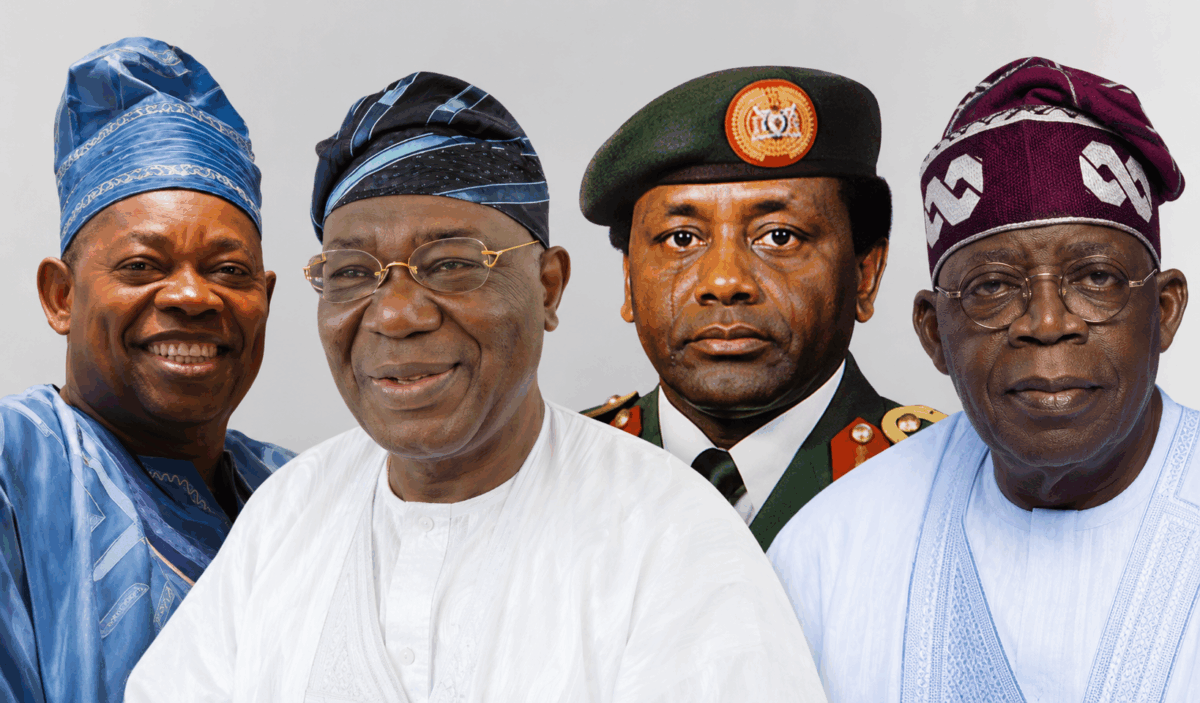
Moshood Kashimawo Olawale (MKO) Abiola’s “Hope ’93” campaign slogan in the June 12,1993 presidential election and his manifesto which promised democratic governance, social justice and economic reform, gave hope to millions of Nigerians whom, at the time, had become weary of several years of misgovernance, economic hardship and political instability caused by successive military juntas.
Mr Abiola, whose victory at the poll was annulled by the then military regime of General Ibrahim Badamosi Babangida (IBB) in 1993, promised to provide stable electricity, jobs, and affordable education, healthcare, and housing for Nigerians who had suffered years of misrule.
The Peoples Gazette, in this piece, highlights what has changed from 1993 till date.
Ernest Shonekan: August 26, 1993 to November 17, 1993
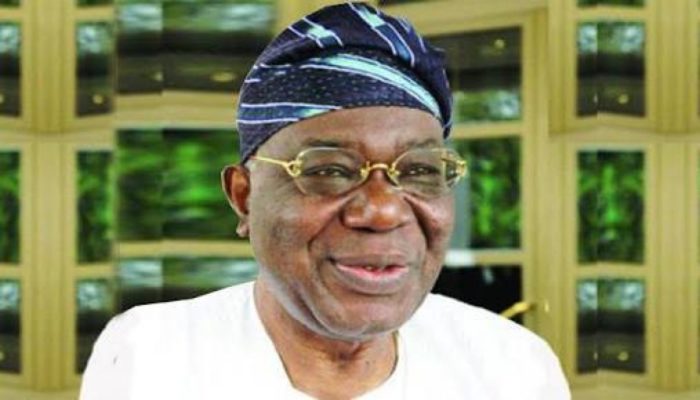
Following the annulment of the June 12 presidential election by Mr Babangida, his regime constituted an Interim National Government led by Ernest Shonekan on August 26, 1993.
During the administration of Mr Shonekan which ran from August 26, 1993 to November 17, 1993, the official dollar-to-naira exchange rate was pegged by the Central Bank of Nigeria (CBN) at approximately ₦22 to $1.
However, at the parallel (black) market, the rate ranged between ₦21.90 and ₦22.05 to $1. The official exchange rate was recorded at an average of ₦22 to $1, following earlier foreign exchange market reforms and deregulation introduced late in the preceding regime of Mr Babangida.
Nigeria’s Gross Domestic Product (GDP) during Mr Shonekan’s Interim National Government was valued at approximately $56.8 billion for the full year, with a modest annual growth rate of roughly 1.57% to 1.6%.
During that period, Nigeria’s annual inflation rate averaged about 57.17%. Economic records from the National Bureau of Statistics and the Central Bank of Nigeria indicated that this figure was driven by severe money supply expansion and political instability following the annulled June 12 elections.
General Sani Abacha: November 17, 1993 to June 8, 1998

General Sani Abacha’s regime, which came into power through a coup d’état, ruled from November 17, 1993 to June 8, 1998, and was fraught with human rights abuses, including attacks on the press and activists, which led to economic sanctions from foreign countries and bodies.
During Mr Abacha’s regime, Nigeria’s Gross Domestic Product (GDP) grew at an average rate of 2.5% annually. Nominal GDP was approximately $56 billion at the start of his regime in 1993, and closed at roughly $38 billion to $40 billion by 1997 and 1998.
The official exchange rate was administratively pegged at roughly N22 to $1, however, the parallel market and Autonomous Foreign Exchange Market (AFEM) rates which reflected the actual market reality, depreciated significantly, trading between N56 and N88 to $1. During Mr Abacha’s regime, Nigeria experienced extreme economic volatility with annual inflation at a historic high of 72.84% in 1995 before tight fiscal and monetary policies were emplaced, reducing it to 8.53% in 1997.
General Abdulsalami Abubakar: June 9, 1998 to May 29, 1999
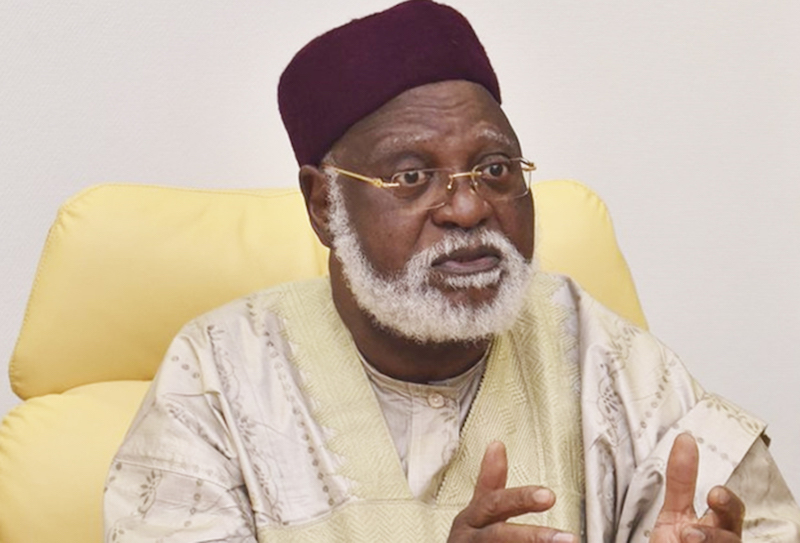
The Chief of Defence Staff from 1997 to 1998, General Abdulsalami Abubakar succeeded Mr Abacha after his death. During his time as military administration between June 9, 1998 and May 29, 1999, Nigeria had an estimated GDP of $29 to $36 billion, while the official exchange rate was pegged at N21.89 to $1, with the parallel (black) market trading around N84 and N90 per $1, while inflation rate averaged between 10% and 13%.
Mr Abubakar was in government when Mr Abiola died in custody. He also facilitated the return of democracy in Nigeria in 1999.
President Olusegun Obasanjo: May 29, 1999 to May 29, 2007

President Olusegun Obasanjo’s administration from May 29, 1999 to May 29, 2007 recorded some level of economic growth as the GDP grew from about $31.2 billion at the start of his term to $146 billion at the end of his administration.
Mr Obasanjo’s administration facilitated Nigeria’s $18 billion debt write-off from the Paris Club of creditor nations.
When Mr Obasanjo came into office in 1999, unemployment stood at over 12%. By the end of his tenure in 2007, official estimates dropped to between about 5.3% and 8.2%, driven by debt relief, banking sector reforms, and increased foreign direct investment.
Under Mr Obasanjo’s administration, the official dollar to naira exchange rate depreciated from around N94 to N125, while inflation fluctuated, hitting 5.4% by the end of his tenure.
Another key moment of Mr Obasanjo’s tenure was the Odi Massacre. The Odi massacre occurred on November 20, 1999, when the military invaded the Ijaw town of Odi in Bayelsa State on the order of Mr Obasanjo. The operation was a reprisal after 12 security agents were killed by an armed group linked to unrest in the area.
During the military invasion on November 20, 1999, troops backed by armoured vehicles destroyed several parts of the community. Estimates of civilian deaths ranged from several hundred to nearly 1,000. Almost all buildings, including homes, schools, and markets, were razed, with only a bank, a church, and a health centre reportedly left standing.
Umaru Musa Yar’Adua: May 29, 2007 to May 5, 2010
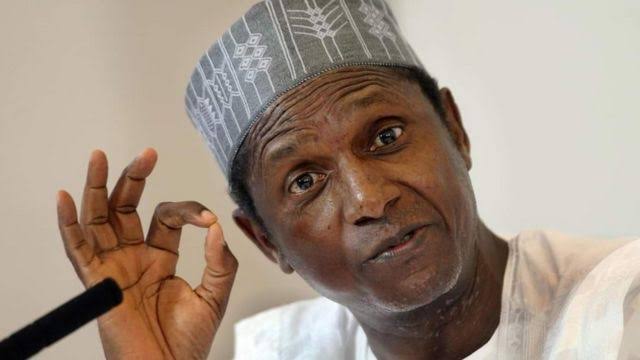
Umar Musa Yar’Adua succeeded Mr Obasanjo to become the second president in 2007 after Nigeria returned to civilian rule in 1999.
The first thing Mr Yar’Adua did was admit the election that brought him into power was not credible, which led to the inauguration of the Electoral Reform Committee (ERC) headed by former Chief Justice Muhammadu Uwais.
Nigeria’s economy thrived under Mr Yar’Adua’s Seven Point Agenda which involved reforms in critical sectors such as food security, power and energy, education, security, wealth creation, transport and land reforms.
In almost two years of assuming office, Mr Yar’Adua reduced the fuel price from N75 to N65, in a major feat that endeared his administration to many Nigerians.
He raised external reserves from $43.1 billion to $62 billion but a global economic crisis depleted it to $40.3 billion as of May 2010 when he passed away.
The dollar exchanged between N127 and N150 under Mr Yar’Adua and inflation remained in single digits at 8.04 per cent except for food inflation
He launched the Presidential Amnesty Programme (PAP) in 2009 to quell violent attacks in the Niger Delta region, encouraging militants to surrender their weapons in exchange for unconditional pardon. This strategy worked and restored peace to the troubled region as hundreds of militants gave up their weapons and embraced the pardon.
Mr Yar’Adua inherited an external debt of $2.11 billion and domestic debt of N2.17 trillion in 2007. By 2010, when Mr Yar’Adua died, the external debt had risen to $2.58 billion while domestic debt was N4.55 trillion and foreign exchange stood at $149.
His tenure was cut short by his death in May 2010. Mr Yar’Adua died in Saudi Arabia.
Goodluck Ebele Jonathan: May 6, 2010 to May 29, 2015
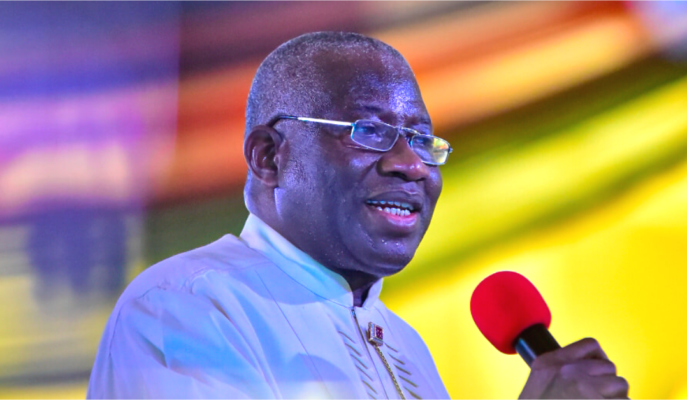
Goodluck Jonathan inherited a booming economy but could not quite sustain it with constant attacks from terrorist sect, Boko Haram, whose operations diminished investor confidence.
By 2011, when Mr Jonathan completed Yar’Adua’s term and became president, external debt had reached $3.5 billion, domestic debt was at N5.62 trillion and dollar exchanged at N156.7.
The economy progressed significantly under Mr Jonathan and recorded a steady annual growth rate of six to seven per cent.
His Transformation Agenda administration rebased the GDP to $576 billion, making Nigeria Africa’s largest economy at the time. But the growth leaned heavily on oil.
When oil prices crashed in 2014, the cracks showed. External reserves fell from $37.4 billion to $28.3 billion, while the naira weakened from about N150 to nearly N197 to the dollar. Public debt rose to around N12 trillion.
The 2014 Nigeria Immigration Service (NIS) recruitment, held on Saturday, March 15, 2014, is remembered as one of the country’s most controversial job screening incidents under Mr Jonathan’s administration.
An estimated 6.5 million unemployed graduates reportedly applied for about 4,000 available positions, leading to overcrowding at screening centres across the country. The poor coordination of the exercise triggered stampedes in several locations, resulting in the deaths of at least 16 to 20 applicants, while hundreds more sustained injuries.
Between 2010 and 2013, Nigeria’s unemployment situation worsened significantly. The official rate rose from 21.1% in 2010 to 23.9% in 2011, with more than 14 million people actively seeking jobs. By 2012 and 2013, estimates from official and World Bank sources placed unemployment at about 24.7% to 25.9%.
Another defining moment of the Jonathan administration was the Chibok incident. While there had been increase in terrorist attacks in some parts of the country, the kidnapping of 276 schoolgirls from Government Secondary School in Chibok, Borno State by Boko Haram terrorists was the final straw.
The incident drew widespread international attention and condemnation. However, it also attracted heavy criticism within Nigeria over what was seen as a slow response from Mr Jonathan’s government. It took the president 15 days to address the issue. Mr Jonathan was eventually defeated at the polls as Nigerians grew tired of his administration which was dogged by widespread corruption and heightened insecurity and thus ushered in the All Progressives Congress (APC).
Muhammadu Buhari: May 29, 2015 to May 29, 2023

Under President Muhammadu Buhari, borrowing rose to record-highs at N77 trillion fomented by a recession in 2016, border closure in 2019 and COVID-19 pandemic
The naira experienced sharp depreciation across multiple exchange windows, reflecting foreign exchange shortages and policy distortions. Inflation soared, remaining in double digits.
At the assumption of his office in 2015, inflation was about nine per cent but by 2023 when he was exiting office, inflation had climbed to 22.4 per cent.
The real GDP growth remained largely stagnant during the eight years of Mr Buhari’s tenure. It stood at 2.7 per cent when he was sworn into office in 2015 and was at 2.7 per cent when he handed over to President Bola Tinubu.
From the N12 trillion he met in 2015, Mr Buhari had incurred an enormous debt of N87 trillion in May 2023.
During Mr Buhari’s presidency, Nigeria’s unemployment rate rose sharply, increasing to 33.3%. The period was marked by a significant deterioration in job availability, with millions of Nigerians, especially young people, moving into unemployment or underemployment, placing the country among those with the highest jobless rates globally.
During the #EndSARS protests in October 2020 under Mr Buhari’s administration, security forces opened fire on unarmed civilians protesting police brutality at the Lekki Tollgate in Lagos.
Amnesty International stated that at least 12 peaceful protesters were killed in a night between Lekki and Alausa, while documenting about 56 deaths across the protest period nationwide.
Bola Ahmed Tinubu: May 29, 2023 till Present
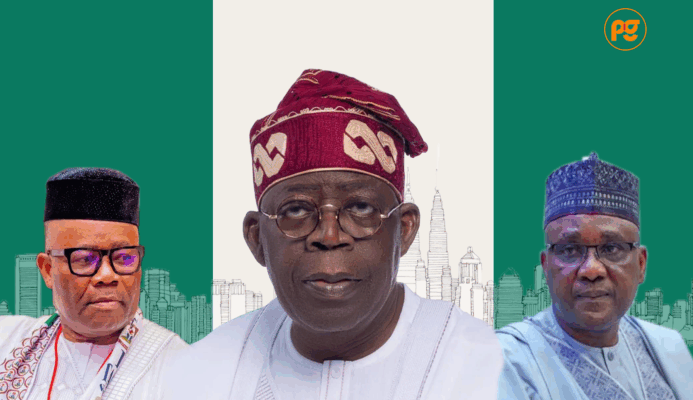
On May 29, 2023, during his inauguration at the Eagle Square in Abuja, President Bola Tinubu declared that the fuel subsidy had been fully removed, stating that “subsidy is gone.” Thus it became the present economic hardship currently being faced by Nigerians as a litre of fuel now sells between N1,250-N1,350.
Having inherited N87 trillion debt from Mr Buhari, Mr Tinubu has more than doubled the nation’s debt which stood at N159 trillion as of December 2025.
Mr Tinubu’s administration embarked on sweeping economic reforms, including the removal of fuel subsidy and the unification of the foreign exchange market, adopting a free float that allowed market forces to dictate trading prices.
He stopped hedging the naira with the dollar allowing the real value of the currency to unfold.
Initially the dollar shot up as high as N1,900 to a dollar but it has since stabilised to about N1,380.
Nigeria’s official unemployment figures moved within a narrow range under Mr Tinubu’s administration. Data from the National Bureau of Statistics (NBS) shows the rate varied between 4.1% and 5.3%, with the most recent figure standing at 4.3%.
Yet, for many Nigerians, these reforms have translated into economic strain. Residents of the Federal Capital Territory told the Peoples Gazette they have largely lost faith in the administration.
Voter turnout from 1993-2026
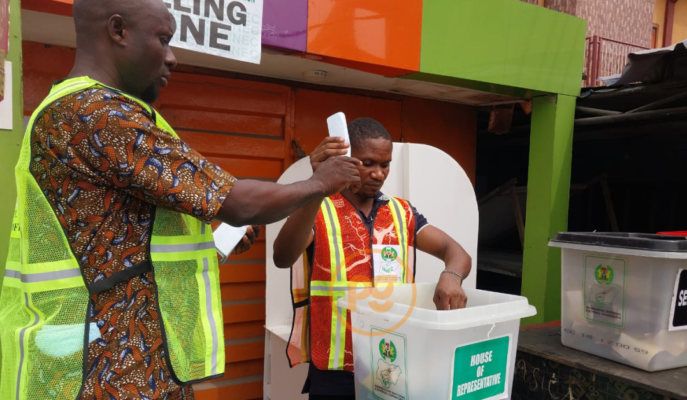
Nigeria has held eight presidential elections from 1993 to 2023. A total of 39 million voters were registered for the historic June 12, 1993 election. Fourteen million turned out to vote, constituting a 35 per cent voter turnout.
Based on the Independent National Electoral Commission (INEC) data, Upon return to democracy in 1999 after years of military regimes, voter registration and turnout surged to 57.94 million and 30.30 million respectively, amounting to a 52.0 per cent voter turnout.
In 2003, Nigeria’s voter turnout hit an all-time high of 69.1 per cent as 42.0 million votes were cast from a total of 60.92 million registered voters. In 2007, voter registration, votes cast, and voter turnout dropped to 61.57 million, 35.40 million, and 57.5 per cent respectively.
The numbers continued to dip in 2011, with 73.53 million registered voters, 39.40 million votes cast, and a 53.7 per cent voter turnout. In 2015, there were 67.42 million registered voters, 29.40 million votes cast, and a 43.7 per cent voter turnout, while in 2019 registered voters surged to 82.34 million, but votes cast and voter turnout dipped further to 28.61 million and 34.75 per cent respectively.
The 2023 election recorded the lowest voter turnout, at 26.72 per cent, out of 93.47 million registered voters and 24.90 million votes cast.
Political parties
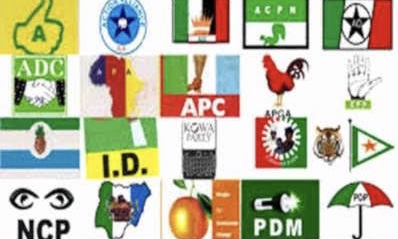
In 1993, under the Babangida regime, Nigeria had just two political parties: the Social Democratic Party (SDP) and the National Republican Convention (NRC). These two parties were later dissolved by Mr Abacha’s regime.
Between 1996 and 1998, under Mr Abacha, the number of political parties increased to five. The then National Electoral Commission of Nigeria (NECON) registered the United Nigeria Congress Party (UNCP), Congress for National Consensus (CNC), Democratic Party of Nigeria (DPN), National Centre Party of Nigeria (NCPN), and Grassroots Democratic Movement (GDM). Critics of the Abacha regime called the parties the “five fingers of a leprous hand.”
On return to democratic rule in 1999, INEC registered three political parties: the People’s Democratic Party (PDP), All People’s Party (APP), and Alliance for Democracy (AD).
The commission’s liberalisation of party registration saw the number of political parties increase to 91 by 2019. The mass deregistration of parties by INEC in 2020 reduced their number to 18. However, heading into the 2027 elections, Nigeria has 22 registered political parties.
Poverty Rate
Though Nigeria had its years of oil boom in the 1970s, poverty became widespread in the late 1980s and early 1990s. A World Bank report estimated Nigeria’s poverty rate between 1992 and 1993 to be about 44.9 per cent. However, 32 years later, the poverty rate has surged to 63 per cent, with 133 million Nigerians plunged into poverty, according to the World Bank.
Press Freedom Index
The period between 1993 and 1998, under successive military regimes, was characterised by repression and attacks on press freedom. Media houses were shut down, while journalists resorted to guerrilla-style journalism amid detention, brutalisation, and possible assassination.
A journalist with TheNews Magazine, Bagauda Kaltho, was assassinated under Mr Abacha’s regime. The World Press Freedom Index released by Reporters Without Borders (RSF) in 2026 stated that “Nigeria is one of West Africa’s most dangerous and difficult countries for journalists, who are regularly monitored, attacked and arbitrarily arrested. Electoral periods continue to bring significant violence against media professionals.”
Nigeria’s press freedom ranking from 2013 to 2026 has fluctuated between 115th and 112th, respectively. The 2026 World Press Freedom Index shows that Nigeria is ranked 112th out of 180 countries, a 10-place improvement from its 122nd position in 2025.
More than three decades after MKO Abiola’s “Hope ’93,” the gap between that promise and Mr Tinubu’s present “Renewed Hope” continues to widen, with no clear end in sight. Nigerians are watching if Mr Tinubu will be able to return Nigeria to the path of economic boom.

We have recently deactivated our website's comment provider in favour of other channels of distribution and commentary. We encourage you to join the conversation on our stories via our Facebook, Twitter and other social media pages.

More from Peoples Gazette

States
Independence: NBA urges Nigerians to expect better future
The NBA said that ordinary Nigerians should be deriving benefit from the subsidy removal rather than hardship.

Agriculture
FG tasks ECOWAS on leveraging financing strategies for agroecology
The federal government has urged stakeholders in the agriculture and finance sectors in the West Africa region to leverage financing strategies to enhance agroecology practices

Politics
Katsina youths pledge to deliver over 2 million votes to Atiku
“Katsina State is Atiku’s political base because it is his second home.”

Heading 2
Tinubu’s economic reforms yielding results despite doubts: Bagudu
Mr Bagudu described Mr Tinubu as a visionary leader whose decisions demonstrated courage and commitment to national development.
Sport
Flamingos lose 2-1 to Poland in FIFA U-17 Women’s World Cup opener
Poland’s Natalia Skrok made it two in the second half when Blanka Zajac, in the 65th minute, crossed into the Nigerian penalty area.

States
Gov Mbah scraps N750 daily ticket fee for Enugu tricycle operators, extends work hours
Mr Mbah also disclosed that tricycle operators would continue to use the state’s modern transport terminals free of charge.

States
FG unveils five-point strategy to tackle banditry, terrorism in Sokoto
Mr Ribadu called for sustained security deployments around vulnerable settlements, forest corridors and border communities.

Politics
2027: Wike urges Rivers traditional leaders to avoid ‘mistake’, back Tinubu for prosperity
Mr Wike said, “Supporting Tinubu is a support for prosperity.”
Heading 4
NAPTIP raises alarm over rise in parents’ facilitation of children’s sexual exploitation
The NAPTIP boss said parents and guardians were facilitating the sexual exploitation of their children to make money.


