

MSF raises alarm over escalating cholera outbreak in Zamfara
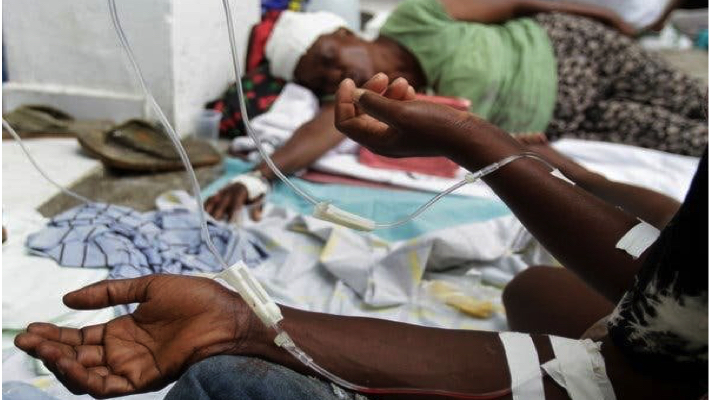
Médecins Sans Frontières (MSF) has expressed concern over the rising number of cholera cases in Zamfara State, calling for action to avert more loss of lives.
The medical humanitarian organisation, also known as Doctors Without Borders, raised the alarm in a statement it issued on Thursday.
MSF’s medical coordinator in Nigeria, David Kizito, said that already, there are more than 1,500 cases from three medical facilities the MSF had been supporting in the state.
He added that other humanitarian actors and the state’s ministry of health had also reported high incidence rates in other parts of Zamfara.
He said MSF had focused its response on hotspot areas such as Shinkafi, Zurmi, and Talata Mafara, where access to safe water remains critically low.
According to him, while cholera has been endemic in Nigeria for decades, seasonal outbreaks often intensify between April and October.
‘’Flooding during the period contaminates water sources, accelerating the spread of the disease in areas with poor sanitation.
“Cholera causes severe diarrhoea and vomiting, and if untreated, can lead to rapid dehydration and death within hours,” he said.
Mr Kizito also said that MSF had scaled up its Water, Sanitation, and Hygiene (WASH) interventions and health promotion activities.
This, he said, was alongside other humanitarian actors and the ministry of health, which activated a Public Health Emergency Operations Centre (EOC) on July 3.
On expansion of cholera treatment, he said that MSF had begun services in the state in mid-June, following the first suspected case at one of its supported facilities.
According to him, this included boosting case management and surveillance, alongside scaled-up WASH activities.
‘’In Zurmi, MSF and other humanitarian actors supported the ministry in opening a Cholera Treatment Centre (CTC) at Zurmi General Hospital.
’’In July, it also assisted the ministry in setting up a Cholera Treatment Unit (CTU) at Talata Mafara General Hospital and a CTC at Shinkafi General Hospital,’’ he said.
Mr Kizito said that between June 16 and August 5, the Zurmi CTC reported 562 suspected cases, mostly from Yambuki, Kadamusa, and Zurmi town.
He added that in Shinkafi General Hospital, about 401 cases were recorded between July 11 and August 5, and the worst-affected areas were Shinkafi North Ward, particularly Alkalawa, Sabon Gari, and Kurya.
He further said that 58 cases came from Isa LGA, which has a border with Sokoto State.
‘’At the Talata Mafara CTU, more than 600 cases were recorded between July 1 and August 8, with Kayaye accounting for the highest percentage; cases also came from Anka and Bakura LGAs,’’ he said.
According to him, the outbreak was unfolding in a context of insecurity, displacement, and limited access to clean water and sanitation.
The situation, he said, was exacerbated by the rainy season.
He, however, assured MSF’s continuous commitment to working alongside communities, health authorities, and other partners to ensure timely treatment, prevention, and support.
“MSF emphasises the importance of setting up decentralised oral rehydration points and enabling all existing primary healthcare centres to treat mild and moderate suspected cholera cases.
“This will ensure timely treatment, reduce complications, and allow prompt referral to dedicated CTCs in hospitals such as Zurmi, Shinkafi, and Talata.
“Moreover, urgent cholera vaccination is needed to halt transmission and save lives,’’ he said.
Mr Kizito said that the participation of everyone in Zamfara was needed to reduce the spread, stating, ‘’no one should die from a preventable disease.”
MSF head of mission in Nigeria, Ahmad Bilal, encouraged abiding by certain hygiene practices to reduce the risk of contracting the disease.
“Access to safe drinking water through boiling, practising regular handwashing, consuming freshly prepared meals, and avoiding open defecation.
“Also, keeping vaccinations up to date is a straightforward yet highly effective measure to safeguard yourself and your family from preventable diseases.”
(NAN)

We have recently deactivated our website's comment provider in favour of other channels of distribution and commentary. We encourage you to join the conversation on our stories via our Facebook, Twitter and other social media pages.

More from Peoples Gazette

States
Independence: NBA urges Nigerians to expect better future
The NBA said that ordinary Nigerians should be deriving benefit from the subsidy removal rather than hardship.

Agriculture
FG tasks ECOWAS on leveraging financing strategies for agroecology
The federal government has urged stakeholders in the agriculture and finance sectors in the West Africa region to leverage financing strategies to enhance agroecology practices

Politics
Katsina youths pledge to deliver over 2 million votes to Atiku
“Katsina State is Atiku’s political base because it is his second home.”

Sport
2027 AFCON Qualifier: Guinea-Bissau beat Madagascar, extend lead over Nigeria in Group L
Guinea-Bissau now have 10 points, Nigeria seven points, while Madagascar and Tanzania have two points each.
Africa
WHO raises concern over rising Bundibugyo Ebola deaths, insecurity in DR Congo
Mr Ghebreyesus said the outbreak, declared six months ago, had spread across 67 health zones in eight provinces in the DR Congo.

Africa
Afreximbank urges industries to boost intra-African trade as alternative to China in global markets
“As global markets look to diversify production beyond China, Africa must position itself as a natural partner of choice,” Mr Maayergi said.

World
Russell Brand faces probe over prison message to supporters
Mr Brand was convicted at Southwark Crown Court of one count of rape and three counts of sexual assault.
Politics
Tinubu admits cost-of-living crisis after APC dismissed widespread hunger claims
According to Mr Tinubu, the 2027 election is about the country’s future and direction.

World
WHO pushes for stronger vaccination, screening, treatment to eliminate cervical cancer
WHO said that expanding HPV vaccination, improving screening access, and ensuring timely treatment are critical to protecting women.


