

Murder in Asaba
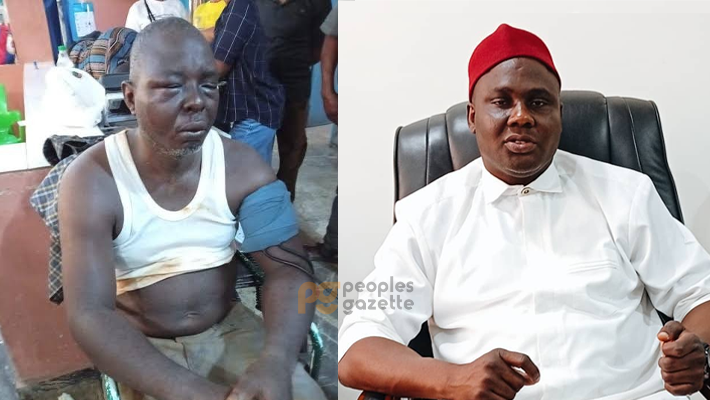
There is something profoundly disturbing about the decision of the Delta State Government to respond to the death of a deputy director in the Ministry of Education by constituting an administrative panel.
Government is entitled to inquire into the circumstances surrounding the death of its employee and establish whether administrative procedures were breached or its officials failed in their duties. What government cannot do, however, is allow an administrative inquiry to become a substitute for the criminal investigation that the circumstances of the death plainly require.
The allegation is grave. A senior civil servant, Unity Ekpevbughe Adeda, was allegedly beaten by thugs at the instance of the Commissioner for Education, Kingsley Ashibogwu, and subsequently died. However, Ashibogwu has expressly denied giving such an order or participating in the assault. The police are investigating the circumstances of Adeda’s death and, as of September 28, reports said Ashibogwu had been taken into police custody along with other suspects.
If the allegation is established by evidence, the matter is not merely one of administrative misconduct. It is potentially a case of murder. Simpliciter. The proper institutional response is therefore not to place the death principally within the instrumentalities of administration, but to ensure that the criminal justice machinery is activated and allowed to run its course.
The Arise Television analyst Frank Tietie was right to challenge the response of the Delta State Government and the position taken by the state labour leadership. There is something fundamentally wrong with treating the alleged killing of a citizen as though it were principally a disagreement within the public service.
An administrative panel can inquire into administrative conduct, but it cannot determine criminal guilt, arrest suspects, prosecute an accused person or replace the police. The Police Act 2020 leaves little room for institutional confusion. Section 4 sets out the functions of the Nigeria Police Force, including the prevention and detection of crime. More directly, Section 31 provides that where an alleged offence is reported to the police, the police shall investigate the allegation in accordance with due process and report their findings to the appropriate Attorney-General for legal advice.
The criminal law is equally unambiguous about the character of unlawful killing. Sections 315 and 316 of the Criminal Code deal with unlawful homicide and the circumstances in which a killing constitutes murder, while Section 319 provides the punishment for murder. Whether the facts ultimately establish murder, manslaughter or another offence is a matter for investigation, legal advice and, where appropriate, trial before a competent court. An administrative panel cannot answer that question.
There is an even larger issue here. Nigeria has a long and painful history of citizens being injured or killed because people who occupy positions of authority mistake power for personal entitlement. The danger begins when an officeholder ceases to understand the limits of office. A subordinate becomes someone to be punished rather than a citizen protected by law. An instruction becomes an order that must be obeyed regardless of its consequences. A group of thugs can then become an unofficial instrument of official power.
The consequences can be fatal.
Nigeria’s history provides an older warning in the story of Gogo Chu Nzeribe. A labour figure during the military era, Nzeribe was arrested by the authorities in 1968 and detained at Dodan Barracks, then the seat of federal military power. He subsequently died in detention in circumstances that became part of the grim record of military rule. His story belongs to that history of arbitrary detention in which the state could take possession of a citizen’s liberty and, in the absence of meaningful accountability, expose him to terrible consequences.
But Nzeribe was not the man whose death gave Wole Soyinka’s prison memoir its title. This distinction is of historical importance. That man was Segun Sowemimo, a young journalist whose fate became one of the haunting episodes of Soyinka’s The Man Died. Sowemimo was assaulted by soldiers following an incident involving the wife of the then military administrator of the Western Region. The allegation was that he had taken photographs of her while she was dancing owambe. The punishment administered by soldiers was grotesquely disproportionate to the alleged offence. Sowemimo suffered severe injuries, developed gangrene and eventually died after his condition deteriorated.
Soyinka, then imprisoned by the military authorities, sought information about Sowemimo. The message eventually came back with devastating simplicity: the man died.
Those words became the title of the memoir.
The connection between Gogo Nzeribe, Segun Sowemimo and the sad episode of murder in Asaba is not that Nigeria is still living under military rule. It is that the old pathology of power can survive the institutions that once sustained it. Democratic government does not automatically produce democratic habits of power.
A civilian officeholder can still behave as though public office confers a private licence to intimidate, humiliate or punish. That is the mindlessness of personages of power. They forget that the person standing before them is not merely an employee, a subordinate or an inconvenient dissenter. He is a citizen. The state exists to protect his life, liberty and dignity, not to place those things at the mercy of whoever happens to occupy an office.
The labour movement ought to understand this better than most institutions. Labour’s historic purpose is inseparable from resistance to arbitrary power and the protection of workers from abuse. Its response to the Delta incident should consequently be measured against the principle that the life of a worker cannot be reduced to an administrative file. A worker who dies in circumstances suggesting criminal violence deserves the full protection of the criminal law.
The proposed panel is misconceived if its purpose is to investigate the alleged killing itself. An administrative panel has no jurisdiction to investigate a crime, determine criminal responsibility or make findings of guilt.
The Supreme Court settled this principle in 1986 in Yesufu Amuda Garba & Ors v University of Maiduguri, where it held that the determination of guilt in criminal matters belongs to a court of law and not to an administrative investigating panel. The Court was emphatic that where serious criminal offences are alleged, the proper course is to report the matter to the law-enforcement authorities.
The alleged killing of a public servant is therefore a matter for the police to investigate. Evidence must be gathered and tested through the criminal justice process. Any person against whom the evidence establishes a prima facie case must be dealt with according to law. The protection of due process applies equally to anyone accused of the crime.
An administrative inquiry may have a place later, but only within its proper sphere. It cannot substitute for a criminal investigation or become a parallel forum for determining criminal culpability. That is precisely the danger Garba sought to prevent.
The issue before Delta State is not whether an administrative panel should replace a criminal investigation. It cannot. An administrative panel has no jurisdiction to determine criminal culpability. The alleged killing must first be investigated by the police and, where the evidence warrants, prosecuted before a court of law.
An administrative inquiry may have a place in examining matters properly within the state’s disciplinary authority, but it cannot become a substitute for the criminal process. A citizen is dead. The state owes him more than an administrative panel. It owes him justice under the law.
Abdul Mahmud, a human rights attorney in Abuja, writes weekly for The Gazette

We have recently deactivated our website's comment provider in favour of other channels of distribution and commentary. We encourage you to join the conversation on our stories via our Facebook, Twitter and other social media pages.

More from Peoples Gazette

States
Independence: NBA urges Nigerians to expect better future
The NBA said that ordinary Nigerians should be deriving benefit from the subsidy removal rather than hardship.

Agriculture
FG tasks ECOWAS on leveraging financing strategies for agroecology
The federal government has urged stakeholders in the agriculture and finance sectors in the West Africa region to leverage financing strategies to enhance agroecology practices

Politics
Katsina youths pledge to deliver over 2 million votes to Atiku
“Katsina State is Atiku’s political base because it is his second home.”

Health
Lagos restates readiness for Ebola threats
Mr Abayomi said, “Early detection and prompt reporting save lives.”

Heading 2
2027: Remi Tinubu donates 2026 Prado SUVs to APC youth
Recall that this it’s not the first time Ms Tinubu has been involved in vehicle donations for different purposes.

Heading 4
FG releases N38.93 billion to 166 public tertiary institutions
Mrs Ovuakporie said universities would receive N28.5 billion, polytechnics N5.8 billion and colleges of education were allocated N4.7 billion.

Economy
Rising Cost of Living: FG urged to revive refineries, cut spending
Mr Oaikhenan said that decline in inflation did not necessarily mean that prices of goods and services were falling.
States
Three men remanded for dismantling car, selling components as spare parts
Mr Jimoh said the arrest followed the report of a stolen vehicle at the Idanre Divisional Police Headquarters on October 12.

World
Egypt sends over 280 trucks loaded with food supplies to Gaza
The ERC said it sent an aid convoy toward Gaza early on Sunday.


