

NDIC promotes public awareness on deposit insurance, financial stability

The Nigeria Deposit Insurance Corporation (NDIC) has intensified efforts to deepen public understanding of deposit insurance and strengthen confidence in the banking system.
It also assured Nigerians that depositor funds remained protected under its regulatory framework.
NDIC managing director Thompson Sunday made this known at a stakeholders’ town hall meeting on Saturday in Lagos.
The theme of the meeting is “Strengthening Depositor Confidence: NDIC’s Role in Financial System Stability and Consumer Protection.”
Mr Sunday, represented by Adedayo Olukoya, the director of the bank examination department, said improved public knowledge of deposit insurance would reinforce trust and resilience within the financial sector.
Also speaking, the director of the Claims Resolution Department, Olawale Sule, explained that NDIC’s operations were anchored in four core mandates: deposit guarantee, banking supervision, failure resolution, and bank liquidation.
“The corporation insures deposits in licensed banks to ensure customers do not lose their savings if a financial institution fails,“ Mr Sule added.
He noted that depositors do not pay premiums under the scheme; instead, insured institutions contribute at prescribed rates and based on risk assessments.
Mr Sule said the NDIC guarantees payment of insured deposits up to the statutory limit when a bank becomes distressed and is eventually closed.
“Depositors of deposit money banks, non-interest banks, and mobile money operators are covered up to N5 million, while those in microfinance banks, primary mortgage institutions, and payment service banks are insured up to N2 million,” he said.
According to him, NDIC works closely with the Central Bank of Nigeria to monitor the health of financial institutions through routine supervision.
He explained that this includes off-site surveillance through periodic returns submitted by banks, as well as on-site examinations to verify financial condition and regulatory compliance.
“This allows early detection of problems and timely intervention to prevent failure,” he said.
Mr Sule added that when banks show signs of distress, NDIC may provide financial assistance, management changes, mergers, or acquisition arrangements to stabilise the institutions and protect depositors.
Where recovery efforts fail, he said the corporation moves to resolve the institution through liquidation following licence revocation.
“In such cases, NDIC steps in as liquidator to identify assets and liabilities, settle depositors’ claims, and recover funds owed to the bank,” he said.
Mr Sule explained that depositors are given priority in the payment process.
“They are first paid the insured portion of their savings, while balances above the insured limit are reimbursed later as liquidation dividends when assets are realised,” he said.
He also highlighted the importance of the Bank Verification Number (BVN), noting that it enables the corporation to trace depositors’ alternate accounts and credit insured funds promptly after a bank closure.
Providing an overview of the town hall engagement, the head of communications and public affairs at NDIC, Hawwua Gambo, said recent developments in the banking sector had made sustained stakeholder engagement necessary to reinforce public confidence in deposit insurance.
She noted that the revocation of licences of some banks and subsequent reimbursement of depositors had generated heightened public interest and discussions about deposit safety and recapitalisation efforts.
While such regulatory actions were essential for financial stability, she said they had also created misconceptions and knowledge gaps among the public.
According to her, proactive engagement remains critical to providing clarity, building trust, and strengthening depositor confidence.
Mr Gambo added that findings from NDIC’s recent public awareness survey underscored the need to enhance interpersonal communication channels to improve public understanding of deposit insurance and banking operations.
(NAN)

We have recently deactivated our website's comment provider in favour of other channels of distribution and commentary. We encourage you to join the conversation on our stories via our Facebook, Twitter and other social media pages.

More from Peoples Gazette

Agriculture
FG tasks ECOWAS on leveraging financing strategies for agroecology
The federal government has urged stakeholders in the agriculture and finance sectors in the West Africa region to leverage financing strategies to enhance agroecology practices

Politics
Katsina youths pledge to deliver over 2 million votes to Atiku
“Katsina State is Atiku’s political base because it is his second home.”

Economy
Navy recovers 80,000 litres of suspected stolen crude oil in Delta
The Nigerian Navy recovered approximately 80,000 litres of crude oil in anti-crude oil theft operations in Delta State.

States
Kano govt restores 39.8 million-litre Goron Dutse reservoir after 30 years
Governor Abba Yusuf said restoring the facility was part of his government’s broader effort to revive the state’s critical infrastructure.

Sport
AFCON Qualifiers: Guinea-Bissau trash Nigeria 3-0
The victory lifted Guinea-Bissau to the top of Group L with six points while Nigeria’s qualification hopes suffered another setback.

Economy
Pension fund assets rise to N31.8 trillion
The National Pension Commission (PenCom) says pension assets grew by N289.40 billion from the N31.51 trillion recorded at the end of July.

World
Three teenagers die after car veers into river
Police said the fourth person, a 17-year-old survivor, will be questioned.
Showbiz
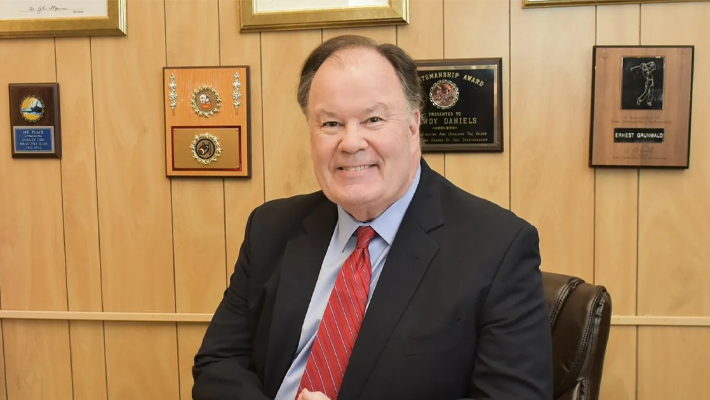
Saved by the Bell actor Dennis Haskins dies at 75
His agent, Jay Schachter, confirmed the news of his death, which occurred on Sunday in Burbank, California.


