

New UK-Nigeria partnership to speed up deportation of Nigerian criminals, failed asylum seekers
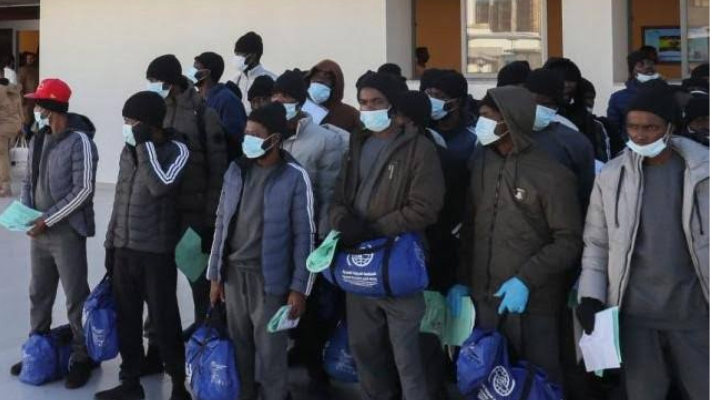
Visa overstayers, foreign criminals and failed asylum seekers will be removed from British soil far more easily under a new agreement struck this week during the state visit of Nigeria’s President, Bola Tinubu.
UK letters, an alternative identification document issued to individuals without a valid passport and used to support the return of people with no right to remain in the UK, will be recognised by the Nigerian government for the first time.
The agreement, reached between the Home Secretary, Shabana Mahmood, and Nigeria’s Minister of Interior, Dr Olubunmi Tunji-Ojo, removes one of the major administrative hurdles to returning people, meaning the UK will no longer have to wait for emergency travel documents to be issued by Nigeria.
The new deal adds to the sweeping reforms the Home Secretary has made to the UK immigration system to secure the UK’s borders and remove incentives attracting illegal migrants to Britain.
Minister for Border Security and Asylum Alex Norris said:
Anyone who abuses our systems, breaks our laws or tries to cheat their way into Britain will be stopped and removed.
Today’s agreement is another step in our mission to restore order to the border by ensuring those who have no right to be here are swiftly removed.
Nigeria is a key partner in our work to tackle illegal migration, as the UK’s largest African visa market and home to thousands of Nigerians who have built their lives here. We owe everyone across the system fairness.
Minister of Interior Olubunmi Tunji-Ojo said:
For us, as a country, we keep saying that we are totally committed to being a responsible country in fulfilling our core obligations.
It is good that we are starting this with the UK. This relationship with the UK means a lot to Nigeria. President Bola Ahmed Tinubu has shown great commitment to this.
So it is one relationship that we aim to be able to sustain for generations yet to come. And for us to sustain that relationship, we must remember: ‘He who comes to equity must come with clean hands.’ So we need to be as open and as fair as possible.
Hopefully, this strengthened partnership will be a template for other bilateral understandings.
The agreement marks a shared commitment to safe, fair and well‑managed migration. Annual returns to Nigeria have nearly doubled to 1,150. Returns and deportations of illegal migrants and foreign criminals from the UK have reached nearly 60,000 since the 2024 election.
A further agreement to launch joint operations and share information has been reached to crack down on criminal gangs abusing visa routes, making sure all arrivals are genuine and ready to contribute.
Following a series of high‑profile cases involving fake job sponsorships, sham marriages and forged financial or employment records, a new standardised document‑checking system will verify the authenticity of applications. Nigeria will also review its laws to tackle immigration crime, ensuring the toughest possible sentences are handed down to offenders.
The UK has strengthened its commitment to protecting Nigerian women and children at risk of exploitation, while improving business‑visa schemes to help UK and Nigerian companies pursue investment opportunities aimed at driving economic growth.
A new partnership targeting online scammers involved in romance fraud, investment scams and cryptocurrency schemes will also deliver stronger protections for the UK public. The new “fusion cell” model will bring together public‑sector bodies, banks, tech firms and communications companies to rapidly share intelligence on criminal tactics so swift action can be taken.
The UK’s National Economic Crime Centre already uses this fusion‑cell model with strong results, including more than 400 arrests and £7.5 million seized under Operation Henhouse in February 2025.
Today’s partnership will build on work already disrupting high‑harm fraud networks, preventing millions in losses and protecting vulnerable people across the UK. Earlier this year, National Crime Agency officers and the Nigerian Police Force worked with Meta to uncover hundreds of cryptocurrency‑linked social media accounts used to target UK residents, leading to the arrest of 7 suspects in Agbor, Nigeria.

We have recently deactivated our website's comment provider in favour of other channels of distribution and commentary. We encourage you to join the conversation on our stories via our Facebook, Twitter and other social media pages.

More from Peoples Gazette

States
Independence: NBA urges Nigerians to expect better future
The NBA said that ordinary Nigerians should be deriving benefit from the subsidy removal rather than hardship.
Agriculture
FG tasks ECOWAS on leveraging financing strategies for agroecology
The federal government has urged stakeholders in the agriculture and finance sectors in the West Africa region to leverage financing strategies to enhance agroecology practices

Politics
Katsina youths pledge to deliver over 2 million votes to Atiku
“Katsina State is Atiku’s political base because it is his second home.”

Sport
2027 AFCON Qualifier: Guinea-Bissau beat Madagascar, extend lead over Nigeria in Group L
Guinea-Bissau now have 10 points, Nigeria seven points, while Madagascar and Tanzania have two points each.
Africa
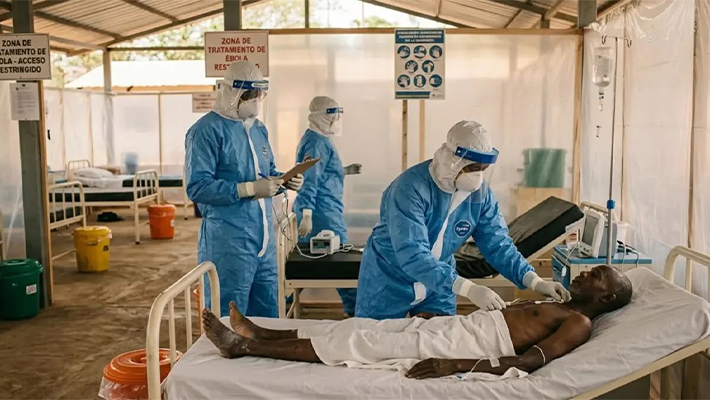
WHO raises concern over rising Bundibugyo Ebola deaths, insecurity in DR Congo
Mr Ghebreyesus said the outbreak, declared six months ago, had spread across 67 health zones in eight provinces in the DR Congo.

Africa
Afreximbank urges industries to boost intra-African trade as alternative to China in global markets
“As global markets look to diversify production beyond China, Africa must position itself as a natural partner of choice,” Mr Maayergi said.

World
Russell Brand faces probe over prison message to supporters
Mr Brand was convicted at Southwark Crown Court of one count of rape and three counts of sexual assault.
Politics
Tinubu admits cost-of-living crisis after APC dismissed widespread hunger claims
According to Mr Tinubu, the 2027 election is about the country’s future and direction.

World
WHO pushes for stronger vaccination, screening, treatment to eliminate cervical cancer
WHO said that expanding HPV vaccination, improving screening access, and ensuring timely treatment are critical to protecting women.


