

Nigeria can become refining hub: Aliko Dangote
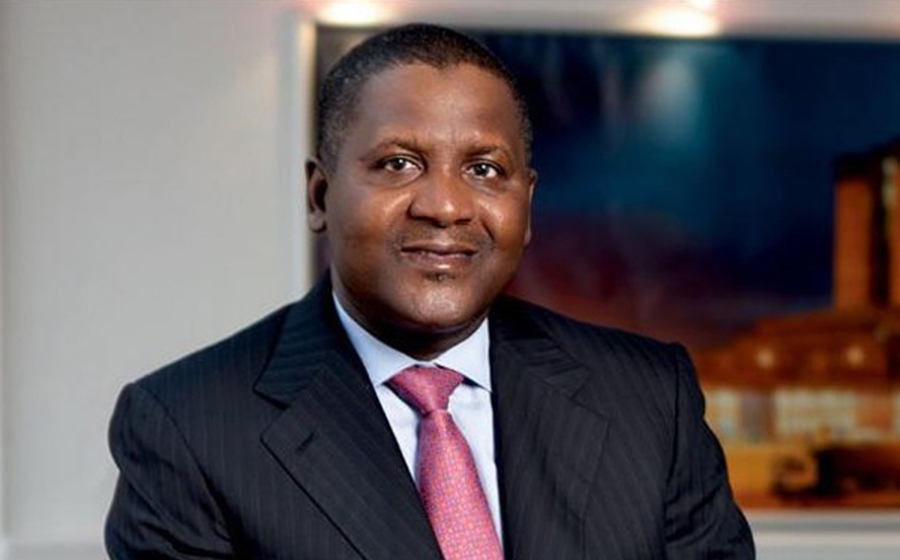
Nigeria must enhance its crude oil production capacity and effectively manage its crude supply to ensure adequate feedstock for domestic refineries, in order to transit from a net importer to a net exporter of petroleum products.
Chairman of Dangote Refinery and Petrochemicals Company Limited, Aliko Dangote, made this assertion during his keynote address at a summit held in Lagos by the Crude Oil Refinery Owners Association of Nigeria (CORAN). The event attracted top government officials and key stakeholders from the midstream and downstream sectors.
Addressing Nigeria’s potential as a refining hub, Dangote expressed concern that, despite producing over 3.4 million barrels of crude oil per day, Africa imports around 3 million barrels of petroleum products daily. He noted that these imports, primarily from Europe, Russia, and other regions, are estimated to cost approximately $17 billion in 2023. He urged that Nigeria could capitalise on this situation to become a net exporter of refined petroleum products, as the markets would be more competitively served from Nigeria.
“Both the crude oil and the petroleum products will travel shorter distances. The logistics costs of floating storage will be eliminated, and countries can purchase their petroleum product requirements just-in-time. Nigeria and Africa can become completely self-sufficient, and we can keep all the value on our shores. We have done it in cement, and we can certainly do it for petroleum products.
“It is worth noting that the Dangote Refinery already produces sufficient diesel and jet fuel to meet Nigeria’s demand. We recently started the production of PMS and will soon ramp up to meet Nigeria’s needs. Our refined products have been exported to diverse markets, including Europe, Brazil, the UK, the USA, Singapore, and South Korea,” he added.
Represented by Engr. Mansur Ahmed, Group Executive Director of Dangote Industries Ltd, Dangote emphasised that Nigeria must develop a refining capacity of 1.5 million barrels per day and prioritise domestic crude supply obligations to seize this opportunity. Acknowledging the arising and future challenges, he urged the government to incentivise investors, contrasting this with the Dangote Oil Refinery, which was built without any government incentives.
“…It is unfortunate that while countries like Norway are putting oil proceeds into a future fund, in Africa, we are spending oil proceeds from the future. We will also need to prioritise the implementation of domestic crude supply obligations. We will need to expand our crude oil production capacity to support demand from new refining capacity. The government of President Bola Ahmed Tinubu is taking active steps to achieve this through fast-tracking IOC divestments and other initiatives,” he stated.
Emphasising that global developments in the petroleum sector, particularly in Europe, will disrupt historical trade flows for refined petroleum products in Africa, Dangote stated that Nigeria is uniquely positioned to capitalise on this opportunity and become a significant player in the global oil industry. He called for consultation, collaboration, and cooperation among stakeholders.
“As a vibrant exporter of refined products, Nigeria will witness an improvement in its balance of trade and generate much-needed foreign currency. Nigeria’s potential as a refining hub is clearly not in doubt; let us work together to make it happen,” he urged.
The foremost industrialist noted that the summit’s theme, “Making Nigeria a Net Exporter of Petroleum Products,” would have seemed unrealistic a few years ago, and added that despite being Africa’s largest crude oil producer, Nigeria has historically relied on imports to meet its refined petroleum product needs.
However, he emphasised that the Dangote Petroleum Refinery and Petrochemicals is poised to transform Nigeria from a “net importer” to a “net exporter” of refined petroleum products, establishing the country as an emerging player in global downstream trade flows; with refined products already exported to various markets, including Europe, Brazil, the UK, the USA, Singapore, and South Korea.
Commending Dangote for this transformation, Chairman of IPPG/Waltersmith Refinery & Petrochemicals Co. Ltd, Abdulrazaq Isa, called on the government to support domestic refiners by ensuring the availability of crude, adhering to domestic crude supply obligations, and implementing effective pricing and monitoring measures to prevent smuggling.
Chairman of CORAN’s Board of Trustees and CEO of Integrated Oil & Gas, Captain Emmanuel Iheanacho (rtd), remarked that the Dangote Oil Refinery has set a high standard by producing Euro-V products, thus protecting citizens from exposure to high-sulphur products. He noted that transforming Nigeria into a net exporter will bring numerous benefits but reiterated the need for increased investment to boost crude production, lamenting that Nigeria loses approximately $83 billion annually by not meeting its OPEC quota.
While acknowledging that tank farms remain essential despite local refining, Iheanacho urged the Nigerian Midstream and Downstream Petroleum Regulatory Authority (NMDPRA), to consider cancelling import licences, as Nigeria can now meet its local demand.
Chairman of Major Energies Marketers Association of Nigeria (MEMAN), Huub Stokman, stated that Nigeria is on the verge of becoming Africa’s refining powerhouse, which will significantly boost the economy. The Chairman of CORAN, Momoh Oyarekhua, also expressed concern over challenges related to crude supply and stated that domestic refiners will work with regulators and stakeholders to address these issues.
The Minister of State for Petroleum Resources (Oil), Senator Heineken Lopkobiri, assured that the government would continue to refine frameworks to enhance crude production and support domestic refineries. His counterpart from the Ministry of Industry, Trade and Investment, Dr. Doris Uzoka-Anite, emphasised the Tinubu-led administration’s commitment to ensuring value addition for mineral resources before export.
Two panel sessions were held to discuss Nigeria’s downstream petroleum refining sector and its potential impacts, as well as policy strategies for achieving self-sufficiency in petroleum products.

We have recently deactivated our website's comment provider in favour of other channels of distribution and commentary. We encourage you to join the conversation on our stories via our Facebook, Twitter and other social media pages.

More from Peoples Gazette

States
Independence: NBA urges Nigerians to expect better future
The NBA said that ordinary Nigerians should be deriving benefit from the subsidy removal rather than hardship.

Agriculture
FG tasks ECOWAS on leveraging financing strategies for agroecology
The federal government has urged stakeholders in the agriculture and finance sectors in the West Africa region to leverage financing strategies to enhance agroecology practices

Politics
Katsina youths pledge to deliver over 2 million votes to Atiku
“Katsina State is Atiku’s political base because it is his second home.”
Anti-Corruption
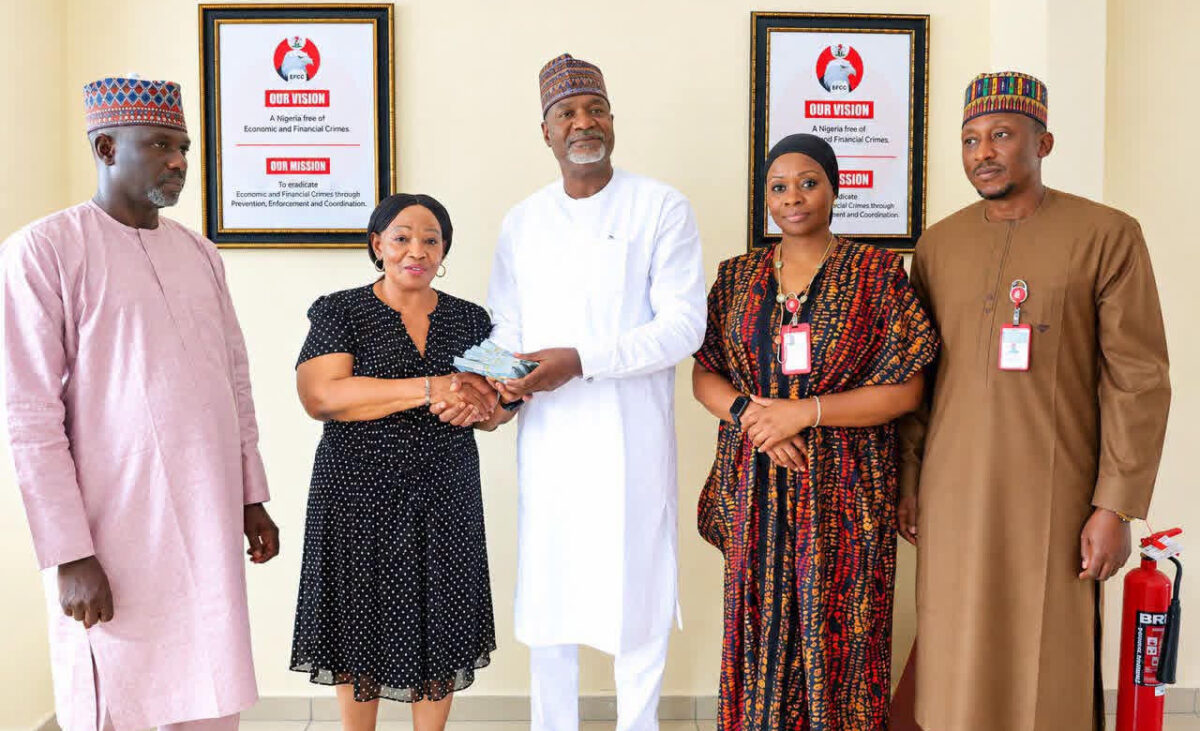
EFCC recovers $104,950 for U.S.-based businesswoman Adeshola Oshilaja defrauded by family friend
Ms Oshilaja commended the commission for its efforts and professionalism in handling the case.

Heading 5
OAU researcher secures $5 million grant to reduce maternal deaths in Nigeria
The statement noted that Mr Awowole’s work on PRIME targets reducing maternal deaths in Nigeria by 60% with Nigeria accounting for a quarter of global maternal deaths.

Abuja
Dutse residents commend road rehabilitation, seek quick completion
Mr Ishaku earlier promised that his administration would ensure the completion of ongoing projects.

States
Gov. Okpebholo receives late Orbih’s remains at Benin Airport
Mr Ize-Iyamu said Mr Orbih was a generous and compassionate man who helped countless people.
NationWide
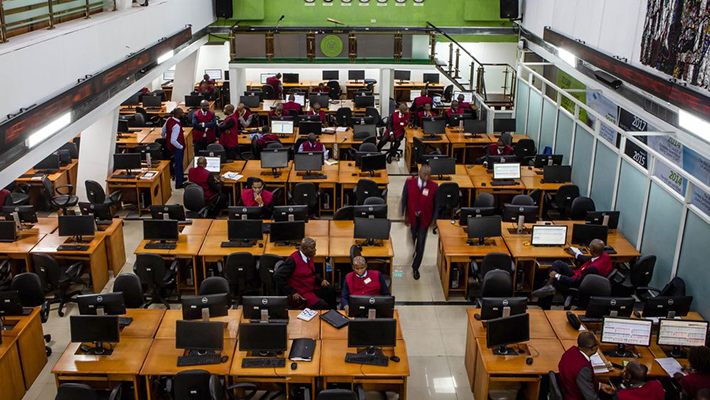
Stock market rebounds, adds N209 billion to investors’ wealth
Red Star Express led the gainers, appreciating by 9.76 per cent to close at N13.40 per share.
States
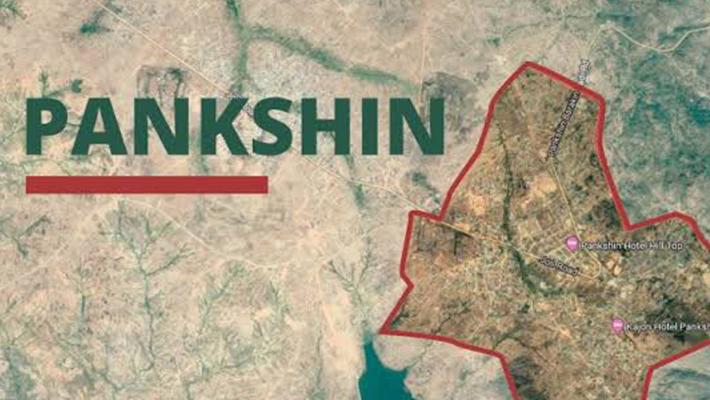
Chairman vows to end ritual killings in Plateau LG
Mr Gonung also called for stronger collaboration among security agencies.


