

Nigeria capable of generating four million tonnes of green ammonia yearly: Centre

The West African Science Service Centre on Climate Change and Adapted Land Use (WASCAL), says with the right investments and frameworks, Nigeria can generate four million tonnes of green ammonia annually by 2060.
Ammonia is an inorganic chemical compound of nitrogen and hydrogen used in making fertilisers.
The centre’s Executive Director, Prof. Emmanuel Ramde, stated this at the Nigeria4H2 Project Results Workshop and End of Project Stakeholders’ Interaction, on Friday in Abuja.
The Nigeria4H2 project is being implemented in collaboration with the WASCAL, the Federal University of Technology, Akure, Ondo State, Afe Babalola University, Ekiti State and the Federal University of Technology, Minna, Niger State, among others.
It seeks to assess the technical, infrastructural, regulatory and investment landscape to harness Nigeria’s green hydrogen potential to power transportation, produce electricity and manufacture fertilisers based on green ammonia in Nigeria.
Mr Ramde said this would enhance support for farmers, reduce dependence on imported fertilisers, strengthen national food security, and create thousands of green jobs across the value chain.
He said, “Renewable energy plays a critical role in the energy transition for Africa, and Nigeria has green hydrogen and renewable energy potential such as solar, wind and hydro power. In producing green hydrogen, it can play two roles – in the energy sector to power transportation and produce electricity, and in the agricultural sector, to produce fertiliser to boost food security in the region.’’
He underscored the need to integrate green hydrogen into agricultural policy by positioning green ammonia as a core component of Nigeria’s fertiliser strategy to boost productivity and sustainability.
He stated, “We are proud to report that, under three forward looking production scenarios developed within the framework of this project, Nigeria has the potential to unlock its potential. Nigeria has the potential not only to meet a significant share of its domestic fertiliser demand through green ammonia but also to establish itself as a global player in the emerging green economy. The scenarios indicate that with the right investments, clear regulatory frameworks, and adequate infrastructure, Nigeria could generate over four million tonnes of green ammonia annually by 2060 to produce fertiliser.
“But realising this potential will require action such as developing a national green hydrogen strategy by establishing clear targets, incentives, and regulatory frameworks to guide public and private investment in green hydrogen and ammonia. There is need to foster public-private partnerships to leverage international expertise and financing, accelerating technology transfer and local capacity building.’’
He expressed WASCAL’ s readiness to support Nigeria and governments across West Africa with technical advice and help to develop policies to promote green energy.
He thanked the German Federal Ministry of Research, Technology and Space (BMFTR) for its financial and technical support, without which the study would not have been possible.
Director-General, Energy Commission of Nigeria (ECN), Dr Mustapha Abdullahi, called for tax incentives for hydrogen investors, public-private sectors partner on pilot projects, to fast- track local content promotion in hydrogen tech training, research, and innovation by academia and NGOs.
Mr Abdullahi said the NIGERIA4H2 project, titled: “A Critical Analysis of the Potential, Infrastructure, and Enabling Framework Conditions for Green Hydrogen in Fertiliser Production in Nigeria,” fully aligned with the Renewed Hope Agenda of President Bola Tinubu.
Represented by Ibrahim Sulu, Director, Renewable Energy, ECN, Mr Abdullahi said Nigeria’s National Energy Policy, first approved by the Federal Executive Council in 2003, recognised hydrogen as a high-potential, environmentally friendly energy carrier.
He said the policy advocated for its integration into the national energy mix, alongside research, innovation, and capacity development to advance its applications.
He stated, “Today, developed and emerging economies are racing to diversify their energy portfolios with low-carbon sources, particularly hydrogen – classified by colour codes such as green, blue, and white. Given these global trends, the time is ripe for Nigeria to establish a robust National Hydrogen Policy to serve as the foundational pillar for accelerating Nigeria’s Green Hydrogen Strategy.’’
(NAN)

We have recently deactivated our website's comment provider in favour of other channels of distribution and commentary. We encourage you to join the conversation on our stories via our Facebook, Twitter and other social media pages.

More from Peoples Gazette

States
Independence: NBA urges Nigerians to expect better future
The NBA said that ordinary Nigerians should be deriving benefit from the subsidy removal rather than hardship.

Agriculture
FG tasks ECOWAS on leveraging financing strategies for agroecology
The federal government has urged stakeholders in the agriculture and finance sectors in the West Africa region to leverage financing strategies to enhance agroecology practices

Politics
Katsina youths pledge to deliver over 2 million votes to Atiku
“Katsina State is Atiku’s political base because it is his second home.”

States
Gov. Oborevwori pledges stronger partnership with traditional rulers
The governor described traditional rulers as indispensable partners in governance.
Heading 2
NMDPRA moves to curb tanker crashes, sensitises drivers
He noted that the transportation of petroleum products remained critical to Nigeria’s energy security and economic development.
World
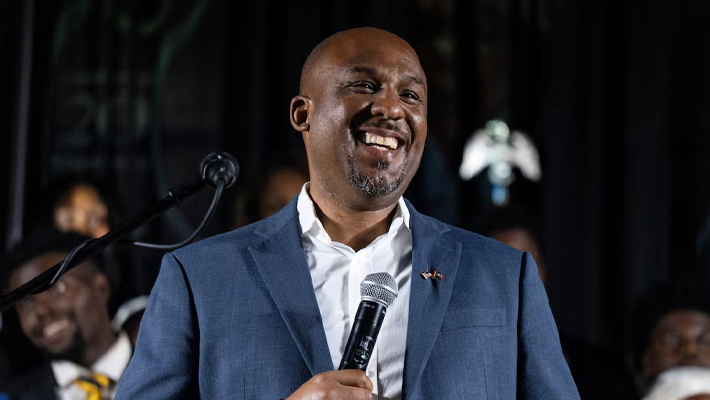
Scott Colom emerges first Black senator-elect in Mississippi since 1874
Mr Colom, 43, scored 49.2 per cent of the votes to defeat incumbent Senator Cindy Hyde-Smith.

Lagos
APC condemns disruption of Obi’s NDC town hall meeting in Lagos
The APC enjoined political parties and candidates to campaign on issues that uplift Nigerians’ lives and not instigate violence at political events.

Hot news Home top
I left Obi because my trust, loyalty were betrayed: Yunusa Tanko
Mr Tanko’s exit from the Obidient Movement is the latest in a series of departures by Mr Obi’s followers.

Heading 1
2027: ASUU warns officials against endorsing political parties, candidates
ASUU said members were free to exercise their constitutional rights to vote and participate in the electoral process.


