

Nigeria far from achieving 15% healthcare pledge after 22 years: WHO
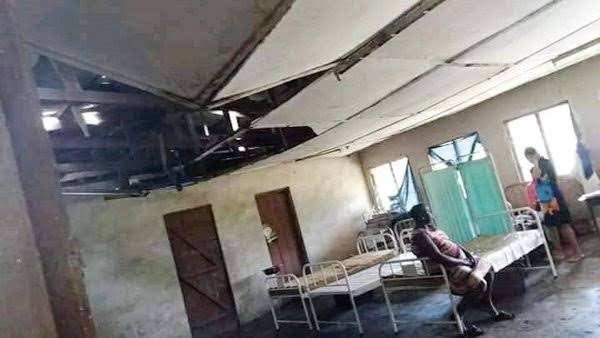
The World Health Organisation (WHO) says Nigeria is still far from meeting the 2001 15 per cent Abuja declaration on improving the health sector.
Walter Mulombo, WHO country representative to Nigeria, said this in Abuja in a meeting with journalists.
“In Nigeria, where a proposed target was set that 15 per cent of total government budget should go to health, until today we are still far from achieving the target,’’ he said.
In April 2001, heads of state of African Union countries met and pledged to set a target of allocating at least 15 per cent of their annual budget to improve the health sector.
Mr Mulombo advocated more funding of the health sector to meet the said target, saying the sector was not adequately funded, compared to areas such as defence and army, among others.
According to him, health is a human right and not a luxury or consumable; the more politically wise decisions the country makes now will benefit this nation.
“We need to start talking about human rights violations because it is not acceptable for any child to miss a vaccine,’’ he said.
He said that some areas where the organisation accessed showed that 80 per cent of the money went into tertiary hospitals.
According to him, primary healthcare is where 80 per cent of the population in the communities get their first exposure to healthcare services.
“The spending itself is distorted. That is the biggest challenge that has generated everything that we have seen.
“Lack of adequate budget to prepare responses to a pandemic, for instance, we have to struggle in many places,’’ he said.
According to him, the main challenge is the way health is featured as a political choice, and unfortunately, many governments do not live by the standard.
“Many countries continue to consider health as a luxury or something that is costing the government money, whereas it should have been taken like an enabling factor for economic and socioeconomic development,’’ Mr Mulombo said.
He said it was worrisome the way countries were dealing with social determinants of health, factors like socioeconomic status, education, neighbourhood and physical environment, employment, social support networks, and access to health care.
According to him, addressing social determinants of health is important for improving health and reducing longstanding disparities in health and healthcare.
Mr Mulombo advocated more facilities with dialysis machines and more expensive equipment to combat the noncommunicable diseases as such was part of the organisation’s challenges.
He said that the organisation also had the challenges of demographic transition because the facilities that were used during the colonial period were still the same in Africa, although It may be possible that Nigeria had the same situation.
“The country is not expanding in the space of demographic transition, and the way the population is increasing, Nigeria is projected to have more than 400 million population by 2040, 2050,’’ he said.
Mr Mulombo said there was also the problem of how the country prepares for the response to any big outbreaks of pandemics.
He said the COVID-19 pandemic was not expected and, as such, caused havoc in many counties.
April 7 every year was dedicated by the United Nations as World Health Day, and 2023 also marked the 75th anniversary of the organisation.
The day’s theme was: “Health for All -Strengthening Primary Health Care to Build Resilient Systems.”
(NAN)

We have recently deactivated our website's comment provider in favour of other channels of distribution and commentary. We encourage you to join the conversation on our stories via our Facebook, Twitter and other social media pages.

More from Peoples Gazette

States
Independence: NBA urges Nigerians to expect better future
The NBA said that ordinary Nigerians should be deriving benefit from the subsidy removal rather than hardship.

Agriculture
FG tasks ECOWAS on leveraging financing strategies for agroecology
The federal government has urged stakeholders in the agriculture and finance sectors in the West Africa region to leverage financing strategies to enhance agroecology practices

Politics
Katsina youths pledge to deliver over 2 million votes to Atiku
“Katsina State is Atiku’s political base because it is his second home.”

Hot news Home top
Chris Brown sentenced for London nightclub attack
Brown,37, had repeatedly struck Abe Diaw with a tequila bottle in the VIP section of Tape, a nightclub in London on February 19, 2023.

World
London’s Oxford Street becomes traffic-free
City officials said the revitalisation plan will create new opportunities for the famous street, which brings about $33 billion annually to London’s economy.
Health
Borno NMA sets up committee to check quackery
The NMA chair said that suspected cases of quackery would be reported to the appropriate authorities for investigation and necessary action.

Sport
Burna Boy headlines NFL’s first regular-season game in France
The performance marked the return of Burna Boy to the Stade de France after he headlined a sold-out 80,000-capacity concert at the venue last year.

Faith
Church chains Jesus’ statue to prevent another fall after killing Ecuadorian priest
This was captured in a viral video on social media showing the church taking the extra precaution by securing the crucifix with chains.

States
Ogun man arrested, arraigned for stealing iron rods
A 23-year-old man, Michael Gbadero, stood before an Abeokuta Magistrates’ Court in Isabo on Monday, accused of stealing iron rods worth N460,000.


