

Nigeria must rely on domestic resources for sustainable economic growth: Edun

The Minister of Finance and Coordinating Minister of the Economy, Wale Edun, has said Nigeria must rely on domestic resource mobilisation for sustainable economic growth.
Mr Edun, who said this during a news conference in Abuja on Friday, also called for investment-driven growth to navigate a fragile and uncertain global economic environment.
He said that the discussions at major global platforms, including the G-24, revealed a shifting international landscape marked by uncertainty, fragmentation and a retreat from multilateralism.
According to him, developing economies are witnessing net negative financial flows, as debt servicing outpaces inflows from foreign direct investment (FDI) and overseas development assistance (ODA).
He said, “In 2024 alone, developing countries paid about 163 billion dollars in debt servicing, while ODA stood at about 42 billion dollars and FDI at roughly 97 billion dollars. This shows that more is flowing out than coming in.
“I recently attended international meetings as part of Nigeria’s global investment drive, the message from international engagements was clear.
“In an age of slow global growth and elevated interest rates, we are largely on our own. We must mobilise domestic revenues, attract investments, boost productivity and create jobs to reduce poverty.”
Mr Edun said that the country currently chaired the G-24, and used the platform to advocate fairer credit ratings and a more equitable global financial architecture.
He said that weak and conservative credit assessments had contributed to higher borrowing costs for African countries.
He said that Artificial Intelligence (AI) was expected to widen inequality in the short term before potentially delivering broader benefits in the long run.
The minister said that the country’s macroeconomic reforms had begun yielding results, with improved growth momentum and greater stability.
“The economy recorded 3.1 per cent growth in the first quarter of 2025, rising to 4.23 per cent in the second quarter and 3.98 per cent in the third quarter. We are projecting fourth quarter growth between 4.2 and 4.5 per cent.
“The trajectory has moved from about two per cent growth to over four per cent, and our goal is to reach at least seven per cent per annum,” he said.
He said that seven per cent annual growth rate would outpace population growth and significantly reduce poverty.
He said that countries such as China and India had leveraged sustained high growth to lift millions out of poverty.
Mr Edun said that oil and gas now accounted for less than four per cent of GDP, down from 5.65 per cent in 2019.
According to him, oil exports have also declined to about 65 per cent of total exports from 87 per cent in 2019.
“This shows reduced reliance on oil and a gradual shift toward non-oil sectors, even though oil remains important for foreign exchange earnings,” he said.
The minister said that the improved macroeconomic stability to monetary tightening measures by the Central Bank of Nigeria had helped to moderate inflation, stabilise the exchange rate, build reserves and restore investor confidence.
He said that the next phase of reforms would focus on scaling up investment to sustain growth, particularly in an environment of high global interest rates.
Mr Edun said that the 2026 Appropriation Bill, presently before the National Assembly, was designed to support investment-led growth, maintain fiscal discipline and prioritise efficiency and impact.
He said that the economic management team had engaged the senate appropriations committee to clarify issues in the proposed budget and improve implementation.
He also commended President Bola Tinubu on the recent executive order mandating the direct remittance of certain oil sector revenues to the federation account.
He said that the directive would strengthen fiscal federalism, boost public finances and enhance the capacity of government at all levels to fund public services.
(NAN)

We have recently deactivated our website's comment provider in favour of other channels of distribution and commentary. We encourage you to join the conversation on our stories via our Facebook, Twitter and other social media pages.

More from Peoples Gazette

Agriculture
FG tasks ECOWAS on leveraging financing strategies for agroecology
The federal government has urged stakeholders in the agriculture and finance sectors in the West Africa region to leverage financing strategies to enhance agroecology practices

Politics
Katsina youths pledge to deliver over 2 million votes to Atiku
“Katsina State is Atiku’s political base because it is his second home.”

World
Three teenagers die after car veers into river
Police said the fourth person, a 17-year-old survivor, will be questioned.
Showbiz
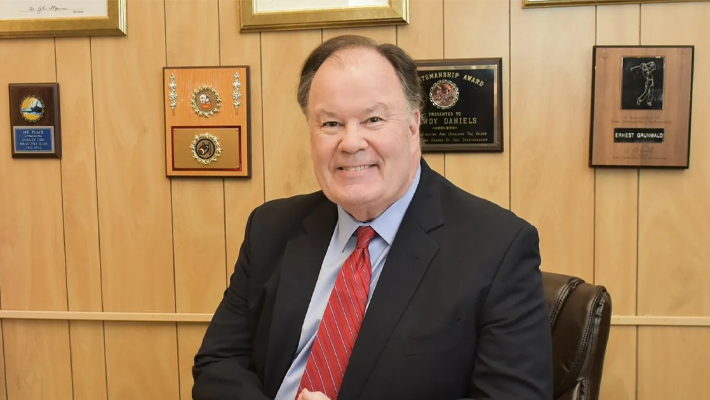
Saved by the Bell actor Dennis Haskins dies at 75
His agent, Jay Schachter, confirmed the news of his death, which occurred on Sunday in Burbank, California.
Africa
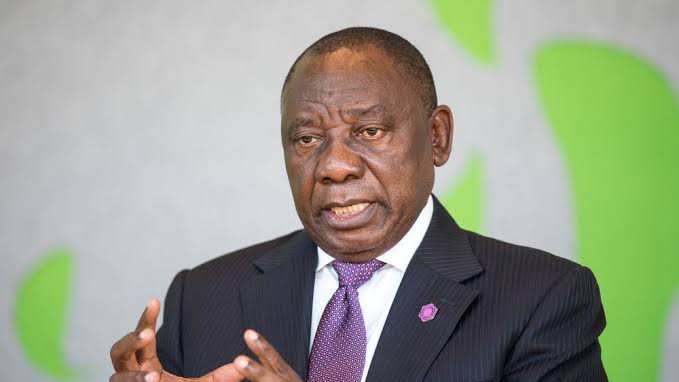
Ramaphosa says women’s anger justified as 11th body found in Ekurhuleni; assures rapid investigations
“The nation is angry. The women of South Africa are angry, and their anger is justified. I too share that anger,” Mr Ramaphosa said.
States
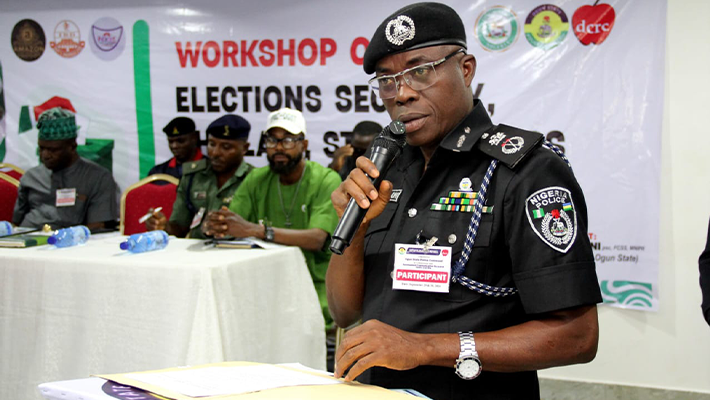
2027: Ogun CP calls for early pre-election security preparations
“Election security is not an election-day assignment,” Mr Ojajuni said.

Heading 5
U.S. Supreme Court gives nod to Trump govt to restart third-country deportation of migrants
The Supreme Court’s 6-3 ruling halts an earlier appeals court ruling, pending a hearing on the policy in December.

States
EFCC arrests man with undeclared $265,000 at Kano airport
The Kano Zonal Directorate of the EFCC arrested a suspect, Adam Musa Adam, with $265,000 at the airport.


