

Nigeria, other African nations can generate $469 billion in annual revenue without raising tax: AfDB

Nigeria and other African countries can unlock more than $469 billion in additional annual revenue without raising statutory tax rates, according to the African Development Bank.
Kevin Urama, chief economist/vice president for economic governance and knowledge management at AfDB, said this on Wednesday in Abuja.
He said the additional revenue could be mobilised without increasing tax rates, stressing that stronger domestic resource mobilisation remained the most sustainable source of development financing for the continent.
According to him, improving tax administration through digitalisation, strengthening public institutions and enhancing service delivery would significantly increase tax compliance.
“We see that by improving tax administration through digitisation and other reforms, just by adopting best practices, the continent can mobilise more than $469 billion extra without increasing tax rates. It is simply about improving efficiency and strengthening compliance,” he said.
Mr Urama said many citizens were reluctant to pay taxes because they often provided essential services such as electricity, water and road infrastructure for themselves. He noted that governments could improve voluntary tax compliance by delivering quality public services, strengthening transparency and ensuring prudent management of public resources.
The economist said the AfDB was supporting African countries, including Nigeria, in strengthening domestic revenue mobilisation by building the capacity of national revenue authorities.
He added that the bank had also developed a Public Service Delivery Index to encourage governments to improve service delivery and strengthen the social contract between citizens and the state.
Mr Urama said stronger domestic resource mobilisation would reduce excessive dependence on external financing and provide countries with greater fiscal space to pursue development priorities.
(NAN)

We have recently deactivated our website's comment provider in favour of other channels of distribution and commentary. We encourage you to join the conversation on our stories via our Facebook, Twitter and other social media pages.

More from Peoples Gazette

States
Independence: NBA urges Nigerians to expect better future
The NBA said that ordinary Nigerians should be deriving benefit from the subsidy removal rather than hardship.

Agriculture
FG tasks ECOWAS on leveraging financing strategies for agroecology
The federal government has urged stakeholders in the agriculture and finance sectors in the West Africa region to leverage financing strategies to enhance agroecology practices

Politics
Katsina youths pledge to deliver over 2 million votes to Atiku
“Katsina State is Atiku’s political base because it is his second home.”

Africa
Morocco 2026: Flamingos edge Venezuela 1-0, face Brazil in Semi-final
Brazil had earlier secured a 2-1 win over China in their quarter-final encounter.
Faith
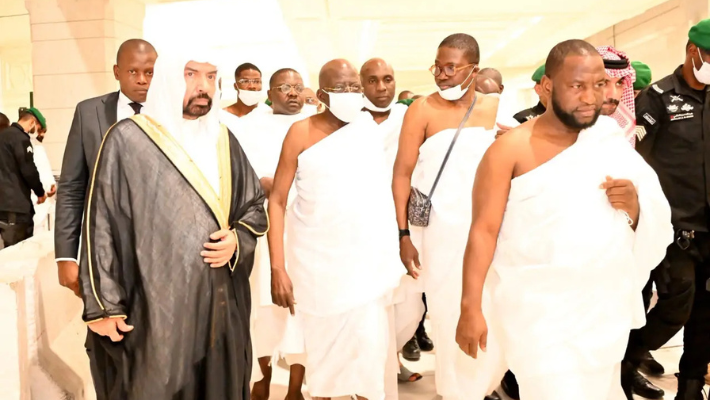
Makkah: Tinubu prays for Nigeria at dinner for members of delegation
The President also sought divine guidance for the country’s leaders and protection for Nigerians at home and abroad.

States
Kwara United suffer 2-1 defeat to Bendel Insurance
The defeat leaves Kwara United in 14th position on the NPFL table with 12 points from 11 matches.

NationWide
Negotiating council defends N70,000 monthly transport allowance for civil servants
Mr Gbenga said the allowance formed part of an agreement reached between the government and organised labour.

Faith
Some Lagos mosques risk demolition, say experts
Mr Abou-Nolla urged mosque managers to obtain title documents before commencing construction and comply with relevant legal procedures.
NationWide
Customs deploy AI tools to curb fake news, online scams
Mr Adeniyi noted that AI-assisted risk management helped assess imported goods and categorise them according to their respective risk levels.


