

Nigeria records gains against illicit finance, asset recovery: CISLAC
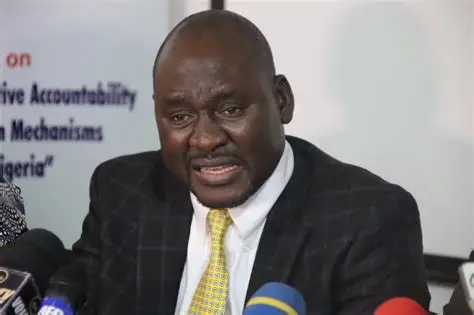
Nigeria has recorded significant progress in tackling illicit financial flows, recovering assets and strengthening anti-money laundering enforcement, the Civil Society Legislative Advocacy Centre (CISLAC) says.
CISLAC, however, said consolidating the gains would require stronger implementation, greater institutional independence and increased transparency in managing public resources.
Auwal Ibrahim Musa-Rafsanjani, CISLAC’s executive director and head of Transparency International Nigeria, said this at the launch of Nigeria’s ninth SDG 16 Shadow Report.
The report was unveiled on the margins of the 81st United Nations General Assembly in New York.
“Nigeria has recorded important institutional and enforcement actions, particularly in the areas of illicit financial flows, asset recovery and anti-money laundering. These developments are significant,” Mr Rafsanjani said.
The report covers developments from July 2025 to August 2026 and independently assesses Nigeria’s progress towards Sustainable Development Goal 16. SDG 16 promotes peaceful and inclusive societies, access to justice and effective, accountable institutions.
Mr Rafsanjani said Nigeria had also recorded legislative and policy advances that could support stronger governance and accountability. He said those achievements showed the institutional foundations on which the country could accelerate reforms before the 2030 SDG deadline.
The CISLAC chief, however, said implementation remained the major challenge.
“While Nigeria has made legislative and policy advances, implementation and enforcement remain weak, inconsistent and, in some cases, undermined by political interference,” he said.
According to him, progress in asset recovery must now be accompanied by greater transparency over how recovered funds and properties are managed.
He called for effective post-recovery tracking to enable Nigerians to know what was recovered, where it was kept and how it was eventually utilised.
“Without effective post-recovery tracking and public accountability, recovered assets can become vulnerable to mismanagement and the cycle of corruption can be repeated,” he said.
Mr Rafsanjani also recommended stronger safeguards to protect public institutions from political capture and interference.
Institutions established to protect the public interest, he said, must operate independently, transparently and accountably. He called for improved asset declaration systems and stronger mechanisms to address unexplained wealth among public officials.
The report also identified the judiciary, security institutions and electoral bodies as requiring stronger institutional safeguards to reinforce public confidence.
Mr Rafsanjani said effective vetting of political appointees, transparent electoral processes and integrity within the justice system were essential to sustainable democratic governance. He also raised concern over Nigeria’s security challenges, particularly what he described as the growing commercialisation of kidnapping for ransom.
“This is not simply a security challenge. It has profound implications for governance, economic development, human rights and the rule of law,” he said.
According to him, insecurity affects agriculture, education, businesses, mobility and citizens’ confidence in public institutions.
“When citizens cannot live, work or travel without fear, the foundations of peaceful and inclusive societies are weakened,” Mr Rafsanjani said.
(NAN)

We have recently deactivated our website's comment provider in favour of other channels of distribution and commentary. We encourage you to join the conversation on our stories via our Facebook, Twitter and other social media pages.

More from Peoples Gazette

States
Independence: NBA urges Nigerians to expect better future
The NBA said that ordinary Nigerians should be deriving benefit from the subsidy removal rather than hardship.

Agriculture
FG tasks ECOWAS on leveraging financing strategies for agroecology
The federal government has urged stakeholders in the agriculture and finance sectors in the West Africa region to leverage financing strategies to enhance agroecology practices

Politics
Katsina youths pledge to deliver over 2 million votes to Atiku
“Katsina State is Atiku’s political base because it is his second home.”
States
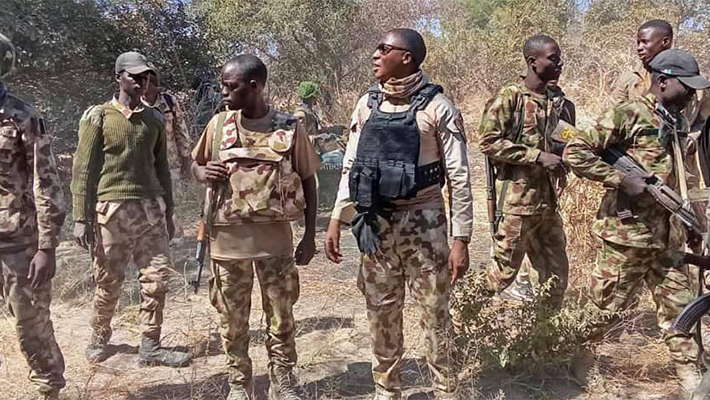
Troops rescue three kidnap victims in Kebbi community
Mr Olaniyi said the victims were later handed over to the district head of Dirindaji, Usman Muhammad.

States
One killed as car crashes, bursts into flames on Lagos bridge
LASTMA said its officials are managing traffic to facilitate the free flow of vehicles.
States
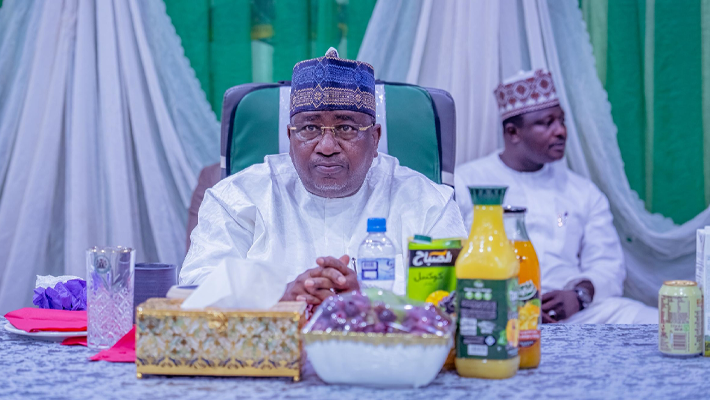
Kebbi govt delivered 25 major projects, awarded 13 new contracts: Commissioner
Mr Ahmed-BK said the state’s road network had suffered decades of neglect, leaving residents with poor connectivity and decaying facilities.
States
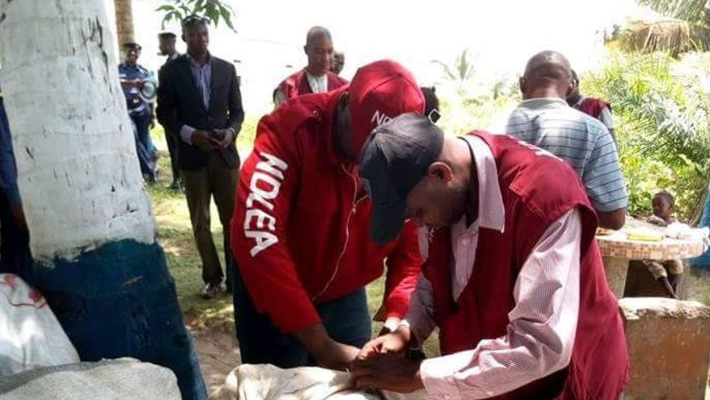
NDLEA arrests South African woman, U.S.-based grandmother over drug trafficking
Mr Babafemi said the NDLEA operatives recovered 5,820 pills of diazepam, 780 tablets of tramadol, 3.7kg of skunk, and 230.25 litres of skuchies.

Abuja
Tiler arrested for allegedly killing hotel worker in Abuja
The police boss urged residents to shun violence and self-help during disagreement.
States
Ogun police arrest suspected railway vandal, recover 16 stolen iron rods, gas cylinders
The 36-year-old suspect was apprehended after operatives intensified surveillance in the area on Friday.


