

Nigeria@66: Industrial sector shakeholders seek productivity over stability
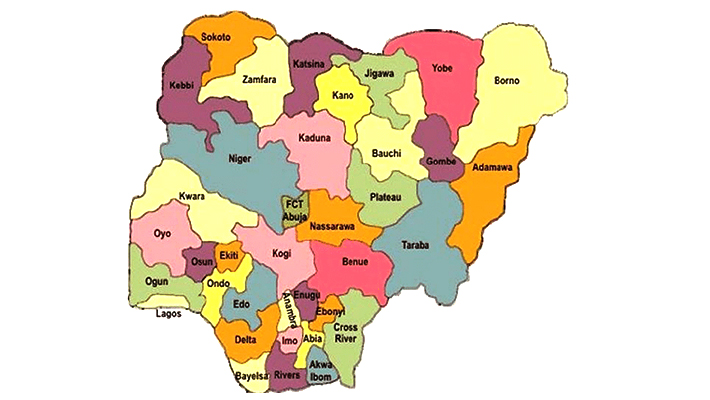
As Nigeria marks its 66th independence anniversary, stakeholders across the industrial sector have called on the federal government to move beyond macroeconomic stabilisation and prioritise productivity, competitiveness and improved living standards.
The call was made in separate statements on Wednesday in Lagos.
President of the Lagos Chamber of Commerce and Industry (LCCI), Leye Kupoluyi, stressed that improvements in key economic indicators must translate into lower production costs, stronger purchasing power, increased investment and job creation.
He noted that the government’s economic reform programme had delivered encouraging signs of macroeconomic stabilisation.
According to him, they include stronger real gross domestic product (GDP) growth, moderating inflation, improved external reserves, and greater stability in the foreign exchange market.
Mr Kupoluyi also described the recent reduction in the Monetary Policy Rate (MPR) to 23 per cent as a welcome signal of growing confidence in the disinflation process.
He, however, said macroeconomic stability must ultimately translate into improved welfare, stronger purchasing power, lower production costs and employment.
According to him, the critical test of the economic recovery is whether the gains from stabilisation can improve household welfare and business operating conditions.
He said despite declining inflation, the cost of essential goods and services remained beyond the reach of many households because prices had risen significantly over the past several years.
Mr Kupoluyi said food, transportation, housing, healthcare, education and energy continue to absorb a large share of disposable income.
On businesses, he said high electricity and alternative energy costs, diesel, logistics, finance, imported raw materials, regulatory compliance and multiple taxes continued to constrain competitiveness.
He stated, “We call for complementary measures to ensure that the reduction in the MPR translates into more affordable credit, particularly for micro, small and medium enterprises (MSMEs) and productive-sector businesses.”
The LCCI president also urged the National Credit Guarantee Company to facilitate greater access to credit for small businesses.
On manufacturing, Mr Kupoluyi said the sector must become a major channel for converting economic growth into mass employment, higher productivity and improved household incomes.
He called for a comprehensive industrial competitiveness programme focused on reliable and affordable energy, long-term finance, predictable trade and tariff policies, local supply-chain development and industrial infrastructure.
“We need to produce more in Nigeria, employ more Nigerians, and reduce the country’s dependence on imported goods,” he said.
Similarly, Chief Executive Officer, Centre for the Promotion of Private Enterprises (CPPE), Muda Yusuf, said Nigeria’s economic transformation remained incomplete because the country had diversified what it produced more than what it exported.
Mr Yusuf said while the economy had recorded important reforms and investments in sectors such as telecommunications, banking, cement, fertiliser and refining, productivity remained constrained by infrastructure deficits, insecurity, costly power and logistics.
He said real GDP growth rose from 3.38 per cent in 2024 to 3.87 per cent in 2025 and reached 4.43 per cent year-on-year in the second quarter of 2026.
He also noted that headline inflation stood at 15.39 per cent in August, while the Central Bank of Nigeria (CBN) reduced its policy rate to 23 per cent in September.
“While these gains provide a stronger foundation, they have yet to translate sufficiently into relief for households and firms,” Mr Yusuf said.
He urged the government to prioritise power supply, security along farming and commercial corridors, ports and logistics, agricultural productivity, industrial competitiveness and enterprise-focused skills.
Mr Yusuf said support for industry should be tied to investment, efficiency and export performance, with the objective of reducing the cost of production and expanding the supply of affordable goods and services.
He also stressed the need for coordinated action by the three tiers of government, saying the benefits of national reforms would ultimately be realised where people live and businesses operate.
Mr Yusuf said the federal government should sustain macroeconomic stability and address national security, power and transport priorities.
“The state and local governments should improve infrastructure and reduce the levies and administrative burdens confronting businesses.
“The ultimate measure of reform should be reflected in lower transport and production costs, higher farm yields, reliable public services and more productive jobs,” he said.
Meanwhile, an industrialist, Funlayo Bakare-Okeowo, said the reported growth in the broader economy had yet to translate into commensurate growth for existing manufacturers.
“The GDP is growing, agreed, but why is it not reflected in the manufacturing sector?” she noted.
Ms Bakare-Okeowo said factories were closing while existing manufacturers were struggling to expand, noting that much of the new factory investment appeared to be coming from foreign investors.
She called for more deliberate government intervention in the manufacturing sector, particularly through improved access to affordable finance.
According to her, manufacturers have struggled to access funds from development finance institutions (DFIs) in spite of continued advertisements inviting businesses to apply for loans.
“For the past two years, no one has been able to borrow from them, yet they continue to advertise that manufacturers should come and borrow,” she said.
Ms Bakare-Okeowo described the situation as unacceptable, urging government-owned DFIs to address the constraints preventing them from effectively financing manufacturers.
She also questioned the ability of manufacturers to sustainably access commercial credit at double-digit interest rates.
“Can any manufacturer borrow at this double digit?” she asked.
The industrialist, therefore, called for a more intentional government approach to addressing the financing and operating challenges confronting manufacturers.
Ms Bakare-Okeowo said the focus should not only be on attracting new factories but also on enabling existing manufacturers to survive, reinvest and expand their capacity.
She said strengthening existing industrial capacity was critical to creating jobs, deepening local supply chains and reducing Nigeria’s dependence on imported goods.
“Manufacturing is the bedrock of every economy,” Ms Bakare-Okeowo said
(NAN)

We have recently deactivated our website's comment provider in favour of other channels of distribution and commentary. We encourage you to join the conversation on our stories via our Facebook, Twitter and other social media pages.

More from Peoples Gazette

States
Independence: NBA urges Nigerians to expect better future
The NBA said that ordinary Nigerians should be deriving benefit from the subsidy removal rather than hardship.

Agriculture
FG tasks ECOWAS on leveraging financing strategies for agroecology
The federal government has urged stakeholders in the agriculture and finance sectors in the West Africa region to leverage financing strategies to enhance agroecology practices

Politics
Katsina youths pledge to deliver over 2 million votes to Atiku
“Katsina State is Atiku’s political base because it is his second home.”

Politics
Church leader endorses Hamzat, seeks protection for Igbo businesses in Lagos
Obafemi Hamzat, the All Progressives Congress governorship flag-bearer in Lagos, has been endorsed by the founder of the Zion Prayer Movement Outreach, Chukwuebuka Obi.

Politics
Brazil re-elects Lula, Bolsonaro refuses to concede
President Lula da Silva narrowly defeated his major challenger, Flávio Bolsonaro, in Brazil’s presidential election held on Sunday to return for a fourth term.
Education
AGILE improves learning conditions for 778,000 students in Katsina
The World Bank-supported Adolescent Girls Initiative for Learning and Empowerment (AGILE) Project has improved learning conditions for 778,000 students in Katsina.
Politics
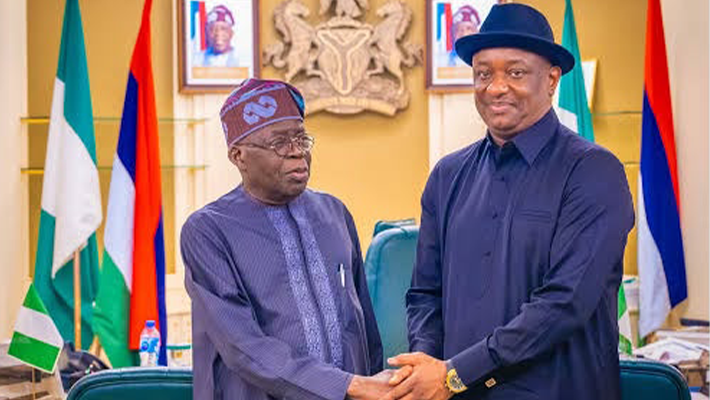
Tinubu appoints Keyamo director of APC air mobilisation
President Bola Tinubu has appointed aviation minister Festus Keyamo as director of air mobilisation for the All Progressives Congress’ 2027 re-election campaign.

Sport
NPFL: Barau FC, Kwara United play 1-1 draw in Kano
Barau FC and Kwara United drew 1-1 in their Nigeria Premier Football League (NPFL) encounter at Sani Abacha Stadium, Kano, on Sunday.

Sport
Euromatch NPFL: Matchday 10 results
Here are the results of the Matchday 10 fixtures in the ongoing 2026/2027 Euromatch Nigeria Premier Football League (NPFL), played on Sunday.


