

Nigerian political elite’s indifference to abducted Oyo schoolchildren
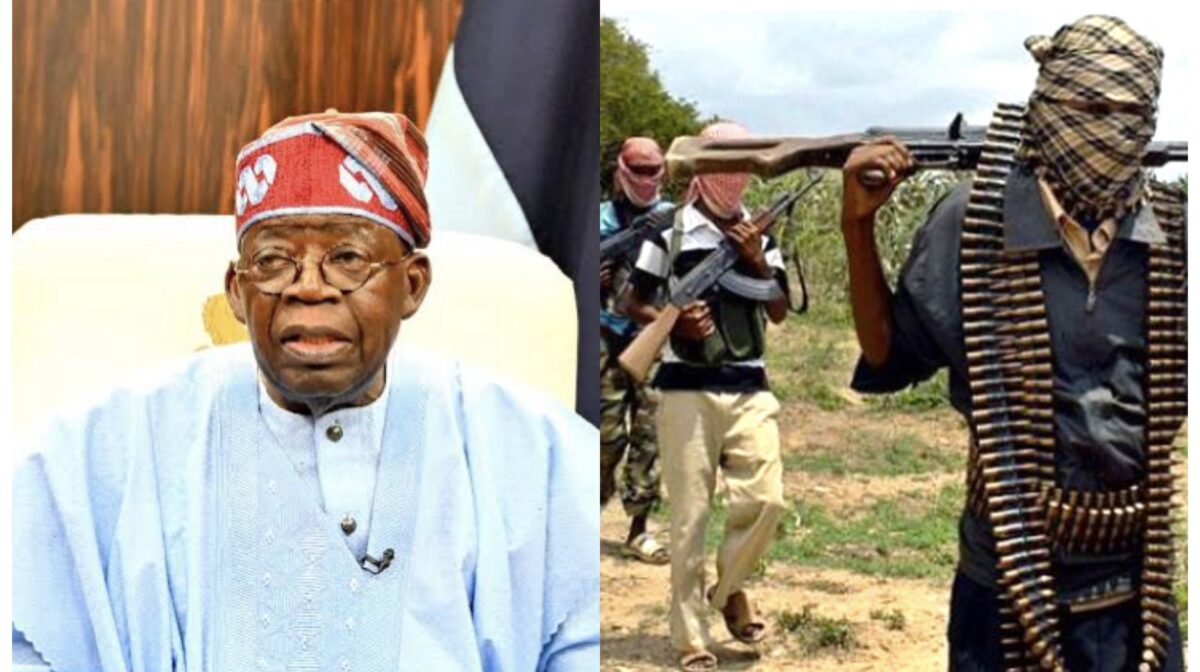
Nigeria’s political elite have once again failed Nigerians. During campaigns, they often claim they are seeking office to serve the people. However, in reality, all they ever care about is their political survival. Their lukewarm reactions to the May 15 mass abduction of schoolchildren and teachers in the Oriire Local Government Area (LGA) of Oyo State prove this.
On that unfortunate day, heavily armed gunmen had simultaneously raided three schools, namely Community Grammar School, Baptist Nursery and Primary School, and L.A. Primary School in Esiele and Yawota communities of Oriire LGA. They abducted between 46 and 49 people, including teachers, teenagers, and toddlers as young as two years old.
After retreating deep into the expansive forest corridors stretching across multiple states, and positioning the children and teachers around them as human shields to prevent military airstrikes, the abductors would later release highly distressing social media footage showing the victims being tortured. They brutally beheaded a captured mathematics teacher, Michael Oyedokun, on camera, after killing another teacher during the initial raid.
For a public that has grown increasingly desensitised to the country’s recurring crises, the mass abduction has sparked an unusually fierce wave of outrage and collective action. In response, the Nigeria Union of Teachers (NUT) declared an indefinite shutdown of public schools across the state, insisting that teachers would not return to the classroom until their abducted colleagues and pupils are rescued and safely reunited with their families.
Public outrage has reached a boiling point, fuelled by what many Nigerians perceive as the political class’s indifference to the kidnapping. While the citizens agonise over the fate of the abducted Oyo schoolchildren and demand their safe return and the swift prosecution of their kidnappers, Abuja’s corridors of power appear largely insulated from the grief and anxiety gripping the country. True to type, for the political class, it is business as usual.
The crisis has exposed a widening gulf between the expectations of ordinary Nigerians and the priorities of the political leaders. While families endure the agony of waiting for news of their abducted children and teachers, much of the political class appears preoccupied with the manoeuvring and calculations ahead of the 2027 national elections.
Instead of mounting relentless pressure on security agencies to secure the victims’ release, supporters of the ruling All Progressives Congress (APC) party seem more concerned that the tragedy could be exploited for politics. Then there are the politicians who have responded with offers of money, seemingly unaware that grieving parents are not asking for compensation, but the safe return of their children.
It’s been weeks since the schoolchildren and their teachers were abducted, and they remain in captivity. Their abductors are no longer merely demanding money. Reports indicate that they are making political demands, including weapons, concessions, and even influence over Nigeria’s future laws. Nigerians should pause for a moment and consider what that means. This is no longer just a kidnapping. It is an assault on the authority of the Nigerian state.
When criminals can storm schools in broad daylight, abduct children and teachers, hold them for weeks, make demands of the government, and still retain the upper hand, it is clear that something fundamental has broken. The tragedy in Oyo is about far more than the fate of the kidnapped schoolchildren; it is about the fate of Nigeria itself. This is not a crisis affecting only victims’ families. It affects every Nigerian, including politicians who may imagine themselves shielded from its consequences, and therefore are unbothered. They are not.
Every Nigerian, politicians included, has a stake in ensuring that the Nigerian government remains more powerful than those who challenge its authority. A government’s strength is measured by the confidence that its citizens have in its ability to protect them. When people begin to doubt that their government can safeguard lives during a national emergency, trust starts to collapse. And when trust in public institutions disappears, society risks sliding into a dangerous state in which the rule of law weakens and order gradually gives way to chaos.
The Oyo crisis demands a national reckoning and should force Nigerians into a difficult but necessary conversation. How did Nigeria get here? How did a country with one of Africa’s largest security budgets become a place where terrorists can abduct schoolchildren for weeks and dictate terms to the government? How did armed groups become so emboldened that ransom is no longer enough, that they now seek political concessions?
The answers are uncomfortable. For years, Nigeria treated insecurity as a series of isolated incidents rather than as symptoms of a deeper institutional failure. Each attack produces the usual public outrage, followed by official visits. Then public attention shifts until the next tragedy occurs. The result is what we are witnessing today. Criminal networks that once sought quick ransom payments are evolving into more ambitious actors. They are testing the limits of state authority and discovering that those limits are weaker than many imagined.
Armed groups are learning that the Nigerian government at all levels is weak and that there are few or no consequences for their crimes. This is dangerous for every Nigerian, irrespective of status. The rescue of the schoolchildren and teachers must become an urgent national priority. Not because it will solve the country’s security crisis overnight, but because failure would send an even more dangerous message: that kidnapping is an effective strategy for extracting concessions from the Nigerian government. No sovereign nation can afford to communicate that message.
Ojo Maduekwe is a communications professional. Write him: mrmaduekwe@gmail.com

We have recently deactivated our website's comment provider in favour of other channels of distribution and commentary. We encourage you to join the conversation on our stories via our Facebook, Twitter and other social media pages.

More from Peoples Gazette

States
Independence: NBA urges Nigerians to expect better future
The NBA said that ordinary Nigerians should be deriving benefit from the subsidy removal rather than hardship.

Agriculture
FG tasks ECOWAS on leveraging financing strategies for agroecology
The federal government has urged stakeholders in the agriculture and finance sectors in the West Africa region to leverage financing strategies to enhance agroecology practices

Politics
Katsina youths pledge to deliver over 2 million votes to Atiku
“Katsina State is Atiku’s political base because it is his second home.”

Heading 1
EFCC chair warns Nigerian girls against dating Yahoo boys, sextortionists
Mr Olukoyede decried the rising incidents of sextortion in the country.

Politics
2027: Fubara playing active role in Rivers political team, says Wike
Mr Wike said Mr Fubara remains an integral and active part of the ruling political team.

Africa
2027 AFCON: Tanzania, Kenya, Uganda plan joint visa for football fans
Kadaga said the proposed arrangement would enable fans to attend matches in different countries and visit tourist attractions.

Hot news Home top
NCC to block cloned, counterfeit phones from Nigerian mobile networks, registers 231 million devices
Mr Ogoh said the checks also apply to other SIM-enabled equipment, including tablets, modems and PoS terminals.

Education
FG assures NASU of continued dialogue on workers’ welfare
The minister urged NASU to sustain dialogue, collective bargaining and tripartite engagement as effective mechanisms for resolving industrial disputes.

States
Yobe govt. donates 160 motorcycles, operational equipment to forest guards
The SSG said the equipment also includes 900 raincoats, 900 rain boots, 900 blankets, 900 torchlights, and 900 mosquito nets.


