

Nigerians will get used to fuel price hikes, inflation: Minister
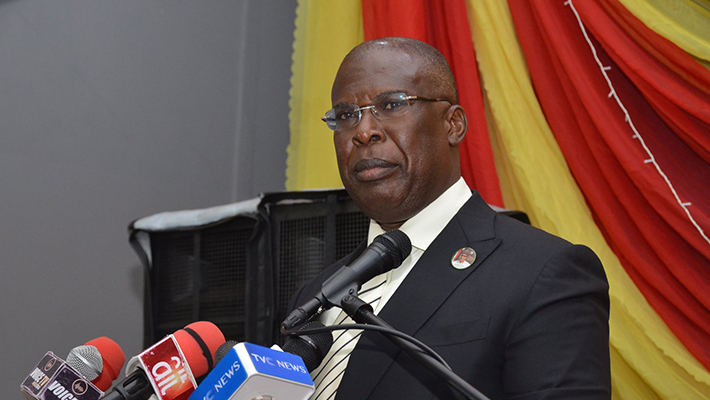
Junior petroleum minister Timipre Sylva says Nigerians will adjust to the new realities of a deregulated pricing regime for petrol, just like they did with kerosene and diesel which “are more important to the ordinary citizens.”
Mr. Sylva spoke with reporters at the State House shortly after meeting with President Muhammadu Buhari on Monday. He said the government could no longer cope with subsidising a commodity “that is mostly used by the elites.”
”The only explanation to everything we have said is that the country just could not afford subsidy anymore,” Mr. Sylva told reporters. “We will get by, I am sure when things stabilise, our earnings begin to improve, we will begin to see the benefits of what this government has done.”
Since the latest increment on the pump price of petrol, costs of basic commodities have cut deeply into the pocket of everyday Nigerians. On Monday, the statistics office reported October inflation worsened to 14.23 percent from 13.71 percent the previous month.
The rates reverberated through the food markets as costs of basic commodities such as bread, cereals, meat, fish, fruits, potatoes, yam and vegetables were sold at prohibitive prices.
Mr. Sylva said the worsening economic conditions are not peculiar to Nigeria.
“Let us first agree, that these are not the best of times not only for Nigeria but for the global community.
“What we have said over and over again as a government is that the government is no longer in the business of fixing pump price, that is the meaning of deregulation and stepping back on subsidy.
“Yes, we are very aware that this will result in some increase, but why do we have to do this, because it is clearly impossible for the government to continue to subsidise”, the minister said.
He added that collection has also reduced because less oil is being produced, there is less activity in the oil industry which is driving the economy. So you find out it is a double whammy from all sides.
As the government continues to make average Nigerians see reasons to adapt to shrinking purchasing power, it is not immediately clear if the authorities are committed to cutting governance costs significantly to make room for extra resources to cater for disadvantaged citizens.

We have recently deactivated our website's comment provider in favour of other channels of distribution and commentary. We encourage you to join the conversation on our stories via our Facebook, Twitter and other social media pages.

More from Peoples Gazette

States
Independence: NBA urges Nigerians to expect better future
The NBA said that ordinary Nigerians should be deriving benefit from the subsidy removal rather than hardship.

Agriculture
FG tasks ECOWAS on leveraging financing strategies for agroecology
The federal government has urged stakeholders in the agriculture and finance sectors in the West Africa region to leverage financing strategies to enhance agroecology practices

Politics
Katsina youths pledge to deliver over 2 million votes to Atiku
“Katsina State is Atiku’s political base because it is his second home.”

Education
Kaduna targeting zero out-of-school children in one year, says commissioner
Mr Madaki emphasised the need to prioritise children from disadvantaged backgrounds.

Abuja
Police arrest another Abuja driver over fake presidential number plate
The police said the suspect was arrested on Monday at about 2:35 p.m.

Sport
La Liga apologises to China over Mbappé’s Mao meme comment
La Liga said, “To the extent of our institutional responsibility, we apologise on behalf of LALIGA and all its clubs.”
States
Kogi assembly passes state police bill
Mr Yusuf said that State Police occupied a significant place in Nigeria’s nation-building process over the past decades.

Sport
Chinese firms drop Mbappe over Mao meme comment
The footballer has offered apology to the Chinese people, saying his comment was ill-judged.

Africa
AFC, Munich Re sign $1 billion managed debt mobilisation programme to expand trade finance
The AFC’s deputy director and head of syndications, Wole Asase, stated that the arrangement slightly differed from previous agreements.


