

Nigeria’s total trade for Q4 2022 stood at N11.722 billion: NBS

The National Bureau of Statistics (NBS) says Nigeria’s total merchandise trade stood at N11.722 billion in the fourth quarter of 2022.
This is according to the NBS Foreign Trade in Goods Statistics Report for Q4 2022 released in Abuja on Friday.
The NBS said total exports stood at N6.359 billion, and total imports stood at N5.362 billion.
The report said on an annual basis, total trade was N52.387 billion, total imports amounted to N25.590 billion, and total exports were recorded at N26.796 billion.
It said total exports increased in Q4 2022 by 7.17 per cent and 10.28 per cent compared to the amount recorded in Q3 2022 at N5.934 billion and Q4 2021 at N5.766 billion, respectively.
The report, however, said total imports declined by 15.46 per cent in Q4 2022 compared to the value recorded in Q3 2022 at N6.343 billion. Total imports also fell by 9.73 per cent compared to the value recorded in the fourth quarter of 2021 at N5.940 billion.
The NBS said re-exports value in the quarter under review stood at N199.59 billion representing 3.14 per cent of total exports.
The report said Namibia, Equatorial Guinea, Cameroun, Ghana and Togo were the top five re-export destinations. It said the most re-exported commodity was ‘floating or submersible drilling or production platforms, recorded at N142.02 billion.
This was followed by cruise ships and similar vessels for transporting persons or goods worth 500 tonnes valued at N14.78 billion, refrigerated vessels, other than those of subheading 8901.20, of a capacity of 500 tonnes amounting to N13.16 billion.
The report said the top five export destinations in Q4 2022 were Spain, Netherlands, India, France, and Indonesia, accounting for 9.70 per cent, 9.03 per cent, 7.71 per cent, 7.70 per cent, and 7.44 per cent, respectively, of total exports.
Altogether, exports to the top five countries amounted to 41.59 per cent of the total value of exports, NBS stated. It said the commodity with the largest export values in the period under review was petroleum oils and oils obtained from bituminous minerals, crude at N4.911 billion representing 77.24 per cent.
This was followed by natural gas, liquefied at N704.88 billion, accounting for 11.08 per cent, and urea, whether or not in aqueous solution, at N160.56 billion or 2.52 per cent of total exports.
In terms of imports, the report said in Q4 2022, China, Belgium, India, The Netherlands and the U.S. were the top five countries of origin of imports to Nigeria.
It said the value of imports from the top five countries amounted to N2.993 billion, representing a share of 55.82 per cent of the total value of imports.
(NAN)

We have recently deactivated our website's comment provider in favour of other channels of distribution and commentary. We encourage you to join the conversation on our stories via our Facebook, Twitter and other social media pages.

More from Peoples Gazette

Agriculture
FG tasks ECOWAS on leveraging financing strategies for agroecology
The federal government has urged stakeholders in the agriculture and finance sectors in the West Africa region to leverage financing strategies to enhance agroecology practices

Politics
Katsina youths pledge to deliver over 2 million votes to Atiku
“Katsina State is Atiku’s political base because it is his second home.”

States
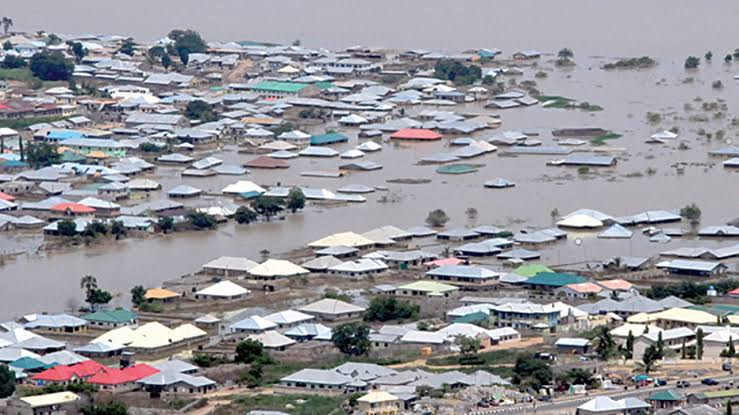
Flooding: Anambra, Ebonyi, Enugu place emergency response agencies on alert
He urged residents living in flood-prone areas to heed early warning messages.
NationWide
Flood Alert: NEMA urges residents in flood-prone areas to evacuate as rains intensify
Mrs Umar advised motorists and pedestrians against driving or walking through floodwaters.

NationWide
Shettima departs Abuja for ECOWAS summit in Freetown
The summit will focus on key policy decisions and strategic resolutions.
NationWide
NBC unveils new digital broadcasting rules
Mr Ebuebu said the commission had observed declining ethical standards in broadcasting.

Heading 3
POWA reaffirms commitment to members’ welfare
According to Mrs Disu, the invaluable role of police officers’ wives cannot be overemphasised.

States
N2 billion NPFL prize won’t fix Nigerian football, says Gara-Gombe
He lamented that Nigeria had only a few stadiums capable of meeting international standards.


