

Odinkalu urges shift from infrastructure to people-centred governance model
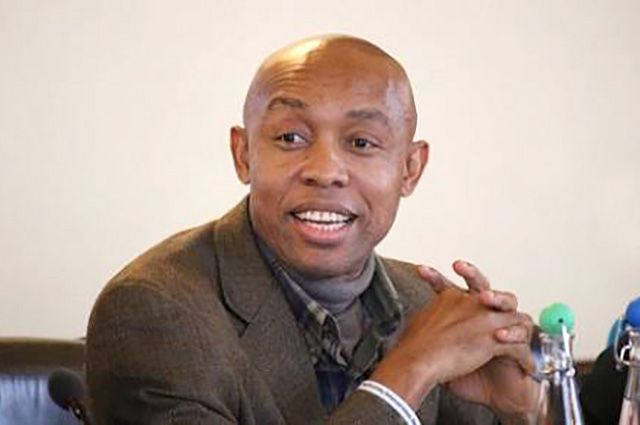
A human rights lawyer, Chidi Odinkalu, has said that sustainable governance in Nigeria must move beyond physical infrastructure to prioritise people, dignity, and institutional integrity.
Mr Odinkalu said this on Thursday in Umuahia while delivering a keynote lecture during the Abia Anniversary Lecture organised to commemorate the third-year anniversary of Governor Alex Otti’s administration in Umuahia.
He warned that projects alone could not guarantee development and emphasised the need for purposeful leadership that directly impacts the lives of citizens in the state.
Mr Odinkalu said that the various sectors of the state’s economy had been transformed within the past three years and could serve as a reference point for broader governance lessons in Nigeria.
He said that the development strides recorded in the state within three years went beyond infrastructure projects and reflected a restoration of dignity, hope, and trust in governance.
“I want to be very clear. Projects matter, but projects will not last if the people do not have and the people do not own them.
“That is why investment in the people is where it all begins,” he said.
The keynote speaker said that for nearly 24 years, Abia suffered what he described as “desgobierno”, a Spanish expression meaning “ungovernment”.
“You cannot be perpetrating ungovernment against your own people and at the same time accusing Nigeria of marginalising them,” he said.
According to him, the South-East should focus less on complaints of marginalisation and more on demonstrating capacity for effective governance.
“If you cannot manage 29,500 square kilometres, guarantee peace, guarantee safety, guarantee development, guarantee roads, guarantee water, guarantee healthcare, guarantee children go to school, why do you want to manage Nigeria?
“We can out-govern the rest of Nigeria and start creating a dignified population, a place where things work.
“Nigeria will tell you, ‘you know what you have done to your place, come and do it for us’,” he said.
Mr Odinkalu described what he called “The Alex Otti Challenge” as a template built on “a clear diagnosis, coherent strategy, and a value system”.
He said that Mr Otti’s government had restored legitimacy to governance in the state because it emerged from what he called a legitimate mandate.
“Anybody who can steal your mandate can steal anything that they prefer.
“This governor, because he has a legitimate mandate, has got to account to those who gave him the mandate,” he said.
Mr Odinkalu said that improved road infrastructure, security, electricity, and healthcare services had significantly transformed the state.
He said the administration had delivered over 1,000 kilometres of roads within three years, comparing the distance to Aba to Kano plus Okigwe to Uzuakoli.
Mr Odinkalu pointed out that electricity projects and street lighting in Aba had reduced crime and improved business productivity.
“What is the biggest crime-fighting invention that this administration has done? Electricity. As a result of street lighting, crime has crashed in Aba,” he said.
Mr Odinkalu further commended the administration for prioritising social welfare through programmes such as health insurance, disability support services, maternal transport schemes, and upgrades of primary healthcare centres.
“The biggest thing in my view that this administration has done is care.
“A government that cares. The infrastructure of care is self-evident for those who have bothered to look at it,” he said.
Mr Odinkalu also urged the state to leverage its growing number of universities to develop a research and development cluster capable of driving innovation and industrial growth.
He advocated the establishment of a commercial dispute resolution hub in Abia to complement its industrial and commercial aspirations.
He also called for the creation of a women’s legacy enterprise fund in honour of the Aba women of 1929 to support female-owned small and medium enterprises.
“Our women in this part of the world have been central to our narrative.
“They represent enterprise communities and leadership communities,” he said.
Mr Odinkalu urged the people of the state to protect the gains already made by supporting enlightened civic participation and responsible leadership.
“The smile has returned to the faces of the people, and hope appears willing to return from exile.
“The choice belongs to the people whether they want to return to darkness or sustain purposeful leadership,” he said.
In his speech, Mr Otti called for stronger citizen participation in governance and elections, warning that declining voter turnout poses a threat to Nigeria’s democratic future.
The governor said that governance must remain centred on “the dignity of man and woman,” which he noted was inspired by the 15th-century philosopher Pietro della Vigna’s “Oration on the Dignity of Man.”
He stressed that development efforts should prioritise people over infrastructure alone, saying that meaningful governance must improve education, health, and welfare outcomes across communities.
Mr Otti also expressed concern over declining electoral participation in Nigeria, citing statistics that showed voter turnout dropping from about 57 per cent in 2007 to 27 per cent in the 2023 general elections.
According to him, citizens who refuse to participate in elections lose moral authority to criticise leadership, urging increased civic engagement beyond just voting.
“Participation does not necessarily mean contesting elections, but it means being actively involved in the democratic process,” he said.
The governor commended Mr Odinkalu for what he described as a thought-provoking lecture, particularly on governance reforms and security coordination.
He also commended him for his proposals to expand the membership of the state security council to include education and health commissioners and gave approval for the inclusion of the commissioners in the council.
He also highlighted the need to strengthen regulation and quality assurance across both public and private tertiary institutions, noting disparities in accreditation standards among universities.
Mr Otti further praised contributions from diaspora professionals and researchers, saying evidence-based planning had shaped Abia’s development blueprint since 2015, with periodic updates ahead of subsequent election cycles.
He said that his administration would continue infrastructure tours and commissioning of projects across communities, reaffirming commitment to inclusive development.
In his remarks, a public affairs analyst, Bolaji Akinyemi, urged stakeholders to remain focused on sustaining the goals of the present administration.
Mr Akinyemi said that the priority should be institutionalising good governance and leadership to ensure that gains achieved are not reversed after exit from office.
He also stressed the need for deliberate strategies that would secure a lasting legacy.
A director at Union Bank of Nigeria, Eileen Shaiyen, said that Abia had the potential to become a commercial and professional services hub if it continued to make the right leadership choices.
Ms Shaiyen said that the challenges of governance in many places stem from poor leadership selection, noting that Abia’s current trajectory reflects the benefits of choosing competent and transformational leaders.
She urged residents to avoid superficial considerations in electing leaders and to take responsibility for sustaining the emerging positive changes in the state and the wider South-East region.
Also, an Abia-born technology expert, Ndubuisi Ekekwe, commended the present administration for what he described as credible efforts to deepen citizens’ capacity and strengthen governance systems.
Mr Ekekwe said that a review of key sectors showed a deliberate and intentional approach to governance.
He added that the state was increasingly adopting a technology- and data-driven system focused on efficient service delivery and citizens’ needs.
Earlier, the Secretary to the State Government, Emmanuel Meribole, said that the government had recorded significant progress in infrastructure renewal, institutional reforms, improved security, and restored public confidence in governance.
Mr Meribole described the developments recorded in Abia as evidence of a deliberate choice of competence and vision.
He said that the reforms were anchored on restoring dignity in governance through timely payment of salaries and pensions, respect for workers, improved business climate, and accountability.
Mr Meribole noted that these efforts were rebuilding public trust and strengthening the foundation for sustainable development in Abia.
(NAN)

We have recently deactivated our website's comment provider in favour of other channels of distribution and commentary. We encourage you to join the conversation on our stories via our Facebook, Twitter and other social media pages.

More from Peoples Gazette

Agriculture
FG tasks ECOWAS on leveraging financing strategies for agroecology
The federal government has urged stakeholders in the agriculture and finance sectors in the West Africa region to leverage financing strategies to enhance agroecology practices

Politics
Katsina youths pledge to deliver over 2 million votes to Atiku
“Katsina State is Atiku’s political base because it is his second home.”

Africa
Ebola: DRC, health partners to open new treatment centre
WHO said the current outbreak is now the largest recorded Ebola virus disease outbreak in the country.

World
Climate experts urge govts to inflate taxes on fossil fuel profits
The call came amid climate crises.
NationWide
Lumumba urges Nigeria to embrace technology, research for growth
He urged Delta state and Nigeria to learn from global best practices.
States
I will be re-elected governor if Osun election is free, fair: Adeleke
Mr Adeleke also urged the electorate to come out en masse on election day and vote for him.
States
Gov. Yusuf inaugurates Kano disease control centre
The governor urged health officials to ensure the judicious utilisation of the facility.

States
Lokoja ultra modern market will transform commerce in Nigeria, says Kogi govt
He described the project as one of the flagship initiatives of Governor Ahmed Ododo’s administration.


