

Africa fixates on long-abolished slave trade as modern slavery festers in Libya

The recent resolution at the United Nations General Assembly, championed by Ghana, declaring the Transatlantic Slave Trade as “the gravest crime against humanity”, has been praised by Africans as a welcome and long-awaited justice. The reason is simple. Between the 16th and 19th centuries, an estimated 12 to 13 million Africans were forcibly transported across the Atlantic. Millions more died in raids, forced marches, and the Middle Passage.
There is no argument against recognising the enormity of the crime of slavery. However, when moral clarity is applied selectively, it risks becoming performance. While Africans have found a unified voice in condemning past atrocities of the West against the continent, that same unity has refused to confront past atrocities committed by the Arabs against Africans, as well as modern-day slavery perpetuated by Africans against their own.
In Libya and across North Africa and the Sahel, Africans are still being trafficked, exploited, and, in some cases, effectively enslaved through modern networks that echo and resemble the caravan systems that once defined the Arab Slave Trade (also known as the Trans-Saharan or Eastern Slave Trade). This is a contemporary reality for millions of Africans.
The International Organisation for Migration estimates that hundreds of thousands of migrants move through these corridors annually, many falling into the hands of traffickers. The Global Slavery Index, for its part, estimates that tens of millions of people worldwide remain in conditions of modern slavery, with a significant concentration in Africa.
In Libya, UN investigations have documented the existence of migrant markets and detention centres where Africans are sold for as little as a few hundred dollars, forced into labour, or held for ransom. Reports by the UN Support Mission in Libya have detailed patterns of torture, sexual violence, and forced labour within both official and unofficial detention facilities.
There is no question whether the Transatlantic Slave Trade deserves its designation. Yes, it does. However, Africans like myself would like to know why our leaders, especially those who sponsored and supported this UN resolution, refuse to demonstrate comparable urgency in confronting the ongoing exploitation of Africans within their immediate geopolitical sphere.
How many emergency sessions have been convened at the African Union to specifically address modern slavery in North Africa and the Middle East? How many sustained diplomatic campaigns have been led by African countries and leaders at the UN to demand accountability from governments and militias complicit in these abuses? How often do these issues and the reparation narrative feature prominently in the speeches of our leaders to Arab countries?
This is not to suggest that the past should be ignored, but rather that the present must be confronted with far greater urgency to prevent history from repeating itself. Yet, for many African leaders, it appears more politically convenient to condemn the crimes of Western powers from centuries ago than to challenge contemporary actors within the continent. While the former carries little diplomatic cost and yields considerable moral capital, the latter requires regional pressure, coalition-building, and a willingness to confront uncomfortable alliances.
Also, for political convenience, African leaders have refused to confront modern-day slavery against Africans that echoes the Arab Slave Trade system, which was historically and continues to be operated by Muslim-majority societies in North Africa and the Middle East. They have refused to accept this responsibility simply because it does not fit into the reparation narrative being pushed through the UN resolution. Nonetheless, the truth has always been simple: the exploitation of African lives has never been the monopoly of a single civilisation.
If African leaders can mobilise the required moral language to describe historical crimes by the West against the continent with precision and conviction, then they must be prepared to apply that same language to address atrocities committed by the Arabs during the Trans-Saharan Slave Trade, and to contemporary abuses happening within Africa’s borders and by actors that are part of the AU. Anything less reduces this UN resolution to selective memory.
The principle at stake is simple: if the commodification and dehumanisation of African lives constitutes one of the gravest crimes imaginable, then that principle cannot be confined to the past or to crimes committed by the West. It must extend, without qualification, to atrocities done by the Arabs, and to the present and against what is happening to fellow Africans in Libya, the extended Northern Africa, and parts of the Middle East.
Ghana and other African countries must elevate the issue of modern slavery affecting Africans within the continent to the same level of international concern as they did with the UN resolution.
They must champion sustained advocacy at both the AU and UN as a central diplomatic priority, and must push for independent investigations, coordinate sanctions where appropriate, and bind regional commitments to dismantle these trafficking networks.
The suffering of Africans must not be ignored simply because the perpetrators are Africans or Arabs, and not Westerners. African leaders must not just be comfortable in calling out a crime because it was committed by Western powers. They must be willing to call out these crimes, even and especially when they are committed by us and within our borders. Until we are willing to apply this moral outrage as consistently to the Arabs and Africans as we do to the West, these types of resolutions, no matter how well-intentioned, will continue to ring hollow.
Maduekwe is a communications professional. Write him: mrmaduekwe@gmail.com

We have recently deactivated our website's comment provider in favour of other channels of distribution and commentary. We encourage you to join the conversation on our stories via our Facebook, Twitter and other social media pages.

More from Peoples Gazette

States
Independence: NBA urges Nigerians to expect better future
The NBA said that ordinary Nigerians should be deriving benefit from the subsidy removal rather than hardship.

Agriculture
FG tasks ECOWAS on leveraging financing strategies for agroecology
The federal government has urged stakeholders in the agriculture and finance sectors in the West Africa region to leverage financing strategies to enhance agroecology practices

Politics
Katsina youths pledge to deliver over 2 million votes to Atiku
“Katsina State is Atiku’s political base because it is his second home.”
Africa
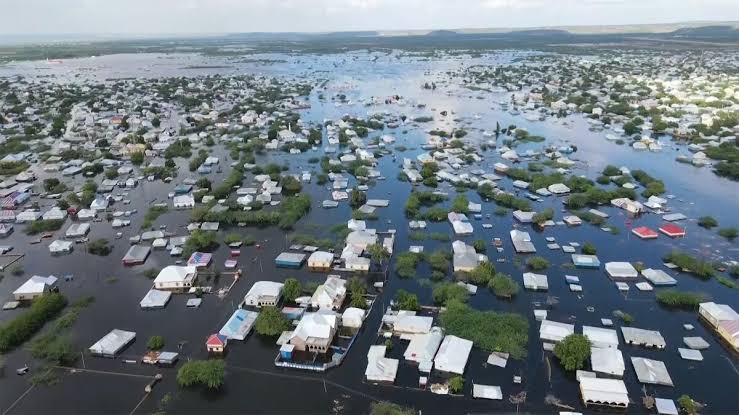
ICRC warns El Niño floods could plunge millions further into hunger in Somalia
ICRC warned that above-normal rains and subsequent flooding were expected to deepen hunger levels across the country.
States
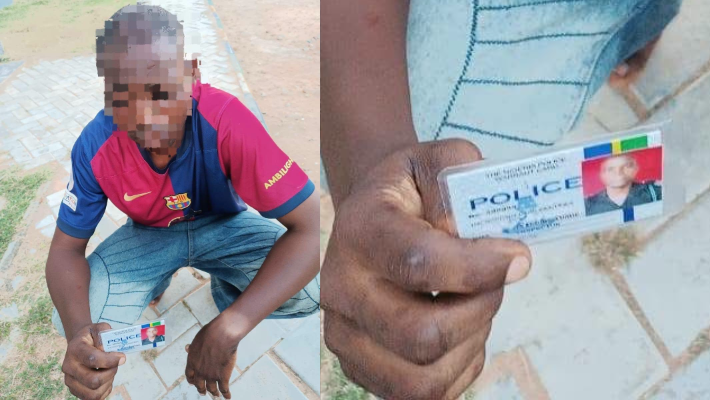
Police nab suspected motorcycle thief impersonating Adamawa cop
The police said the suspect would be arraigned upon conclusion of investigation.
NationWide
PVCs of Lagos residents who registered from January to July 2026 not ready: INEC
Mr Salami urged the media to sustain accurate reporting and public enlightenment.

States
Senate urges FG to treat Kebbi insecurity as national emergency
The Senate stressed the need for a comprehensive security response to prevent further loss of lives.
States
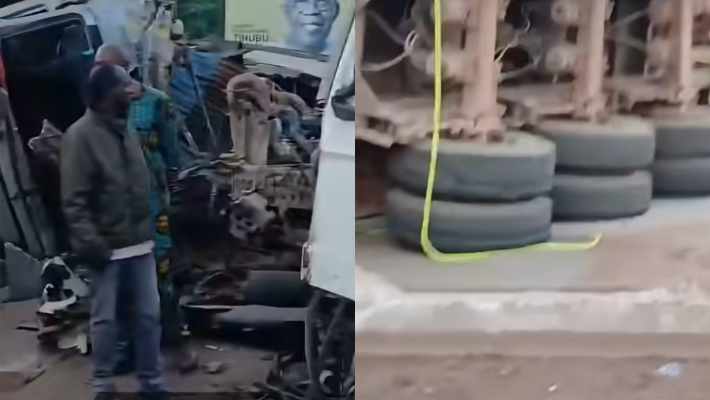
TRACE urges motorists to seek alternative routes as crash grounds Lagos-Abeokuta road
Mr Kelani regretted the inconveniences caused by the traffic congestion.
Africa
AU says terrorists exploiting AI, drones to expand operations
Mr Lallali urged participants to establish cross-border contacts during the training to support future investigations.


