

Only 17% African dwellers have access to essential oral health services: WHO

The World Health Organisation (WHO) says only 17 per cent of people in the Africa currently have access to essential oral health services.
The WHO Regional Director for Africa, Mohamed Janabi, disclosed this in a message to commemorate World Oral Health Day 2026 with theme: “A Happy Mouth is a Happy Life.”
Mr Janabi said that the workforce shortages, chronic underinvestment and insufficient prevention measures, including high sugar consumption and inadequate fluoride exposure, continued to drive preventable oral diseases, especially in underserved areas.
”WHO is supporting countries to transition towards environmentally sustainable and less invasive oral health care, including the phase-out of mercury-containing dental amalgam in line with the Minamata Convention on Mercury.
”Through evidence-based guidance, technical support and new evidence-based approaches, including the recently issued WHO guideline on environmentally-friendly and less invasive oral health.
”WHO is helping expand prevention, strengthen service delivery and integrate essential oral health interventions at the primary care level.”
According to him, improving oral health is fundamental to universal health coverage.
He added that in addition to reducing preventable illnesses, it also lowers long-term costs and improves well-being across the life course.
He stated, “On this World Oral Health Day, I call on governments, partners, academia and civil society to unite to accelerate implementation of national oral health strategies, strengthen workforce capacity and expand access to essential services.
”WHO remains committed to supporting Member States in integrating oral health into national health systems, and advancing equitable access to care.”
He said that on World Oral Health Day 2026, the organisation turns its attention to a silent but widespread health challenge affecting communities across the WHO African Region.
”Oral diseases are among the most common and preventable health conditions, yet they remain one of the most neglected areas of public health.
”Oral diseases, including dental caries, gum disease, tooth loss and the devastating condition Noma, affected 42 per cent of our population in 2021.
”These conditions cause pain, disability and avoidable suffering, while placing sustained pressure on families, communities and health systems,” he said.
According to him, recognising the burden, Member States endorsed the WHO African Regional Framework on Oral Health in 2025.
”This framework advances implementation of the WHO Global Oral Health Action Plan, and establishes a clear path towards universal oral health coverage by 2030.
Countries are already translating these commitments into action,” he said.
Mr Janabi said that with financial support from the Borrow Foundation, Ghana, Madagascar, Tanzania and Uganda have developed national oral health strategies to strengthen prevention and service delivery.
He noted, “Ethiopia, with support from Hilfsaktion Noma e.V., has trained more than 850 primary care and community health workers across 10 regions to improve the early detection of noma.
”Also integrating noma surveillance into mass drug administration campaigns that have reached over 2.6 million people nationwide.
”To strengthen national training capacity and build a sustainable oral health workforce, Malawi has established its inaugural Bachelor of Dental Surgery programme, constructed a new dental school, and graduated its first locally-trained dentists.:
He, however, noted that with sustained commitment and investment, the African Region could reduce the burden of oral diseases, and ensure that future generations grow, learn and live free from preventable oral diseases.
(NAN)

We have recently deactivated our website's comment provider in favour of other channels of distribution and commentary. We encourage you to join the conversation on our stories via our Facebook, Twitter and other social media pages.

More from Peoples Gazette

States
Independence: NBA urges Nigerians to expect better future
The NBA said that ordinary Nigerians should be deriving benefit from the subsidy removal rather than hardship.

Agriculture
FG tasks ECOWAS on leveraging financing strategies for agroecology
The federal government has urged stakeholders in the agriculture and finance sectors in the West Africa region to leverage financing strategies to enhance agroecology practices

Politics
Katsina youths pledge to deliver over 2 million votes to Atiku
“Katsina State is Atiku’s political base because it is his second home.”
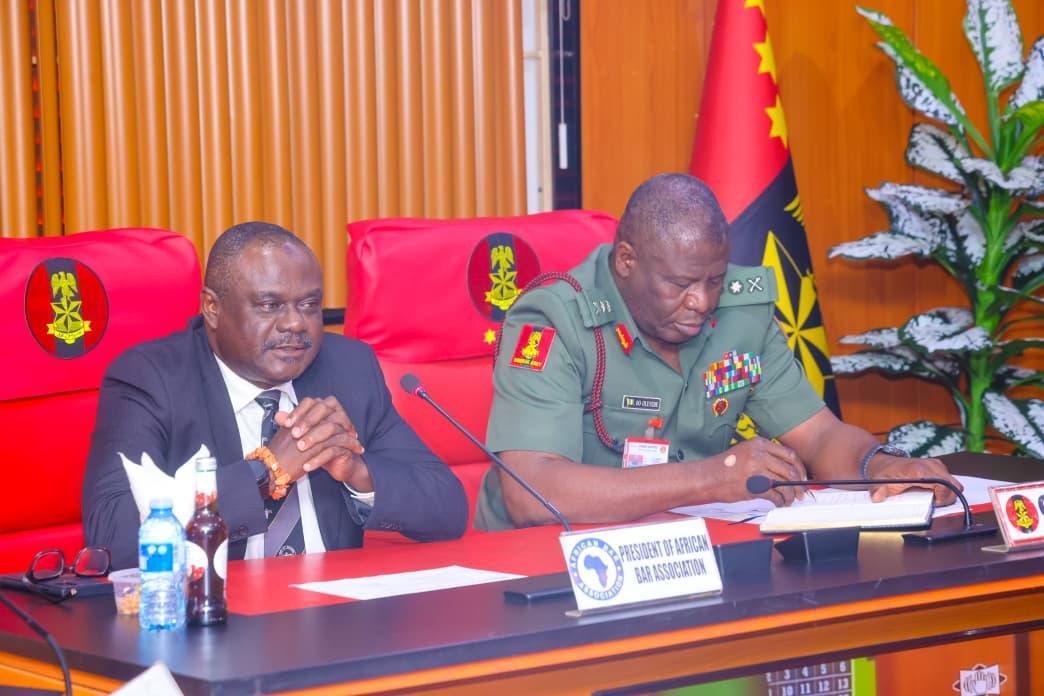
Africa
Africa bar association president advises lawyers to defend justice, freedom
Mr Mark reaffirmed that AfBA would continue to stand as a generational ally of the National Conference of Black Lawyers.

NationWide
NAF clarifies casualties in crashed aircraft, appreciates public support
Mr Ejodame said the NAF remains actively engaged with the bereaved families.

NationWide
Group hails FG for backtracking on ban of solar panel importation
Mr Terungwa commended the Minister of Innovation, Science and Technology, Kingsley Udeh, for supporting a gradual transition to domestic production.

Heading 3
UNICEF expresses sympathy for children, families as earthquake rocks Panama
UNICEF said it was ready to support the Government of Panama’s response if needed.

NationWide
IG deploys new spokespersons to commands, formations
Mr Disu charged the officers to uphold professionalism, accuracy and responsiveness in the discharge of their duties.

States
EFCC secures conviction of Lagos fraudster for laundering N132 million
The commission said Justice Osiagor ordered Mr Pelumi to undertake seven days of community service based on the sentencing.


