

Opposition politicians and the agreement industry
Fela Anikulapo Kuti understood something about power that many contemporary Nigerian politicians have refused to learn. In his 1977 album, No Agreement, he rejected compromise with oppression in words that have survived long after the governments he confronted disappeared. “No agreement today; no agreement tomorrow,” he declared. His protest was directed at injustice and exploitation, not at political negotiation in the abstract. Even so, the refrain acquires fresh relevance in present-day Nigeria, where “agreement” has become the preferred language of political ambition while millions struggle through hunger.
Public conversation has shifted in a curious direction. The price of bread continues to rise. Economic hardship has forced many families from homes they could once afford, while insecurity remains a daily reality across much of the country. These conditions appear insufficiently urgent to compel the country’s leading opposition figures into a national compact over economic recovery or social protection. Energy has instead been invested in negotiating who occupies public office after the next election and under what arrangement power will rotate among political elites.
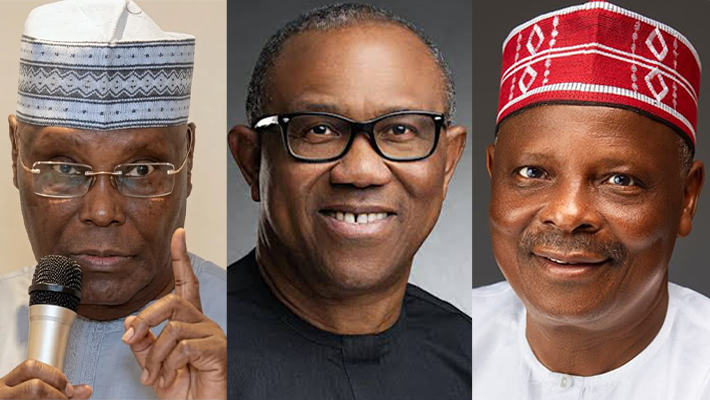
Public attention focused not on a shared programme for rebuilding the economy or restoring confidence in public institutions, but on an understanding over presidential succession and the allocation of political offices. Reports of an agreement between Peter Obi and Rabiu Musa Kwankwaso illustrate this point. The details remain known only to those directly involved, although enough has emerged to reveal the essential purpose of the exercise. Political bargaining has centred on the distribution of future authority rather than on the conditions under which citizens presently live.
Nothing about the politics of personal alliances is inherently objectionable. Democracies across the world which depend on negotiated alliances often produce electoral alignments before major elections. Politics is, after all, an arena of compromise. No democratic system can function if every disagreement becomes irreconcilable. Difficulty arises when negotiation ceases to concern public policy and begins to resemble a private contract over public power. Sovereignty belongs to the electorate. Politicians possess no proprietary interest in elective office capable of being exchanged through personal bargains before citizens have spoken through the ballot. Any agreement which appears to divide future offices between political leaders risks creating the impression that elections serve only to ratify decisions already reached in private
Nigeria has travelled this road before, with its political history rendering numerous stories of personal alliances cemented through traditional oaths administered in shrines. The most famous example remains the relationship between Chris Ngige and members of the Uba political family; an arrangement which eventually exploded into public controversy after allegations surrounding the Okija shrine emerged. Whatever one thinks about the accuracy of every claim made during that episode, the symbolism has endured.
Fidelity to political agreements was elevated above fidelity to democratic accountability, while supernatural sanction was invoked to guarantee compliance. Unfortunately, Nigeria’s contemporary politics now exchanges shrines for written agreements and party documents, although the underlying philosophy has changed very little. While politicians are increasingly turning the sovereign mandate of the people into elite bargains negotiated behind closed doors, the shrine has given way to written agreements and signatures. Modernity has altered the form without necessarily changing the substance.
Fresh reports involving Atiku Abubakar and Rotimi Amaechi reinforce the impression that building personal fiefdoms around power has become an exercise in contractual politics. Every new announcement encourages speculation about the eventual distribution of political office, as though the electorate were expected to endorse an arrangement already fashioned by political elites. Citizens searching for a coherent economic vision often discover little beyond calculations of electoral arithmetic. Such developments expose the deeper weakness in Nigerian political culture.
Elections have gradually become conversations about personalities rather than competing ideas of government. Campaigns often revolve around alliances among influential figures instead of detailed programmes addressing inflation, food insecurity, electricity, education, healthcare or industrial growth. Political parties become vehicles carrying individuals towards office rather than institutions articulating competing visions of national development.
Democracy depends upon consent, although consent requires more than agreements among politicians; it also requires the continuing approval of citizens expressed through free and fair elections. Political negotiations conducted before elections remain legitimate only where they seek to present voters with a united platform whose contents are open to public scrutiny. Once negotiations drift into predetermined arrangements over future offices, democratic choice begins to lose substance. Citizens deserve the opportunity to decide who governs them without discovering afterwards that important decisions had already been settled elsewhere.
While we concede that politicians often defend these pragmatic arrangements as necessary compromises for removing an incumbent government, our view is that pragmatism cannot become an excuse for reducing public office to negotiable property. Electoral victory should create authority, not simply confirm an earlier bargain. None of this implies that opposition parties should avoid cooperation. Nigeria benefits from strong opposition capable of presenting credible alternatives to those presently exercising power.
Party political coalitions, not personal agreements, enrich democracy by broadening representation and preventing unnecessary fragmentation. Citizens gain whenever political competition becomes stronger rather than weaker. Party political coalitions should therefore begin with a covenant directed towards the Nigerian people who deserve to know the programme on which those seeking power ask to be elected rather than contracts among politicians.
Fela’s words survive because they expressed resistance against accepting unacceptable conditions. Nigeria now faces another moment requiring resistance, although the target differs. Citizens should refuse any politics inviting them to applaud elite agreements while postponing discussion about the hardships defining everyday life. Hunger and homelessness cannot be negotiated away through power-sharing formulas and succession arrangements. The country’s next political agreement should concern neither who becomes president nor who occupies the second-highest office; it should concern rebuilding public trust by placing citizens’ welfare before politicians’ ambitions. Any agreement that does not begin from that premise risks becoming a political compact devoid of democratic purpose, signed over the distribution of power in the name of people who were never invited into the room.
Abdul Mahmud, a human rights attorney in Abuja, writes weekly for The Gazette

We have recently deactivated our website's comment provider in favour of other channels of distribution and commentary. We encourage you to join the conversation on our stories via our Facebook, Twitter and other social media pages.

More from Peoples Gazette

States
Independence: NBA urges Nigerians to expect better future
The NBA said that ordinary Nigerians should be deriving benefit from the subsidy removal rather than hardship.

Agriculture
FG tasks ECOWAS on leveraging financing strategies for agroecology
The federal government has urged stakeholders in the agriculture and finance sectors in the West Africa region to leverage financing strategies to enhance agroecology practices

Politics
Katsina youths pledge to deliver over 2 million votes to Atiku
“Katsina State is Atiku’s political base because it is his second home.”
Economy
Nigeria’s inflation dropped to 14.63% in September: NBS
NBS said September headline inflation fell by 0.65 per cent to 14.63 per cent, down from 15.39 per cent in August.

States
Remi Tinubu inaugurates 50 CNG buses, launches ₦1 billion empowerment programme in Edo
Mrs Tinubu said the initiatives would improve transportation and create economic opportunities for residents.

Uncategorized
Alleged Fraud: Witness tells court he facilitated N1.4 billion forex transactions for Yahaya Bello’s associate
Justice Maryanne Anineh adjourned the case until October 27 and November 24, 2026, to continue the trial.
Politics
2027: Only eight women on INEC’s list of Katsina’s 420 legislative candidates
The final list released by INEC showed that only eight women will be contesting in the general elections in Katsina.

World
Finland’s Appeal Court reduces terrorism sentence of IPOB agitator Simon Ekpa
A Finnish district court had last year sentenced Mr Ekpa to six years’ imprisonment for terrorism and tax fraud.
NationWide
2027: ‘No vacancy’ for Akpabio’s seat, senators declare
The lawmaker said Mr Akpabio had already secured the Senate presidency in the 11th assembly.


