

Osun election shows all is not fair in Nigerian politics

John Lyly, the English novelist, is generally credited with the expression from his 1578 novel Euphues: “The rules of fairest play are not observed in love.” Over time, the sentiment evolved into the familiar saying, “All’s fair in love and war.” Nigerian politicians have now given it a contemporary and rather sinister adaptation: all’s fair in politics. President Bola Tinubu recently deployed the expression to defend his determination to contest the 2027 election, saying, “All is fair in politics, and there is equal opportunity.”
There is, however, nothing fair about electoral contests in which the rules are deliberately weakened, institutions are bent towards partisan advantage, and the instruments of state are deployed against citizens whose only offence is their political preference. The Osun governorship election which took place last Saturday is therefore much larger than the contest between Ademola Adeleke and Bola Oyebamiji, or between the Accord Party and the All Progressives Congress. It has become the test of whether Nigeria still regards elections as the constitutional means by which citizens confer legitimacy on government, or whether elections have become a bazaar in which money, intimidation, state power and institutional manipulation are traded for political advantage. INEC itself has identified vote-buying as a threat to the credibility of the poll, while the civil society organisations’ election situation room raised concerns about security risks and demanded neutrality from the police.
The signs were hardly reassuring.
There were allegations of threats, intimidation and political violence in the run-up to the election, while the authorities deployed four police officers to each of Osun’s 3,673 polling units. On election day itself, voting was reportedly disrupted at the polling unit of ADC candidate,Najeem Salaam, after suspected thugs invaded the area shortly after he voted. These incidents may individually be dismissed as isolated episodes, but it is precisely through compounding episodes that public confidence in elections is destroyed.
Nigeria has been here before, but there was a time when it seemed there was a determined effort to move beyond it. The 2011 elections, despite the horrific violence that followed the presidential election, were widely regarded as a substantial improvement on the disastrous2003 and 2007 exercises. International Alert described the April 2011 elections as among Nigeria’s fairest, even while acknowledging that they were also among the bloodiest.
The 2015 election represented another important moment. The transfer of presidential power from Goodluck Jonathan to Muhammadu Buhari was historic because the electoral contest, despite its considerable flaws and tensions, showed that power could change hands through the ballot rather than by force. The Osun governorship election of 2014 was also generally adjudged credible, despite controversy over the heavy deployment of security personnel. However, in 2018, elections reverted to the old way when they were heavily rigged in favour of the ruling party. Nonetheless, contemporary assessments described the 2014 polls as a remarkable improvement over earlier elections and an encouraging template for the 2015 general election.
What has happened since then is profoundly troubling. Rather than consolidating those gains, Nigerian politics has increasingly converted elections into commercial transactions. The voter is approached not as a citizen exercising sovereign power but as a participant in a political market whose vote is available for purchase. It is a development that gives force to Oby Ezekwesili’s analysis of the Nigerian political market: that the corruption of electoral politics is driven not merely by the willingness of voters to sell their votes, but by the pernicious supply side of a political market in which politicians deploy money, patronage and the machinery of the state to purchase political loyalty and secure office.
The consequence is electoral delegitimation: when the ballot becomes a commodity and elections a transaction, the citizen ceases to see the vote as an instrument of sovereignty and begins to see it as a negotiable asset. Though Ezekwesili’s political-market thesis is particularly useful in explaining the transactional dimension of electoral politics, the deployment of state machinery takes the argument beyond the market itself. The state is no longer merely a participant in the political market; it appropriates its coercive and institutional apparatus to distort the terms of competition. When security agencies, electoral umpire, or other instruments of government are perceived to serve the electoral interests of the ruling party, the problem is no longer simply that votes are being bought or political loyalty exchanged.
The referee has entered the contest. This development is crucial to understanding electoral delegitimation: citizens lose faith not only in the value of their votes but also in the neutrality of the institutions meant to protect them. The result is a more profound democratic injury, in which the electoral process itself comes to be regarded as structurally incapable of producing a legitimate expression of the popular will.
The security agencies deserve particular scrutiny. Their constitutional duty is not to the APC, PDP, Accord or any other political party. Their loyalty is to the Constitution and the Nigerian people. Whenever police officers, soldiers or other security personnel are perceived to be enforcing the interests of the ruling party rather than protecting the voter, the distinction between a constitutional government and a partisan state begins to disappear. This is why allegations of security agencies colluding with the ruling party must not simply be dismissed as opposition propaganda. They require investigation, transparency and institutional accountability. The mere perception that the security forces have become instruments of partisan politics is itself corrosive. A policeman standing between two voters is an agent of the republic; a policeman standing between a voter and his preferred candidate because the candidate belongs to the opposition is an agent of political oppression.
The politicians themselves must carry the greater burden of responsibility. This generation has become remarkably casual about destroying democratic norms. They speak of elections as battles, opponents as enemies and political power as property. They change parties without explanation, manipulate institutions without embarrassment and invoke democracy principally when it serves their immediate interests. They have turned elections into a bazaar and then complain when citizens no longer believe in the merchandise.
The danger is not that a particular election may be rigged. The greater danger lies in the contradictions being exploited across the political system. When citizens repeatedly conclude that their votes cannot meaningfully determine who governs them, confidence in constitutional democracy begins to erode. Once that confidence is lost, the authority of the political order rests increasingly on coercion rather than consent, and no constitutional arrangement can indefinitely survive on that foundation.
A political order cannot indefinitely demand obedience to rules that its political class systematically violates.
Nigeria should therefore listen carefully to the warning contained in its own history. The collapse of constitutional orders rarely announces itself; it gathers force through mounting frustration and the growing conviction that the rules no longer provide citizens with a credible means of determining who governs them. The Osun governorship election has now provided an important measure of where Nigeria stands. It was never simply another off-cycle governorship election. It was a litmus test for the 2027 general election, and the conduct of the poll, including the conduct of the institutions charged with protecting the electoral process, will inevitably shape public expectations of what lies ahead.
If the Osun election demonstrated that the vote can still prevail over political money, intimidation and the advantages of incumbency, it offers some grounds for restoring confidence in the electoral process. If, on the other hand, it reinforced the suspicion that Nigerian elections are becoming contests in which everything is permitted except fairness, then the country must confront the consequences. A democracy cannot indefinitely demand the allegiance of citizens who have come to believe that their votes cannot alter the distribution of power. The danger is that the political order will eventually lose the consent that gives constitutional government its legitimacy.
Regardless of the federal might on display in Osun on Saturday, the broader opposition movement must learn an enduring lesson: putting boots on the ground and stomping the ruling party’s strongholds is essential to ensuring fake results are not declared. That, ultimately, is the desideratum for securing the sanctity of the polls. Chocho online will not work. Congratulations are in order to Governor Ademola Adeleke and the people of Osun State.
All’s fair in politics? No. Not in a constitutional democracy. And certainly not in Nigeria.
Abdul Mahmud, a human rights attorney in Abuja, writes weekly for The Gazette

We have recently deactivated our website's comment provider in favour of other channels of distribution and commentary. We encourage you to join the conversation on our stories via our Facebook, Twitter and other social media pages.

More from Peoples Gazette

States
Independence: NBA urges Nigerians to expect better future
The NBA said that ordinary Nigerians should be deriving benefit from the subsidy removal rather than hardship.

Agriculture
FG tasks ECOWAS on leveraging financing strategies for agroecology
The federal government has urged stakeholders in the agriculture and finance sectors in the West Africa region to leverage financing strategies to enhance agroecology practices

Politics
Katsina youths pledge to deliver over 2 million votes to Atiku
“Katsina State is Atiku’s political base because it is his second home.”

Kano
Kano police arrest two suspects over possession of firearm
Mr Kiyawa stated that the police team attached to the farm centre intercepted a tricycle on reasonable suspicion.
Heading 3
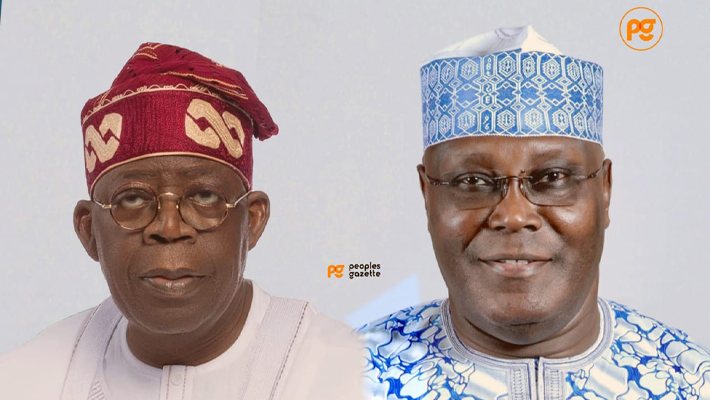
Tinubu wants another term but ashamed to face Nigerians to account for his first term: Atiku
“Now he wants another mandate. Before asking Nigerians for one, he must face them and account for the first term,” Mr Abubakar said.

Health
Diphtheria: 93% of affected children didn’t receive full vaccine doses, says NPHCDA
The NPHCDA CEO said some affected children had either not received any vaccine or received only one of the three recommended doses.

States
LAWMA begins clearing Iyana Oworo’s black spot waste
Mr Gbadegesin said LAWMA was investigating the source of the illegal dumping at the location.
Lagos
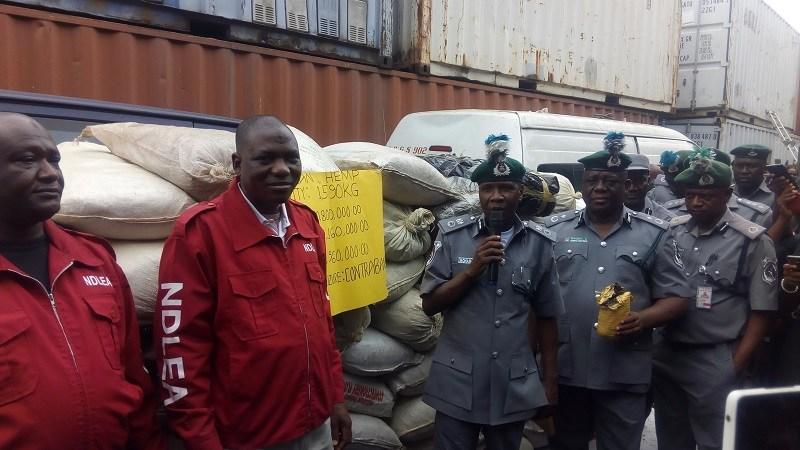
Customs hands over seized cannabis worth over N2.26 billion to NDLEA
The controller attributed the success to intelligence-led enforcement, modern technology, and collaboration among security agencies.
Economy
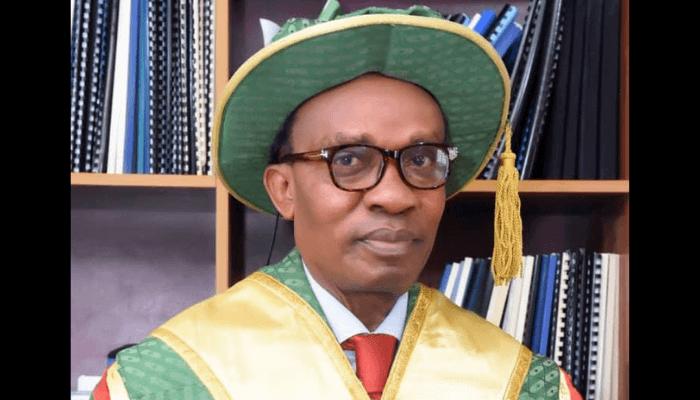
Achievers University VC advises Trinity University graduates on integrity, competence, innovation
Mr Ayorinde warned aspiring entrepreneurs against borrowing without carefully assessing repayment obligations.


