

Over 800 experts rally in Abidjan to tackle Lassa fever
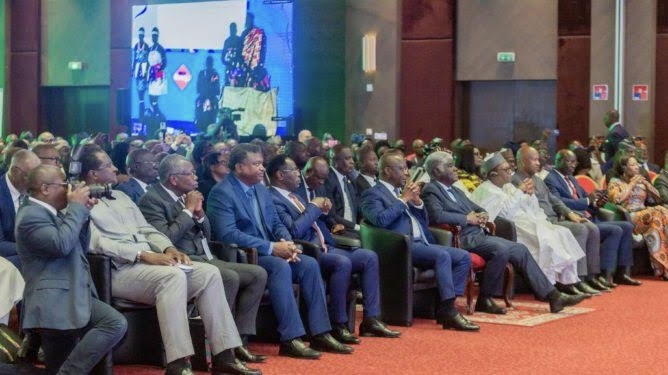
More than 800 health experts, policymakers, and technical partners from Africa, Europe, and the Americas were in Abidjan for the second ECOWAS International Conference on Lassa fever.
Melchior Aïssi, the director-general of the West African Health Organisation, disclosed this at the closing ceremony of the event on Thursday in Côte d’Ivoire.
Mr Aissi called for stronger regional collaboration, enhanced research, and improved preparedness to combat the deadly disease.
The four-day event brought together participants from 32 countries, featuring over 140 oral presentations, 162 posters, 20 parallel sessions, and 28 plenary sessions.
Mr Aïssi said that Lassa fever was a transboundary challenge that requires collective action, adding that “no country can tackle this alone.
“Our shared intelligence, resources, and regional cooperation are essential to prevent, detect, and respond to outbreaks,” he said.
Representing the Coalition for Epidemic Preparedness Innovations, Katrin Ramsauer, head of the Lassa Fever Disease Programme, highlighted the importance of vaccine research and development.
“CEPI currently supports three vaccine candidates, with clinical trials underway in Nigeria, Liberia, and Ghana. Developing vaccines is both a scientific and moral imperative. Together, we can protect the populations most at risk,” she said.
Speaking on behalf of the World Health Organisation, Thinero Baldé, WHO representative in Senegal, praised the conference for fostering collaboration across governments, scientists, and communities.
“Complex challenges demand complex solutions. The networks and relationships formed here in Abidjan are essential to strengthen surveillance, laboratory systems, and emergency response across West Africa,” he said.
Key recommendations from the conference included strengthening regional coordination and expanding national surveillance and laboratory capacities. The conference also recommended the scaling up of scientific research, improving community engagement, and enhancing preparedness for health emergencies.
Participants underscored the need for political commitment to prioritise Lassa fever on national health agendas.
The conference was organised by WAHO in collaboration with CEPI, WHO, and the Côte d’Ivoire Ministry of Health.
It served as an affirmation of West Africa’s collective determination to confront Lassa fever and other emerging infectious diseases in the region.
(NAN)

We have recently deactivated our website's comment provider in favour of other channels of distribution and commentary. We encourage you to join the conversation on our stories via our Facebook, Twitter and other social media pages.

More from Peoples Gazette

Agriculture
FG tasks ECOWAS on leveraging financing strategies for agroecology
The federal government has urged stakeholders in the agriculture and finance sectors in the West Africa region to leverage financing strategies to enhance agroecology practices

Politics
Katsina youths pledge to deliver over 2 million votes to Atiku
“Katsina State is Atiku’s political base because it is his second home.”
Heading 4
Police begin disciplinary action against inspector over anti-Igbo, Obi remarks
The errant officer, who also alleged that Mr Obi is involved in rituals and that he will turn Abuja into a hotbed for fraud.

States
Taraba judicial commission promotes 516 staff, confirms appointments
The commission adopted the promotion of the staff at its 125th and 126th meetings.
States
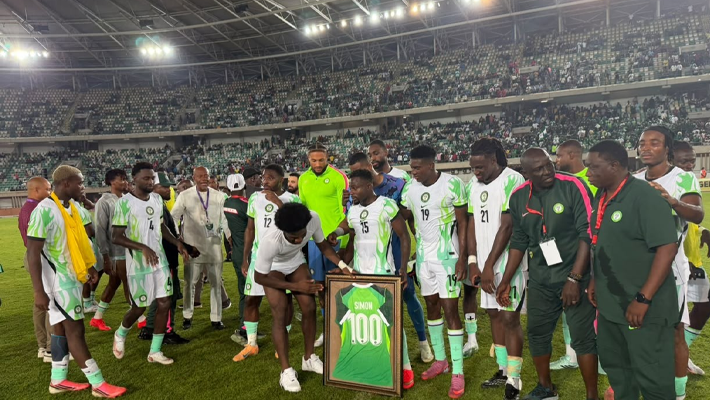
Debutants Ilenikhena, Usor score as Nigeria beat Madagascar 2-1 in 2027 AFCON Qualifiers opener
Madagascar grabbed the lead in the 16th minute.

World
Russian drone strike kills four, injures seven in Kyiv
Mr Zelenskyy said Russians are constantly expanding their escalation operation.

States
WHO expands prequalification programme for medical devices
Mr Maiauduga said the state government decided to migrate to solar to reduce maintenance costs.

Health
WHO expands prequalification programme for medical devices
WHO said prequalification of condoms and IUDs was transferred from UNFPA.


