

Petrol Price Hike: Atiku backs IPMAN call for FG’s intervention, says Nigerians deserve cheaper fuel
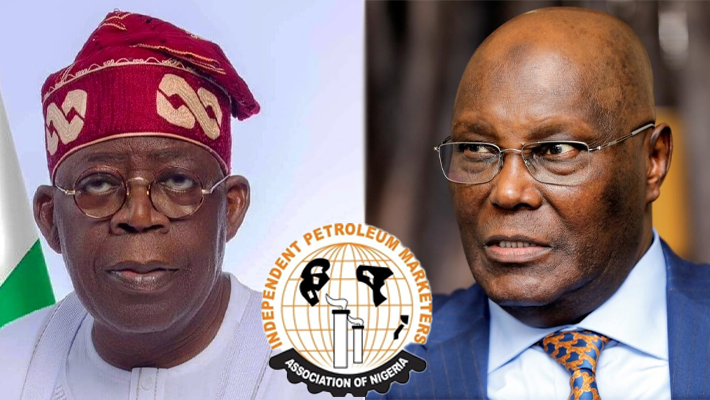
Former Vice President Atiku Abubakar has backed the call by the Independent Petroleum Marketers Association of Nigeria (IPMAN) on government for an interaction with domestic refiners to reduce petrol prices.
He stated that the the association had arrived, though belatedly, at the central economic principle behind his plan to make energy affordable again.
In a statement by his Senior Special Assistant on Public Communication, Phrank Shaibu, Mr Atiku said IPMAN’s intervention was significant because it came from people who buy, distribute and sell petroleum products every day and therefore understand, beyond government propaganda, what expensive petrol is doing to businesses and Nigerian families.
“IPMAN has come late to this conversation, but it has come to the right conclusion. The association is now saying that government cannot simply stand aside while petrol prices punish Nigerians and that deliberate subsidy around domestic refining can help bring prices down. That is precisely the policy principle President Tinubu and his gang of jesters have spent weeks trying to ridicule.
“Tinubu’s argument has always depended on deliberately confusing the import-subsidy bazaar and a transparent, production-linked intervention that strengthens Nigerian refining and delivers measurable relief to Nigerian consumers.
“Let me put it to President Tinubu in simple English: the difference between the import subsidy and the policy I have put before Nigerians is the difference between a farmer who harvests cassava, sells it all cheaply and then travels elsewhere to buy expensive garri for his family, and one who builds the capacity to process his cassava at home.
“Nigeria produces crude oil. It is economic foolishness to possess the raw material, fail to maximise its processing at home and then tell Nigerians that unaffordable fuel is the price they must pay for reform.
“My principle is simple: subsidy follows the barrel. Strengthen the Nigerian barrel, strengthen Nigerian refining and ensure that the benefit follows that barrel all the way to the Nigerian consumer.”
Mr Atiku said the proposal would also strengthen important objectives of the Petroleum Industry Act, including promoting petroleum processing within Nigeria and ensuring safe and affordable access to petroleum products.
He stated, “The law itself recognises that local refining and affordability matter. A policy that expands domestic refining capacity while lowering the burden on consumers therefore advances the direction of the PIA. What is the value of producing crude oil if the taxi driver in Kano, the teacher commuting from Kubwa, the trader in Onitsha or the farmer moving produce to Lagos cannot afford the fuel derived from it?”
Mr Atiku said Mr Tinubu’s celebration of subsidy removal as an economic triumph had become increasingly detached from the reality confronting ordinary Nigerians.
He noted, “The real test of petrol policy is not how cheap one litre appears after somebody converts it into dollars. The real question is how much of a Nigerian’s income and labour it consumes.
“The DailyFuels Fuel Affordability Index places Nigeria at number 91 on its affordability ranking and estimates that the average Nigerian requires about 44 minutes of work to afford one litre of petrol. A 40-litre tank represents about 29.5 hours of work under its methodology.
“That is the Tinubu economy in one statistic. Petrol may appear cheap when converted into dollars and compared with richer countries, but Nigerians do not earn American or European salaries.
“A teacher does not experience fuel policy through a government spreadsheet. A tomato seller experiences it when the truck bringing her produce charges more, her own transport fare rises and her customers arrive at the market with less money in their pockets. By the time one tomato reaches a Nigerian kitchen, Tinubu’s expensive petrol has collected its own levy several times along the journey.
“That is why my targeted intervention is fundamentally a cost-of-living policy. When energy costs rise, transportation, food, production and distribution rise with them. Making fuel affordable means restoring purchasing power to Nigerian families. You do not govern spreadsheets. You govern human beings.”
The former vice president said IPMAN’s intervention should now move beyond commentary and become part of the solution Nigerians would need from 2027.
Mr Atiku said, “I therefore invite IPMAN to join us in an unbreakable contract with the Nigerian people—not merely by acknowledging the principle of targeted intervention, but by bringing its experience, market knowledge and advisory capacity into the monitoring and implementation of this policy when we assume office in 2027.
“The people who buy, distribute and sell petroleum products every day know where distortions occur, where leakages hide and where good policy can be sabotaged between the refinery gate and the filling station. That knowledge must be put at the service of Nigerians.
“Our commitment is clear: subsidy under our administration will strengthen domestic refining, expand local capacity, prevent arbitrage, operate transparently and deliver measurable relief at the pump. IPMAN should have a voice in ensuring that every benefit intended for the Nigerian consumer actually reaches the Nigerian consumer.”
Mr Atiku stressed that the invitation was about building the future from 2027 and not rescuing President Tinubu from the consequences of his own policies.
“Let nobody misunderstand this invitation. IPMAN is being invited to help us build the future with Nigerians, not to rescue President Tinubu from the economic hole he dug for himself.
“Tinubu had his opportunity. Nigerians cried under transport costs, food inflation and collapsing purchasing power, and his government answered them with lectures about sacrifice. He chose dogma over compassion, propaganda over pragmatism and hardship over humanity.
“He cannot spend years turning intervention into a political swear word and then expect the people now vindicating our argument to become an emergency rescue squad for his failed policy, ” Mr Atiku added.
Mr Atiku said his team received credible intelligence indicating that the Tinubu administration had entered full panic mode and now plotting to smuggle subsidy back through the back door—after nearly four years of branding subsidy as economic sacrilege.
He added, “This is not compassion. It is electoral desperation. The strategy is as cynical as it is obvious: impoverish Nigerians for three and a half years, wait until the 2027 election is within sight, then hurriedly return a fraction of the relief you denied them and expect gratitude at the ballot box. Tinubu wants Nigerians to forget the pain because an election is approaching. They will not.
“You cannot weaponise hardship for years and then deploy relief as campaign material. Nigerians have paid too dearly for this government’s policies to be deceived by an election-season conversion. They know the difference between empathy and panic. And they know when their suffering is being repackaged as a campaign strategy.”
Mr Atiku said IPMAN’s position had done more than strengthen the case for targeted intervention; it had exposed how isolated Mr Tinubu’s absolutist argument was becoming from the realities of the petroleum market.
Mr Atiku noted, “IPMAN has not adopted every detail of my policy, and it does not need to. What matters is that one of the most important groups in the downstream petroleum sector has independently arrived at the central proposition Tinubu mocked: deliberate intervention around domestic refining can be used to pursue lower prices for Nigerian consumers.
“The serious policy conversation is moving towards domestic refining, affordability and consumer relief. Tinubu’s propaganda is stranded somewhere behind it.
“So, I welcome IPMAN. Let us prepare together for 2027 — marketers, refiners, regulators, consumers and independent monitors — and build a system where support follows the Nigerian barrel and relief follows that support all the way to the filling station.
“That is the contract we offer Nigerians: local capacity first, transparency first, purchasing power first and affordable energy first.
“President Tinubu had the opportunity to put Nigerians first when they needed relief most. He chose hardship and called it reform.
“There are therefore two honourable options before him now: apologise to Atiku Abubakar and, more importantly, to the Nigerian people for ridiculing a policy principle that major petroleum-sector players are beginning to recognise and quietly withdraw from the 2027 presidential contest or wait to be rejected at the polls in January.
“This is not about Tinubu or Atiku. It is about Nigerians. You cannot empty their pockets, call it reform, ridicule the ideas intended to make their lives affordable and then ask them to reward you with another four years.
“Tinubu may continue defending expensive petrol. We will continue building the coalition that will make Nigeria affordable again from 2027.
“TINUBU MADE NIGERIA EXPENSIVE. *ATIKU WILL MAKE NIGERIA AFFORDABLE AGAIN* .”
Phrank Shaibu
Senior Special Assistant on Public Communication to Atiku Abubakar, Vice President of Nigeria, 1999–2007, and Presidential Candidate of the African Democratic Congress (ADC).
3rd September, 2026

We have recently deactivated our website's comment provider in favour of other channels of distribution and commentary. We encourage you to join the conversation on our stories via our Facebook, Twitter and other social media pages.

More from Peoples Gazette

States
Independence: NBA urges Nigerians to expect better future
The NBA said that ordinary Nigerians should be deriving benefit from the subsidy removal rather than hardship.

Agriculture
FG tasks ECOWAS on leveraging financing strategies for agroecology
The federal government has urged stakeholders in the agriculture and finance sectors in the West Africa region to leverage financing strategies to enhance agroecology practices

Politics
Katsina youths pledge to deliver over 2 million votes to Atiku
“Katsina State is Atiku’s political base because it is his second home.”

Sport
Youth Olympics: Nigeria to field 21 athletes in eight sports
Olopade said Nigeria decided to participate because the event was taking place in Africa for the first time.
States
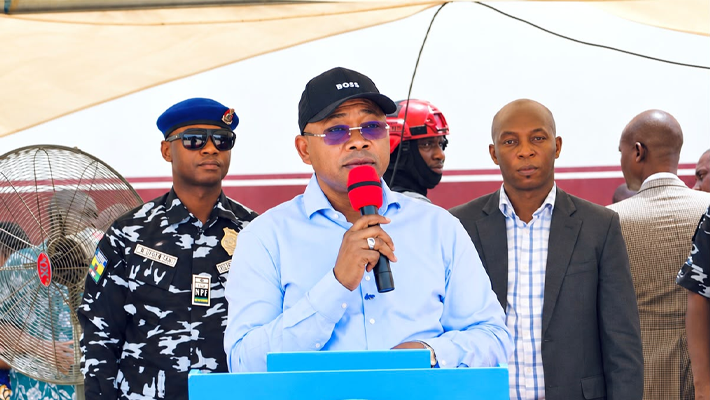
Kogi gov unveils inspection kits, tasks engineers on accountability
Mr Ododo urged engineers to provide technical advice to political office holders whenever they identify better approaches to project execution.

States
Gunmen kill seven people in Plateau
The group sympathised with the bereaved families and the Gyero community and wished the survivor a speedy recovery.
NationWide
Society urges political parties to prioritise water, sanitation in electioneering
Mr Attah said Nigeria’s commitment to ending open defecation by 2030 should remain a key advocacy priority.

States
Lagos assembly backs state police, seeks parliamentary police
Mr Obasa said the establishment of a state police has been a recurring issue from the fifth to the 10th assembly.

Health
Sanwo-Olu pledges to resolve Lagos doctors’ outstanding arrears, welfare issues
Mr Sanwo-Olu said the state government remained committed to working with the guild to address outstanding concerns.


