

Poor infrastructure, multiple taxation cripple industries in Bauchi, Gombe, Jigawa: Stakeholders
Stakeholders in the economic sector have identified decaying infrastructure and multiple taxation as major obstacles to sustainable industrial growth in Bauchi, Gombe, and Jigawa.
They also listed inadequate funding, insecurity, and poor management as crippling industries across the states.
The stakeholders, including manufacturers, entrepreneurs, industrialists, and public officials, said this in separate interviews in Bauchi, Dutse and Gombe.
Abdullahi Hassan, the zonal coordinator of the Industrial Development Centre in Bauchi, said decayed infrastructure and poor management largely caused the collapse of industries.
He said dilapidated roads, a lack of functional rail transport, inadequate logistics, and multiple taxation isolate industries from market access.
Mr Hassan said industries failed to standardise products for export because of poor management and weak market strategies.
“These are financial burdens that startups bear. If they are unable to pay the taxes, they close down,” he said.
Mr Hassan listed some moribund industries in the state, including Steyr Nigeria, Supercor Industries, and Bazamri, among others.
Shuaibu Mohammed, the head of transactions at the Bureau for Privatisation and Economic Reforms, attributed the trend to industries’ inability to adapt to modern technologies.
He said the high cost of acquiring modern machinery and training workers made it difficult for companies to modernise their operations.
Mr Mohammed called for viable intervention programmes to ease the tax burden, improve infrastructure, and provide financial support for industries to revive production and create jobs.
The Gombe government said it initiated industrial development programmes to accelerate economic diversification and address unemployment.
Nasir Aliyu, the commissioner for trade, industry and tourism, said that the government invested in infrastructure to attract investors and transform the state into an industrial hub in the North-East.
He said the government spent about N26 billion to establish the Muhammadu Buhari Industrial Park as part of a renewed employment and investment drive.
“The 1000-hectare industrial park has critical infrastructure, including road networks, water supply and 24-hour electricity to support industrial operations. About 12 companies have secured approval to operate at the park, with some already producing while others are constructing their facilities,” he said.
Mr Aliyu said the park would create about 1,000 jobs, adding that employment opportunities would increase once the facility is fully operational. He said that farmers and grain dealers supplying raw materials to industries would benefit through improved access to markets and better returns on their investments.
He said the Nasarawo small-scale industrial cluster, which houses groundnut oil processors and rice millers, currently employs more than 5,000 workers. The commissioner attributed the feat achieved to deliberate government policies aimed at improving the business environment and attracting investment.
In Jigawa, the government has embarked on a 170.8-hectare Gagarawa Industrial Park project to serve as a regional manufacturing, trade, logistics and distribution hub.
Sagir Musa, the commissioner for information, youths, sports and culture, said 15 plots had been allocated to companies affiliated with the Manufacturers Association of Nigeria (MAN), and 20 other plots were allocated to investors.
He said the measure was imperative because the state’s industrial history has not been encouraging.
Mr Musa said that privatisation subsequently produced a turnaround for some enterprises, illustrating both the difficulties of government-owned industrial ventures and the potential of competent private-sector management.
He said the government has developed a PPP framework and a project portal, including the Comttra Jigawa hibiscus facility, CoAmana’s digital market project, an agripreneurship incubation programme, and agricultural and renewable-energy initiatives.
Mr Musa recalled that during the 2026 Jigawa Economic and Investment Summit, the government announced $140 million investment commitments and adopted 40 recommendations covering investment, climate reform, agriculture, renewable energy, industrialisation, human capital and monitoring.
“InvestJigawa corporate plan also set targets for attracting more than 30 new inward investment projects by 2026, including over 10 light-manufacturing projects, and 2,500 direct jobs across targeted sectors.
“The state has begun efforts to revive JiPHARMA, with InvestJigawa mandated to seek credible investors capable of restarting production of essential drugs and medical consumables,” he said.
According to Mr Musa, the initiative aims to strengthen local production, reduce dependence on external supplies and create employment.
He said the success of the industrial strategy would not be measured by the number of agreements signed, investment summits organised, or plots allocated, but by the number of industries operating in the state.
Lamido Nasir, an industrialist, said that Jigawa was endowed with prolific agricultural resources, including rice, sesame, hibiscus, groundnuts, wheat, vegetables and livestock. He said the economic value of these commodities could be captured outside the state.
“The challenge is not simply producing more crops, but developing industries capable of processing them, creating jobs, generating revenues, supporting farmers and positioning Jigawa within the national and international value chains,” he said,
Mr Nasir highlighted that agric export tax, unfavourable marketing and pricing policies, export restrictions, weak investment and the neglect of agriculture contributed to the collapse of industries. He advocated for proactive industrial policy to address challenges associated with energy crises, finance, roads, security, taxation, access to land, skills, technology and markets simultaneously.
(NAN)

We have recently deactivated our website's comment provider in favour of other channels of distribution and commentary. We encourage you to join the conversation on our stories via our Facebook, Twitter and other social media pages.

More from Peoples Gazette

States
Independence: NBA urges Nigerians to expect better future
The NBA said that ordinary Nigerians should be deriving benefit from the subsidy removal rather than hardship.

Agriculture
FG tasks ECOWAS on leveraging financing strategies for agroecology
The federal government has urged stakeholders in the agriculture and finance sectors in the West Africa region to leverage financing strategies to enhance agroecology practices

Politics
Katsina youths pledge to deliver over 2 million votes to Atiku
“Katsina State is Atiku’s political base because it is his second home.”
Economy
Nigeria leads UN budget talks, rallies Africa ahead of committee opening
Nigeria has rallied African ambassadors ahead of Monday’s opening of the UN’s crucial budget negotiations, with Jimoh Ibrahim spearheading the talks.
Opinion
Murder in Asaba
There is something fundamentally wrong with treating the alleged killing of a citizen as though it were principally a disagreement within the public service.
States
Kwara: One killed in Oko-Olowo highway crash
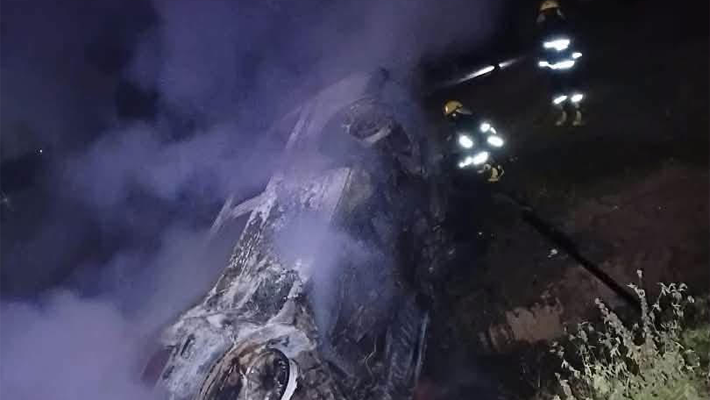
At least one person was killed while others sustained injuries after a commercial bus caught fire on the Oko-Olowo Expressway, Iye-Maja Junction in Ilorin, Kwara, on Sunday.

World
Brazil’s presidential election goes to run-off as Bolsonaro, Lula seek win
Brazil’s election held over the weekend will go to a run-off because no candidate secured the 50 per cent threshold required by the constitution to win the race.
Sport
NLO Cup league format to guarantee more home, away fixtures
The Nationwide League One has introduced a home-and-away league format for its revamped NLO Cup to provide participating clubs with more competitive match opportunities.

Sport
Kwara United defeat 10-man Ranchers Bees 2-1 in Ilorin
Kwara United of Ilorin came from behind to defeat 10-man Ranchers Bees of Kaduna 2-1 in their Nigeria Premier Football League Matchday 7 encounter on Sunday in Ilorin.


