

President Al-Sisi’s crackdown on Egyptians protesting starvation, economic hardship condemnable: Amnesty International

The Egyptian authorities have intensified their crackdown against protesters, striking workers and people voicing criticism online over the authorities’ handling of the economic crisis, said Amnesty International today.
Between January and March 2024, Amnesty International documented four cases of arbitrary arrest and detention of individuals in three governorates who complained about price hikes in comments on social media.
Authorities also questioned dozens of workers from a public sector company who participated in a strike in February demanding to be paid the minimum wage; with two still arbitrarily detained. Security forces also dispersed a demonstration in March, where protesters blamed President Abdel Fattah al-Sisi for “starving” the poor, and arrested protesters.
“The Egyptian government is once again resorting to repressive tactics to crush the slightest form of dissent, whether peaceful protest, workers’ strikes or people simply venting their frustrations in a social media post. Rather than arresting individuals for speaking out about deteriorating living conditions, the Egyptian authorities must take effective steps to fulfil people’s social and economic rights, including those bearing the brunt of the economic crisis,” said Sara Hashash, Deputy Regional Director for the Middle East and North Africa at Amnesty International.
“Egyptian authorities must respect the right to freedom of expression and peaceful assembly and immediately release all those arbitrarily detained solely for the exercise of these rights.”
Much of the anger over the economic crisis has been directed at the government and President al-Sisi who in a controversial speech in September 2023, said hunger and deprivation were acceptable sacrifices for development and progress.
Arbitrary detentions over social media posts
Amnesty International documented cases of four individuals who were arbitrarily arrested between January and March 2024 for posting social media content criticizing the government’s handling of the economic crisis or complaining about rising prices.
According to the Egyptian Front for Human Rights (EFHR) and a human rights lawyer, Egyptian security forces arrested four people from their homes or workplaces in al-Dakhlia, al-Sharkia, and Giza governorates. The Supreme State Security Prosecution (SSSP) opened investigations against them into bogus terrorism-related charges and publishing “false news”. All four remained in pretrial detention at the time of writing.
One employee in a private business who was arrested on 14 March from his workplace in Giza told SSSP prosecutors that he was only arrested because he posted a video on Facebook complaining about the high cost of his mother’s medication.
Prior to bringing them before the SSSP, the authorities subjected the four detainees to enforced disappearance for periods ranging between two to nine days while holding them in National Security Agency (NSA) offices in the cities of Mansoura, Zagazig and 6th of October.
Security forces arrested one of the men on 11 February from his house in al-Dakhlia, then subjected him to torture and other ill-treatment while he was forcibly disappeared at an NSA office, according to EFHR. Amnesty International reviewed the TikTok videos that led to his detention. In one of these videos, he criticized President al-Sisi’s national projects, blamed him for people’s hunger, and criticized the continuously rising prices in supermarkets. The man told the prosecution that NSA officials beat him and gave him electric shocks. However, the prosecution has not investigated his complaint nor referred him for forensic examination.
Targeting striking workers
In February, President al-Sisi set the monthly minimum wage for public sector workers at 6,000 EGP (around 125 USD). On 22 February, thousands of workers at Ghazl Al Mahla textile company, a public sector enterprise in al- Gharbiya governorate, took part in a strike demanding an increase in meal allowances and salary rises to meet the new national minimum wage, according to the Center for Trade Union & Workers Services (CTUWS), an Egyptian NGO. On 29 February, the workers ended the strike after the Minister of Public Business Sector issued on a decree on 25 February setting the minimum wage for all public enterprises to 6,000 EGP.
CTUWS told Amnesty International that during the strike the NSA summoned about 28 workers, questioned them without a lawyer, and held them incommunicado for periods ranging between one to three days. All were released except for two workers who were referred to the SSSP which opened investigations against them into bogus charges of “joining a terrorist group” and publishing “false news”. They remained in pretrial detention at the time of writing.
Dispersing peaceful protests
On 15 March, police dispersed dozens of peaceful protesters demonstrating in al-Dakhilah, Alexandria governorate, over the rising cost of living, arresting an unknown number according to local media. Videos of the protest circulated on X, formerly Twitter, showed protesters raising signs that read “you made us hungry, Sisi.”
Police transferred the detainees to an NSA office in Alexandria, according to Ahmed Al Attar, executive director of the Egyptian Network for Human Rights, an independent rights group.
Among those arrested was a non-commissioned army officer who was forcibly disappeared for at least five days before being referred to Alexandria military court.
On 23 April, the court sentenced him to eight years in prison and ordered his dismissal from the army, according to informed sources. The charges against him have not been publicly disclosed. Human rights lawyers told Amnesty International that they have no information as to whether the rest of the arrested protesters were prosecuted or released without charge.

We have recently deactivated our website's comment provider in favour of other channels of distribution and commentary. We encourage you to join the conversation on our stories via our Facebook, Twitter and other social media pages.

More from Peoples Gazette

States
Independence: NBA urges Nigerians to expect better future
The NBA said that ordinary Nigerians should be deriving benefit from the subsidy removal rather than hardship.

Agriculture
FG tasks ECOWAS on leveraging financing strategies for agroecology
The federal government has urged stakeholders in the agriculture and finance sectors in the West Africa region to leverage financing strategies to enhance agroecology practices

Politics
Katsina youths pledge to deliver over 2 million votes to Atiku
“Katsina State is Atiku’s political base because it is his second home.”

Uncategorized
TCN restores Kainji-Birnin Kebbi 330kV transmission line
The company said power went off in the affected areas on September 7.
States
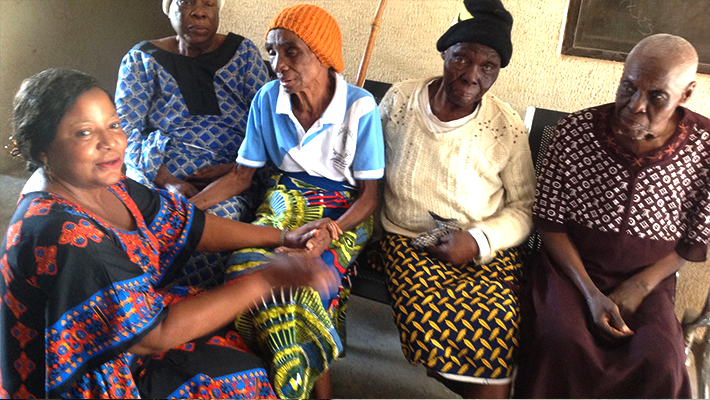
Group seeks better healthcare, social support for elderly Nigerians
Mr Oluwadamilare said growing old in Nigeria was becoming increasingly difficult due to economic hardship.
States
INEC urges Sokoto voters to maintain confidence in electoral process
INEC reminded registered voters that collection of Permanent Voter Cards (PVCs) would begin on October 9.
States
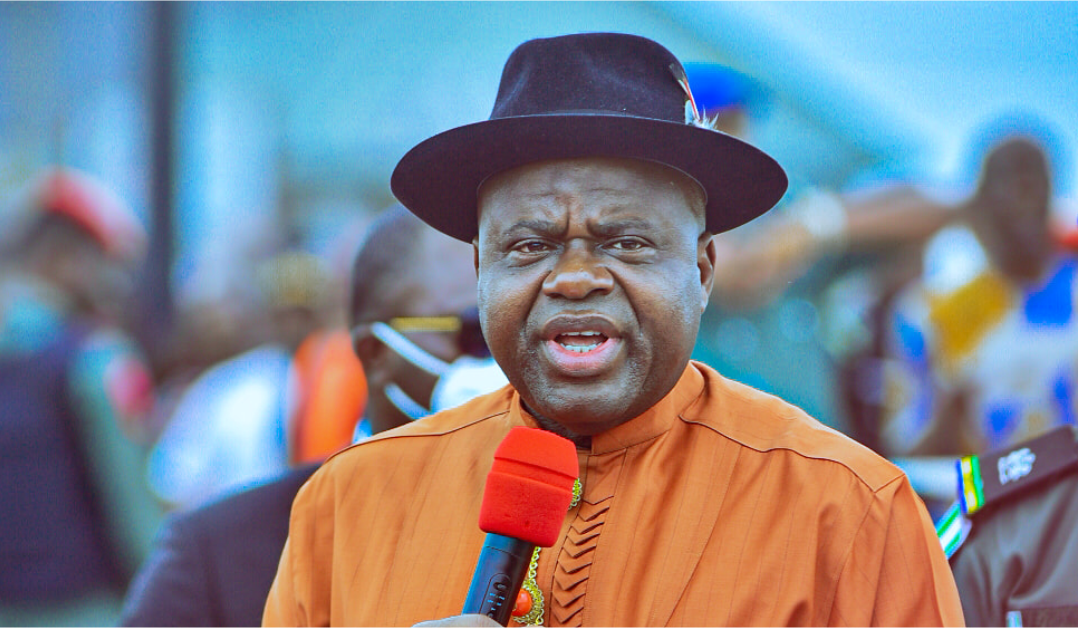
Bayelsa governor urges Nigerians to renew commitment to unity, development
The governor congratulated the people of Bayelsa at home and abroad.
NationWide
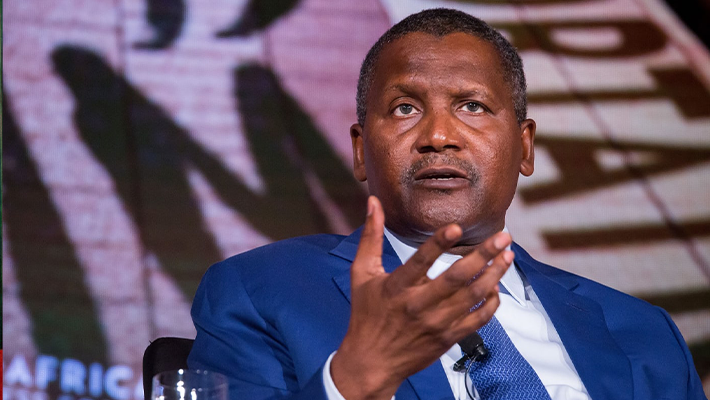
Dangote Foundation gives Nigerian students free shares to build new generation of investors
The initiative forms part of ADF’s broader commitment to empowering young Nigerians.

States
Police, security agencies launch operation to rescue abducted corps members in Imo
The incident occurred on Thursday at about 6:30 p.m. along the Owerri-Onitsha Road, near Umunoha.


