

Report links British colonial rule to Africa’s environmental vulnerability
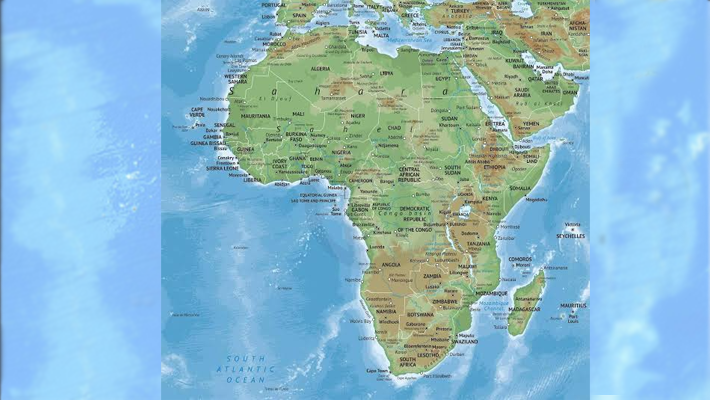
A report by researchers from the University of Lagos (UNILAG) has linked British Colonial rule in Africa to long-term environmental vulnerabilities in the region, urging global leaders and organisations to ensure efforts for compensation for past environmental destruction.
The report, titled “CO2lonianism, Ecocide, Reparation,” was presented at a press conference on August 28 by its lead author, Professor J. G. Nkem Onyekpe, Head of the Department of History and Strategic Studies.
The report argues the long-term ecological harm caused during the British colonial on African nations should be recognised as a huge category of damage which is separate from the consequences of the slave trade, and potentially worth hundreds of trillions of dollars.
Mr Onyekpe said, “The report documents that valuation exercises of comparable ambition and scale have already been attempted successfully.”
He cited a peer-reviewed study in 2022, which estimated that resources appropriated from the Global South through unequal exchange were worth more than $10 trillion annually in 2015 alone.
“If the same order of logic, that large-scale, structurally unequal appropriation of resources is capable of rigorous monetary valuation, were extended backward across the full duration of colonial rule and across the full set of affected African states, the resulting figure would run into the hundreds of trillions of dollars, and quite possibly beyond.” Mr Onyekpe added.
The report has also been formally submitted to the African Union’s newly established sub-commissions: the Committee of Experts on Reparations (AUCER) and the Legal Reference Group on Reparations (AULER).
These sub-commissions have been operational under the AU’s Decade of Justice and Reparations (2026-2035), which is tasked with developing a common African position on reparatory claims.
The researchers used Uganda’s Kanungu District environmental degradation to illustrate the relationship between ecology and livelihoods.
The report identified that land degradation in the district had a statistically significant relationship with farmers’ livelihoods, while deforestation was determined by local respondents as a primary driver.
Local officials and farmers directly attributed the environmental consequences to hunger, food insecurity, and resource constraints.
According to the report, recent developments in international and African law have created a unique window for Africa to lead efforts to recognise whether environmental destruction should be treated as a crime.
It also highlighted the AU’s own decision in July 2025 to consider whether the “massive destruction of environmental ecosystems” should be treated as a crime, as other international bodies move towards the same direction.
Ogunlade Olamide, an Associate Director at the Corporate Accountability and Public Participation Africa (CAPPA), said the report enlightens the ecological destruction in Africa and also follows efforts on the region’s reparations demands.
“Colonial reparations cannot stop at counting the lives taken, the people enslaved, the resources extracted, and indigenous survival altered. The ecological destruction that made those systems possible and whose consequences continue to shape Africa’s climate vulnerability today must be recognized as part of the debt owed to African peoples,” he said.
The report pointed out a previous precedent from the International Court of Justice (ICJ): the 1990s Certain Phosphate Lands in Nauru case, in which Nauru took legal action against Australia, its former colonial administrator, over environmental devastation caused by colonial-era phosphate mining.
Dr Karibi-Whyte, a legal expert familiar with the report, said, “The Nauru case proves that such claims are not merely theoretical but are grounded in established international law,” adding that “Africa is now building on that precedent to address a harm that is orders of magnitude larger.”
The authors want the report to become an important document in solving environmental destruction, as the report’s submission comes as Africa’s leaders seek mechanisms to solve the damage on the continent and restore justice.

We have recently deactivated our website's comment provider in favour of other channels of distribution and commentary. We encourage you to join the conversation on our stories via our Facebook, Twitter and other social media pages.

More from Peoples Gazette

States
Independence: NBA urges Nigerians to expect better future
The NBA said that ordinary Nigerians should be deriving benefit from the subsidy removal rather than hardship.

Agriculture
FG tasks ECOWAS on leveraging financing strategies for agroecology
The federal government has urged stakeholders in the agriculture and finance sectors in the West Africa region to leverage financing strategies to enhance agroecology practices

Politics
Katsina youths pledge to deliver over 2 million votes to Atiku
“Katsina State is Atiku’s political base because it is his second home.”

NationWide
Expert says hospitality sector crucial to Nigeria’s cultural promotion
The president stressed the need to train hospitality workers to provide services that meet international standards and ensure positive experiences for visitors.
States
Police rescue one-month-old baby allegedly sold by mother for N2 million in Oyo
Mr Ayanlade said investigations showed that the baby’s mother received N1 million of the N2 million paid by the buyer.

World
Alberta’s separation from Canada referendum results will be announced October 29
A simple majority in favour of independence in the vote could trigger the legal process required to hold a referendum.

Hot news Home top
Ex-U.S. defence official convicted for helping Nigeria-based scammers launder fraud proceeds released from prison
Prosecutors alleged that the offences occurred between July 2023 and December 2025 when Mr Marcus served as a money mule for online scammers operating in Nigeria.
Heading 1
TCN announces six-hour disruption of electricity supply in parts of Abuja
The company said the exercise would take place from 10:00 a.m to 4:00 p.m on Saturday.

Heading 4
APC gushes over Sonayon-James as Lagos deputy governorship candidate, confident of her intellect
According to the party, the significance of Mr Sonayon-James’s emergence also lies in the opportunity it creates for stronger female participation in leadership and governance.


