

Rich nations must double climate funding from taxes by 2030: Experts

UN-appointed experts said that wealthier countries must more than double the amount of climate finance paid from taxpayers’ money annually by 2030.
The Independent High-Level Expert Group on Climate Finance (IHLEGCF) assessed how much money would be needed to meet the 2015 Paris Agreement goals to limit dangerous global warming.
The new report is set to be launched on Thursday at the UN COP29 climate summit in Azerbaijan, as world leaders and delegates seek to iron out a new finance agreement.
Richer countries previously pledged 100 billion dollars a year in private and public finance to help developing nations green their economies and adapt to inevitable climate change impacts as part of efforts to secure the Paris Treaty.
But, countries agreed that a new agreement on climate finance should be set before 2025.
As nations now hammer out those details at COP29, the IHLEGCF said a total of $1 trillion needs to be flowing into developing countries each year by 2030, bar China, to meet the Paris Agreement goals.
Within this, the group outlined the amount of public money richer governments will need to give developing countries.
The analysis said that around 43 billion dollars in this “bilateral public funding” is flowing yearly from developed to developing countries.
Still, according to the experts, this needs to increase to 80 billion to $100 billion by 2030 per year for the world to meet the Paris Agreement goals.
But that is not all, as bilateral funding is not the only public money that richer governments pay as climate finance.
They also contribute money to multilateral development banks – like the World Bank – which then direct climate finance to developing countries.
For example, the UK government has pledged to spend £11.6 billion ($14.7 billion) over five years to 2026, mostly through bilateral climate finance and including money it pays to multilateral banks.
To meet their share of the $1 trillion, the IHLEGCF said that multilateral banks must triple financial flows to developing nations by 2030 to around 250 billion to $300 billion.
Beyond this, the report said, “The large and rapid scale-up of finance to support a big investment push can only be achieved by harnessing all pools of finance.”
It said that around half of the $1 trillion – between $450 billion and $550 billion – should be flowing into developing countries from private investment.
Prof Nick Stern of the Grantham Research Institute on Climate Change and co-chairman of the high-level group said this is “what’s necessary to deliver on Paris.”
The report warned that any shortfall in investment before 2030 will place added pressure on the years that follow and, therefore, create “a steeper and potentially more costly path to climate stability.”
“The less the world achieves now, the more we will need to invest later,” the report noted. “Delayed action means we will need to mobilise even larger sums in shorter timeframes to catch up on critical targets.
It added, “Additionally, investment needs for adaptation and resilience, as well as loss and damage and restoration of nature, will rise sharply as climate and nature risks escalate.”
The high-level group, also co-chaired by Amar Bhattacharya and Vera Songwe, has supported the climate finance agenda deliberations under successive COP presidencies since COP26.
It was tasked to help develop and put forward policy options and recommendations to encourage and enable the public and private investment and finance necessary for the delivery of the commitments, ambitions, initiatives, and targets of the Paris Agreement.
The report will, on Thursday, be officially launched at COP29 at a special event with Simon Stiell, the head of UN Climate.
(dpa/NAN)

We have recently deactivated our website's comment provider in favour of other channels of distribution and commentary. We encourage you to join the conversation on our stories via our Facebook, Twitter and other social media pages.

More from Peoples Gazette

States
Independence: NBA urges Nigerians to expect better future
The NBA said that ordinary Nigerians should be deriving benefit from the subsidy removal rather than hardship.

Agriculture
FG tasks ECOWAS on leveraging financing strategies for agroecology
The federal government has urged stakeholders in the agriculture and finance sectors in the West Africa region to leverage financing strategies to enhance agroecology practices

Politics
Katsina youths pledge to deliver over 2 million votes to Atiku
“Katsina State is Atiku’s political base because it is his second home.”

World
Co-creator of dark web marketplace ‘Empire’ Raheim Hamilton jailed 40 years
Mr Hamilton agreed to forfeit certain illicit proceeds, including about 1,230 bitcoin and 24.4 Ether, as well as three properties in Virginia.

Heading 4
Petrol, diesel prices displayed on Google Maps to help motorists find cheaper fuel amid soaring energy costs
Petrol stations across the UK are required to report fuel price changes within 30 minutes or risk being fined.

Agriculture
Nigeria finalises preparations to ratify global ocean protection treaty
Nigeria has finalised domestic arrangements to ratify a landmark international treaty designed to protect marine biodiversity beyond national jurisdiction.
Economy
Nigerian states’ revenues rose 93%, education spending drops: World Bank
The World Bank says Nigeria’s 36 states recorded a 93 per cent increase in revenues between 2023 and 2025, but education’s share of the sector’s expenditure declined.

Heading 2
Enugu secures $200 million solar investment to boost electricity supply
Mr Mbah pledged the state government’s support in removing institutional bottlenecks that could delay the project.
Heading 5
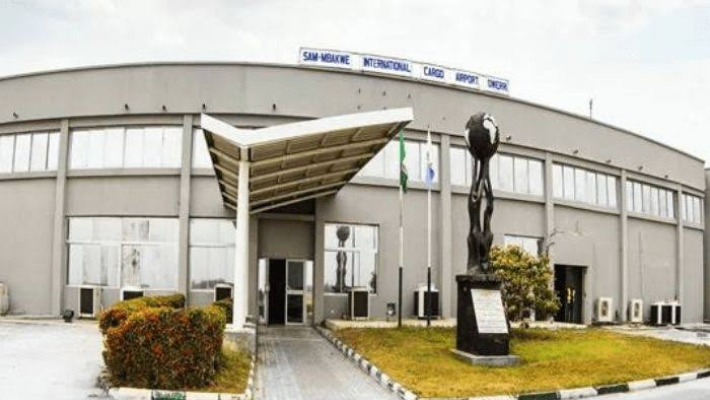
FAAN announces temporary closure of Owerri airport runway for repairs
According to Mr Agbebire, the closure was tentatively scheduled to last about 25 days.


