

Igbo, Yoruba squabbles contextualised
To understand the Igbo–Yoruba squabbles, I took a detour into the heart of South Asia, not across Nigeria, but across continents.
I “landed” in India and Pakistan on April 17, 2024 — the very day 19-year-old Pakistani girl, Ayesha Rashan, walked out of Chennai’s MGM Healthcare Hospital with a new heart beating in her chest.
In January, Ayesha had received that heart from a 69-year-old Hindu man in Delhi, who was declared brain dead. The surgery was complex, the bill a staggering $42,000 — but she paid nothing. An Indian Trust called the Aishwarya Trust, in association with the doctors and the hospital, covered the cost.
But it did not end there.
In Pakistan, reactions varied. Some called it a sin for a Muslim to carry the heart of a Hindu. “Better death than that,” they said. Rumours even spread of an imam in Karachi issuing a fatwa against her.
An online debate ensued. Words dripping with venom, drawn from ancient wells, splashed across social media platforms. Two camps emerged on both sides of the border: one calling for understanding, the other for destruction.
The extremists shouted the loudest, twisting a single act of kindness into proof of betrayal.
Yes, Ayesha was on India’s official transplant list. No, she hadn’t jumped the queue. Still, some Indians bristled: “Muslims don’t donate organs — why should they receive them?” One pointed to grim statistics: only one in a million Indians donate organs; 300,000 patients wait for transplants; 20 die daily. “Why give a heart to Ayesha? And for free?”
India’s government stuck to the facts: they made the match, no Indian patient qualified, and they followed protocol.
Meanwhile, in Pakistan, extremists called the transplant a sin — while others spun it as a triumph: a non-Muslim heart now “bowed to Allah.”
Out of hundreds of posts I read, one stayed with me — from Zahaib Nabeel:
“There are always extremists on both sides–but using a fringe fatwa to define the thinking of 240 million Pakistanis is intellectual dishonesty and morally lazy.
Most Pakistanis celebrated the news of Ayesha’s life being saved. The Indian medical team, the donor family, and the charitable institutions involved deserve deep appreciation–and many Pakistanis gave just that.
Let’s not permit isolated ignorance to erase what truly matters here: a life was saved, transcending borders, surpassing religion.”
I underlined these phrases in my mind: intellectual dishonesty, morally lazy, isolated ignorance, across borders, and beyond religion.
The Igbo–Yoruba quarrel may be smaller than India–Pakistan’s rift, but the pattern is familiar — dishonesty dressed as argument, laziness passed off as truth, isolated ignorance inflated into sweeping judgment. And yet, there is always beauty when we dare to look across and beyond the lines.
Which takes me back — far back — to August 14–15, 1947. The great partition.
In just two days, events uprooted up to 15 million people. One to two million lost their lives. The largest mass migration in human history began.
It happened because India’s leaders could not agree on the shape of the independent nation they were about to inherit. On one side, the Indian National Congress: Gandhi, the moral compass; Nehru, the secular nationalist; Patel, the political strongman. On the other hand, Muhammad Ali Jinnah of the Muslim League was the champion of the Two-Nation Theory. Lord Louis Mountbatten, the last viceroy, and Cyril Radcliffe came from Britain. Radcliffe was a lawyer who had never set foot in India, yet they gave him just five weeks to draw its borders.
Gandhi opposed partition. Nehru accepted it reluctantly, believing it would avert civil war. Patel focused on unifying the princely states. Jinnah pushed hard for Pakistan, arguing that Hindus and Muslims were too different to share a nation.
The British had ruled India the way they ruled everywhere — by dividing, elevating some, suppressing others, and institutionalising identity politics.
Unity among the natives was their greatest fear, so disunity became their greatest tool.
After World War II left Britain broke and weakened, the end came quickly. In 1946, Jinnah’s call for “Direct Action Day” sparked deadly riots. A proposed loose federation — India’s own “Aburi Accord” — collapsed.
In the end, Gandhi called partition a moral failure. Nehru saw it as the lesser evil. Though he had fought for it, Jinnah lamented the “moth-eaten” nation he received, with poor resources and broken borders.
Partition didn’t bring peace. By 1971, East Pakistan had become Bangladesh. India and Pakistan fought over Kashmir almost immediately, and there have been four wars since. Skirmishes still flare in the disputed Punjab. Now both nations are nuclear powers, locked in an arms race where the cost of a wrong move is total annihilation.
…To be continued.
Rudolf Ogoo Okonkwo teaches Post-Colonial African History, Afrodiasporic Literature, and African Folktales at the School of Visual Arts in New York City. He is also the host of Dr. Damages Show. His books include “This American Life Sef” and “Children of a Retired God.” among others. His upcoming book is called “Why I’m Disappointed in Jesus.”

We have recently deactivated our website's comment provider in favour of other channels of distribution and commentary. We encourage you to join the conversation on our stories via our Facebook, Twitter and other social media pages.

More from Peoples Gazette

States
Independence: NBA urges Nigerians to expect better future
The NBA said that ordinary Nigerians should be deriving benefit from the subsidy removal rather than hardship.

Agriculture
FG tasks ECOWAS on leveraging financing strategies for agroecology
The federal government has urged stakeholders in the agriculture and finance sectors in the West Africa region to leverage financing strategies to enhance agroecology practices

Politics
Katsina youths pledge to deliver over 2 million votes to Atiku
“Katsina State is Atiku’s political base because it is his second home.”
Africa
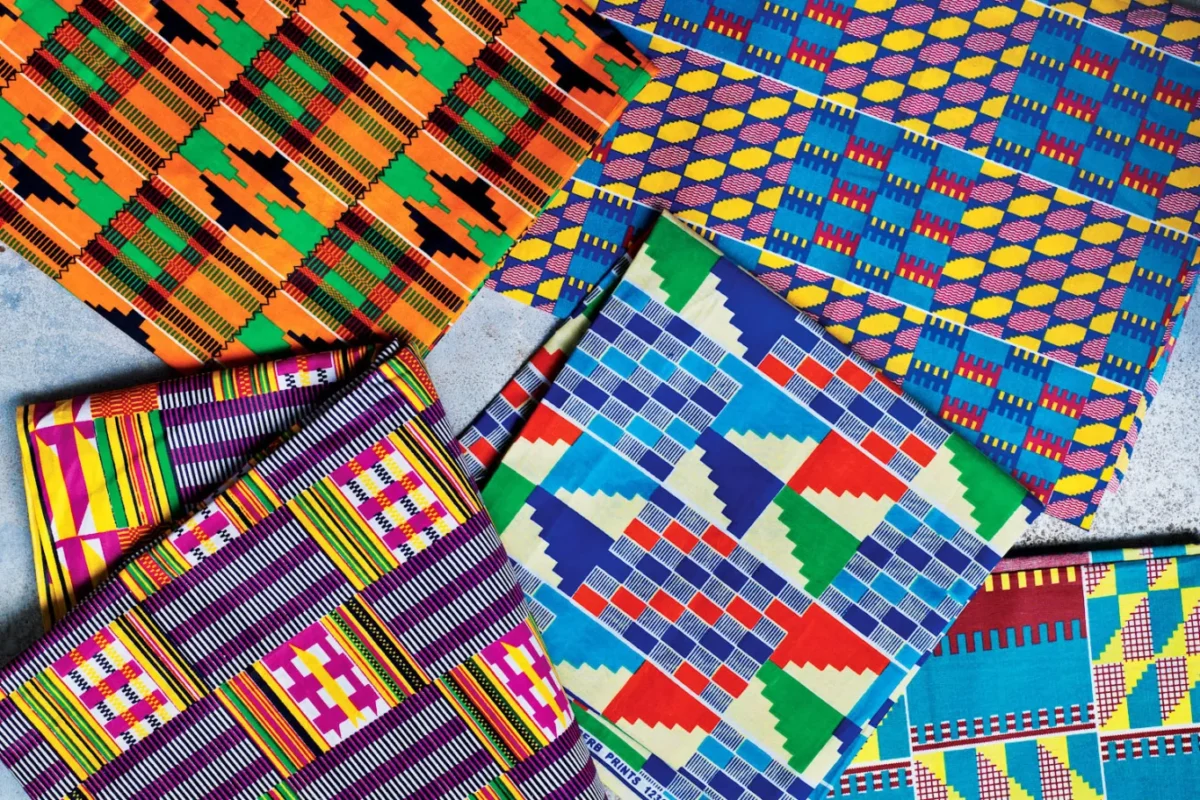
Ghana police link GH¢20 million counterfeit fabric haul to Nigeria, nab suspects
The Ghana Police Service alleged the seized fabrics originated from Nigeria.

Anti-Corruption
N2 Billion Money Laundering Case: Court sentences Faisal Maina to seven years’ imprisonment
After his re-arrest, the EFCC filed an ex parte motion seeking leave to apply for an order enforcing Mr Abang’s judgment against Mr Faisal, delivered on October 7, 2021.

Abuja
Nigeria urges stronger Commonwealth cooperation on security, trade
Nigeria called for stronger cooperation among Commonwealth countries on peace and security, trade, climate resilience, democratic governance and youth empowerment.

Economy
Fuel subsidy removal will become Tinubu’s greatest legacy, says ex-PDP chairman
A former state chairman of the Peoples Democratic Party in Cross River, Venatius Ikem, says subsidy removal by President Bola Tinubu will soon become his greatest legacy.
Economy
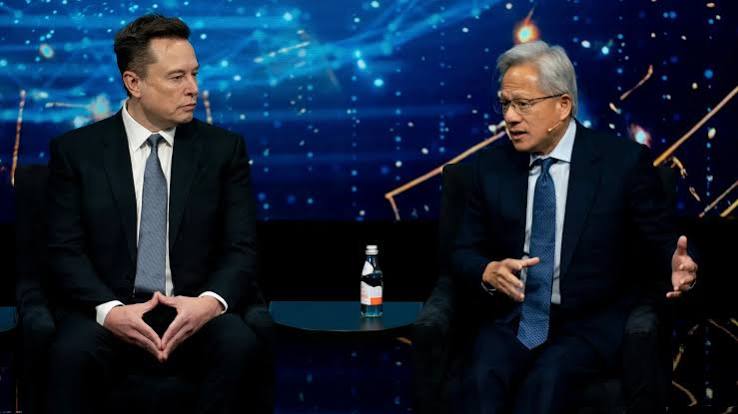
Elon Musk offers to hire Jensen Huang if Nvidia fires him as CEO
Elon Musk has offered to hire Nvidia CEO Jensen Huang if he is sacked by the chip company he helped build.
Diaspora
£20,000 reward for information on murder of Bile-Aka Amoa in Clapham
Detectives investigating a murder in Clapham have announced a £20,000 reward for information that leads to the identification, arrest and prosecution of the killers.


