

Samson Ugwu: Will Mbah’s $40bn Enugu dream bring prosperity or deepen poverty?

Enugu State’s ambition to become a $40 billion economy under Governor Peter Mbah is undoubtedly an attractive economic vision. However, the question increasingly being asked by residents is whether the administration’s economic agenda is creating prosperity or imposing unbearable financial pressure on ordinary people and small businesses.
Across the state, traders, artisans, shop owners and small-scale entrepreneurs are reportedly grappling with multiple taxes, levies, fees and other financial obligations which they say are making business increasingly difficult. For many of them, the reality of doing business in Enugu is becoming less about expansion and survival and more about struggling to remain afloat.
The growing complaints over taxation raise serious questions about the direction of the state’s economic policy and whether revenue generation is being prioritised above the economic wellbeing of the people.
Enugu is not Lagos. It is not Anambra. It is not Abia. Its economic structure, commercial strength, industrial base and capacity to absorb taxation are significantly different. Enugu remains largely a civil-service-oriented state, with a substantial number of residents dependent on salaries, petty trading, small businesses and informal economic activities.
While neighbouring Anambra has a strong commercial and manufacturing ecosystem and Abia is sustained by major trading and industrial clusters, Enugu’s economic realities demand a more sensitive, people-centred and carefully structured tax regime.
It is therefore difficult to understand why a state whose economic base is comparatively less expansive should subject struggling businesses and ordinary residents to what many perceive as an aggressive taxation regime.
Taxation is not inherently bad. Indeed, government requires revenue to provide infrastructure, security, healthcare, education and other public services. But taxation becomes counterproductive when it places businesses under pressure, discourages investment, reduces disposable income and threatens the survival of enterprises that should ordinarily serve as the foundation of economic growth.
A government cannot tax its way into prosperity by squeezing the very people expected to create wealth.
The troubling consequences of excessive taxation are not difficult to imagine. When a small business is confronted with rising operational costs, multiple levies and declining patronage, the owner is left with limited options: increase prices, reduce staff, scale down operations or shut down completely. Each of these outcomes has implications for employment, household income, poverty and the wider economy.
The danger is that a state may generate more revenue in the short term while simultaneously weakening the productive capacity of its people in the long term.
The poverty concerns associated with Enugu’s ranking in data and reports attributed to BudgIT make this conversation even more urgent. At a time when residents are struggling with the cost of living and businesses are battling to survive, the government should be asking how to expand economic opportunities, strengthen purchasing power and reduce the barriers confronting small businesses, rather than intensifying the financial pressure on them.
Governor Mbah’s $40 billion economic ambition cannot be realised through policies that leave traders with diminishing capital, entrepreneurs with mounting liabilities, workers with reduced purchasing power and businesses with little prospect of expansion.
A $40 billion economy must be built on production, investment, innovation, thriving businesses, employment opportunities and a population with the purchasing power to sustain economic activity. It must be built by creating an environment where businesses can grow, investors can operate confidently and entrepreneurs can expand without fear of being overwhelmed by multiple financial obligations.
If the administration is serious about transforming Enugu into a major economic destination, it must rethink its approach to taxation and revenue collection. The state needs a tax policy that is fair, transparent, progressive and responsive to the economic realities of its people.
Small businesses should not be treated like large corporations. Traders operating on modest margins should not be subjected to levies that threaten their livelihoods. Revenue collection agencies should not become instruments of intimidation, and the government must ensure that taxes and other charges are properly harmonised to eliminate duplication and arbitrary enforcement.
The administration must also demonstrate that the taxes collected are translating into visible and measurable improvements in the lives of residents. Citizens deserve accountability. They deserve to know what their money is being used for and why the growing revenue burden should be justified by tangible improvements in infrastructure, public services and economic opportunities.
The goal of government should be to make citizens economically stronger, not financially weaker.
Enugu has enormous potential. Its strategic location, educated population, hospitality industry, emerging technology ecosystem and commercial opportunities can support a genuinely prosperous economy. But that potential cannot be unlocked by placing excessive burdens on the people whose businesses, investments and daily economic activities are expected to drive growth.
Governor Mbah must therefore urgently review the state’s taxation policies, engage traders and small business owners, eliminate unnecessary levies and establish a revenue framework that encourages businesses to survive, expand and employ more people.
The $40 billion ambition should be a promise of shared prosperity, not a slogan that ordinary residents experience through increased taxation and economic hardship.
Ultimately, the true measure of economic transformation is not how much government collects from its citizens, but how much wealth the citizens are empowered to create.
Enugu cannot tax its people into a $40 billion economy. It must build that economy by empowering them to prosper.
- Samson Ugwu is a resident of Enugu and a business owner.

We have recently deactivated our website's comment provider in favour of other channels of distribution and commentary. We encourage you to join the conversation on our stories via our Facebook, Twitter and other social media pages.

More from Peoples Gazette

States
Independence: NBA urges Nigerians to expect better future
The NBA said that ordinary Nigerians should be deriving benefit from the subsidy removal rather than hardship.
Agriculture
FG tasks ECOWAS on leveraging financing strategies for agroecology
The federal government has urged stakeholders in the agriculture and finance sectors in the West Africa region to leverage financing strategies to enhance agroecology practices
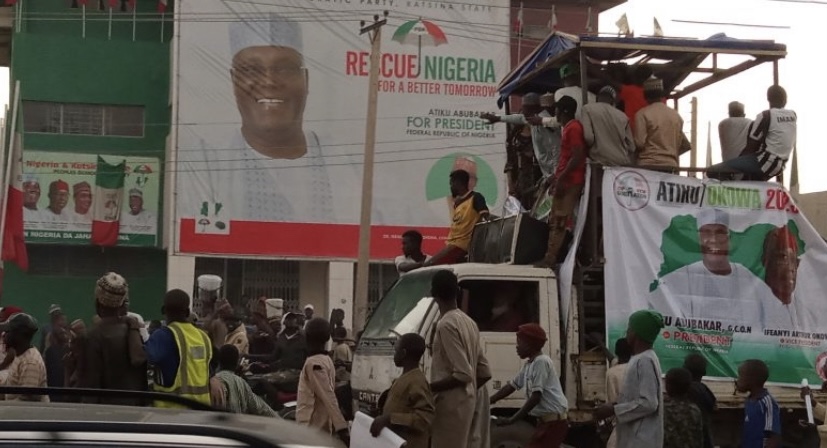
Politics
Katsina youths pledge to deliver over 2 million votes to Atiku
“Katsina State is Atiku’s political base because it is his second home.”

Rights
Abrego Garcia, mistakenly deported by Trump admin, voluntarily leaves U.S. for Spain
Kilmar Abrego Garcia, whom the Donald Trump administration illegally expelled in its immigration crackdown, has self-deported to Spain Tuesday night.
Opinion
Samson Ugwu: Will Mbah’s $40bn Enugu dream bring prosperity or deepen poverty?
For many, the reality of doing business in Enugu is becoming less about expansion and survival and more about struggling to remain afloat.
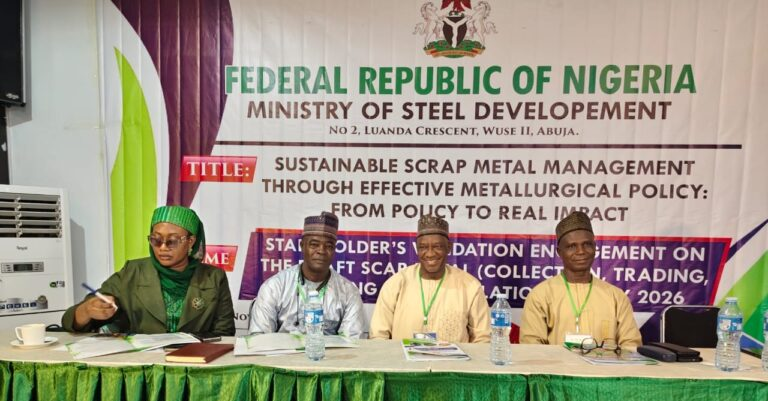
Economy
FG moves to regulate scrap metal trade, curb vandalism
The government says it is strengthening regulations on Nigeria’s scrap metal industry to curb infrastructure vandalism, promote recycling, and protect legitimate businesses.
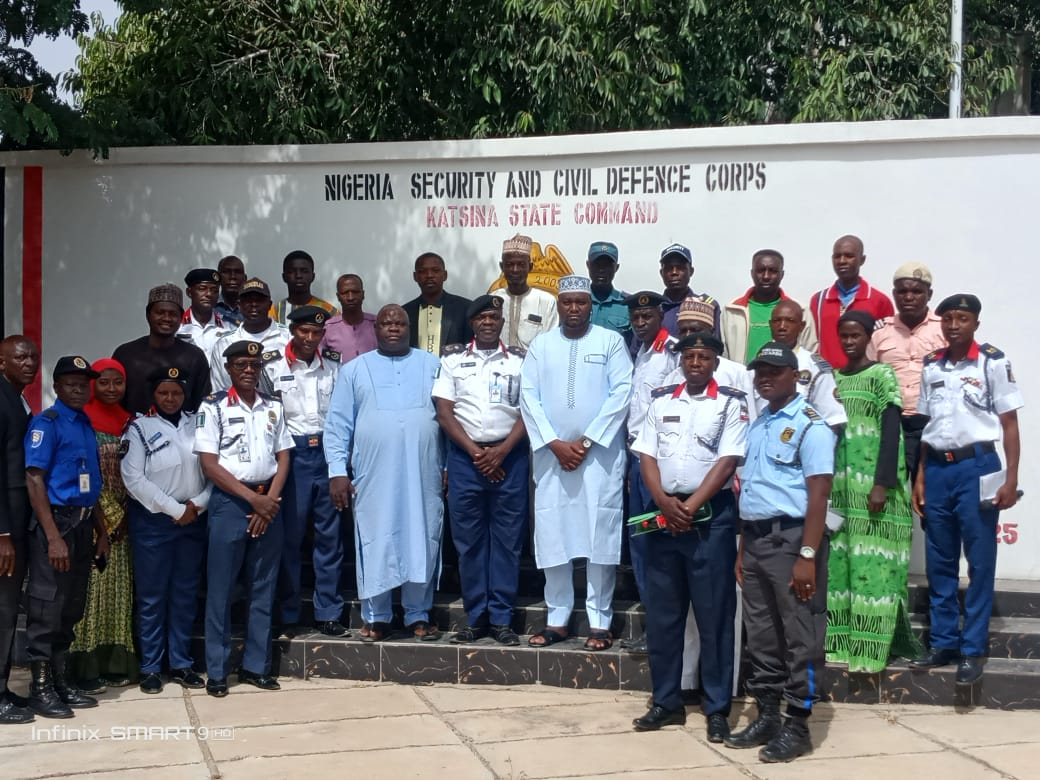
States
Katsina: NSCDC seals illegal private security outfits
NSCDC says it has identified and sealed several illegal private security outfits operating in Katsina.

States
Gov Lawal declines negotiating with Zamfara bandits, offers residents billion-naira arms to defend themselves
Governor Dauda Lawal on Tuesday announced plans to arm youths to protect their communities against bandits and kidnappers ravaging Zamfara.
Agriculture
Agric council unveils 2026-2031 national seed sector roadmap
The National Agricultural Seed Council (NASC) has unveiled a 2026-2031 National Seed Sector Roadmap to strengthen Nigeria’s seed industry.


