

South African cities tighten water restrictions as El Niño threatens drought
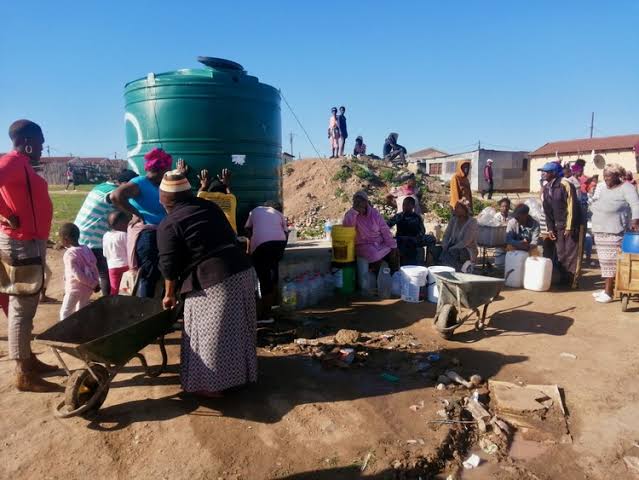
Major cities across South Africa are tightening water restrictions as a strengthening El Niño brings hotter, drier conditions, raising drought risk and further straining already limited water supplies.
Authorities have introduced Level 2 water restrictions across Gauteng Province, including Johannesburg and the Tshwane Metropolitan Municipality, which includes the administrative capital, Pretoria.
Johannesburg’s municipal government estimates that daily water consumption needs to be reduced by 200 million litres to stabilise supplies and ease pressure on reservoirs.
Meanwhile, Cape Town is set to introduce Level 1 water restrictions from December 1, requiring a ten-per cent reduction in water consumption.
Under South Africa’s water restriction framework, Level 1 controls primarily target non-essential outdoor water use. In contrast, Level 2 restrictions prohibit residents from using municipal tap water to irrigate gardens and public green spaces.
Higher charges also apply to households exceeding their allocated water-use limits. The restrictions come as the country’s weather service warns that the current El Niño event could rank among the strongest on record, with below-average rainfall and above-average temperatures expected over the coming summer months.
Ferrial Adam, executive director of WaterCAN, a Johannesburg-based community action network focused on water quality and related issues, said the combination of climate conditions and ageing infrastructure was intensifying the country’s water challenges.
El Niño is a naturally occurring climate phenomenon associated with the periodic warming of sea-surface temperatures in the central and eastern equatorial Pacific Ocean.
It can disrupt normal weather patterns worldwide, increasing the likelihood of drought in some regions and heavier rainfall in others.
Beyond the immediate threat to urban water supplies, concerns are also growing over the potential impact on agriculture.
Prolonged dry conditions and extreme heat could affect crop production and push up food prices from March next year, adding to food security concerns across southern Africa.
(AAN/NAN)

We have recently deactivated our website's comment provider in favour of other channels of distribution and commentary. We encourage you to join the conversation on our stories via our Facebook, Twitter and other social media pages.

More from Peoples Gazette

States
Independence: NBA urges Nigerians to expect better future
The NBA said that ordinary Nigerians should be deriving benefit from the subsidy removal rather than hardship.

Agriculture
FG tasks ECOWAS on leveraging financing strategies for agroecology
The federal government has urged stakeholders in the agriculture and finance sectors in the West Africa region to leverage financing strategies to enhance agroecology practices

Politics
Katsina youths pledge to deliver over 2 million votes to Atiku
“Katsina State is Atiku’s political base because it is his second home.”

Education
MAU Signs N2 billion endowment with NLNG for professorial chair
The Management of Modibbo Adama University, Yola, has signed a $1.5 million endowment, equivalent to N2.03 billion, with the Nigeria Liquefied Natural Gas.

Africa
Zambian opposition leader Mundubile indicted for treason
Zambia’s main opposition leader, Brian Mundubile, has been formally indicted on treason charges over an alleged plot to overthrow the government.
Africa
South African cities tighten water restrictions as El Niño threatens drought
Major cities across South Africa are tightening water restrictions as a strengthening El Niño brings hotter, drier conditions and raises drought risk.

World
Britain facing sex recession as adults under 45 years copulate twice monthly: Lancet
People aged 16 to 44 in Britain are having sex less frequently, with the median number of times they have sex falling to twice a month in 2022–2024, down from four times in 1990.

Rights
More men, women having sex with same gender in UK: Report
The proportion of women aged 16 to 44 reporting such experiences doubled from seven per cent to 14 per cent. The figure tripled for men, from four per cent to 12 per cent.

Showbiz
Nollywood: ‘Things Fall Apart’ star actor Pete Edochie dies of cancer at 79
Nollywood veteran actor and ‘Things Fall Apart’ star Pete Edochie has passed on at 79 following a protracted battle with prostate cancer, his family announced Wednesday.


