

South-East needs new states to resolve regional historical imbalance

In a country where political representation at the federal level is often determined by geography, the South-East’s five-state status is an imbalance that needs to be addressed.
Ndigbo demand at least one new state to bring the South-East on par with the North-East, North-Central, South-West, and South-South, and two to match seven for the North-West.
With each state assigned three senatorial slots, this would increase Igbo representation in the Senate from 15 to 18 or 21, add more constituencies in the House of Representatives, and increase ministerial and board appointments for the South-East.
But numbers alone don’t tell the full story. Beyond the bandwagon, Ndigbo must weigh the economic and cultural costs of state creation, and reach consensus on which existing states should be split. This calls for thoughtful, collective dialogue across the South-East.
Historically, state creation has been driven by two impulses: first, to correct imbalances from past military-era decisions that favoured some regions over others; second, to appease local communities who feel politically dominated by more influential groups within existing states.
Having decided that the region needs at least one extra state to address marginalisation at the federal level, aggrieved communities across existing states in the South-East must now refrain from using the clamour for new states in the region as a tool to resolve internal grievances.
Take, for example, the clamour by the Asa, Ndoki, and Ngwa people in Abia State. While their grievances are valid, dialogue and a fair distribution of political and economic resources might be the solution, rather than the creation of an Aba State.
The South-East needs more states to correct the imbalance in political representation. But if state creation becomes an endless exercise used to resolve internal grievances, Nigeria’s smallest region by landmass risks losing its collective voice on the national stage.
The economics of state creation also raise tough questions for the South-East region.
At just 29,525 square kilometres, about 3% of Nigeria’s total land area of between 911,000 and 923,000, the South-East is the smallest zone. It is nearly ten times smaller than the North-East (279,013 km²), which alone accounts for 30.5% of the country’s land area.
Collectively, the South-East’s states of Enugu (7,161 km²), Abia (6,320), Ebonyi (5,670), Imo (5,530), and Anambra (4,844), are smaller than any of these 13 states: Niger, Borno, Taraba, Bauchi, Kaduna, Yobe, Zamfara, Adamawa, Kwara, Kebbi, Benue, Plateau, and Kogi.
A state’s landmass matters as it affects revenue sharing between the three tiers of government. Federal allocations are shared as follows: 52.68% to the federal government, 26.72% to states, and 20.60% to local governments, with an additional 13% for oil-producing states.
The 26.72% for states is further distributed as follows: 40% based on population, 30% equally, 10% based on internally generated revenue, 10% based on landmass, and 10% based on social development needs.
Given that landmass significantly influences revenue allocation, carving out a new state from an already small region must be approached with caution. Fragmenting the South-East further, without strategic consideration, may offer little economic advantage.
Ndigbo must also weigh the risk of political disunity. Creating a new state solely in response to internal marginalisation could deepen divisions, foster competing interests and encourage governors to prioritise personal ambition over the collective advancement of the Igbo.
And history has shown that state creation does not always end internal marginalisation. New power centres often replicate the same injustices they were created to correct. Minority communities within the new states may quickly find themselves sidelined, raising the question: Do we continue to carve more states in response to every new wave of marginalisation?
Ndigbo must approach this renewed push for state creation sweeping across the region with caution and foresight. Yes, the clamour for additional states will help address the historical imbalance in favour of the South-East at the federal level. Still, we must resist the temptation to carve out new states because a community sees statehood as a remedy for marginalisation.
Maduekwe runs Discussing Africa Media. Write him: mrmaduekwe@gmail.com

We have recently deactivated our website's comment provider in favour of other channels of distribution and commentary. We encourage you to join the conversation on our stories via our Facebook, Twitter and other social media pages.

More from Peoples Gazette

States
Independence: NBA urges Nigerians to expect better future
The NBA said that ordinary Nigerians should be deriving benefit from the subsidy removal rather than hardship.
Agriculture
FG tasks ECOWAS on leveraging financing strategies for agroecology
The federal government has urged stakeholders in the agriculture and finance sectors in the West Africa region to leverage financing strategies to enhance agroecology practices
Politics
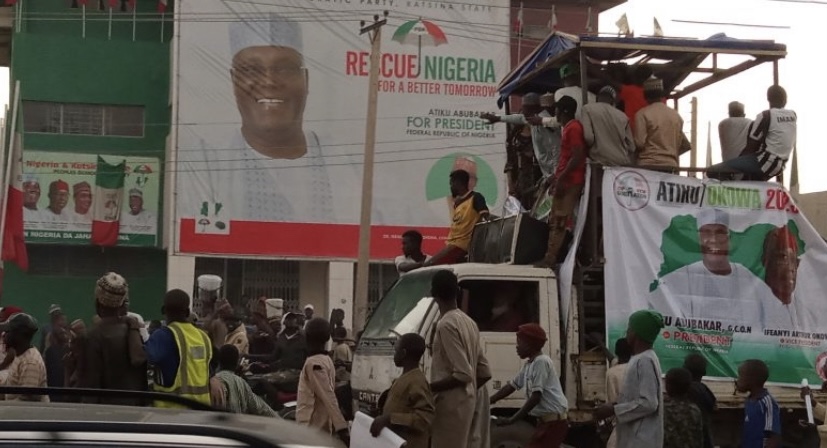
Katsina youths pledge to deliver over 2 million votes to Atiku
“Katsina State is Atiku’s political base because it is his second home.”
World
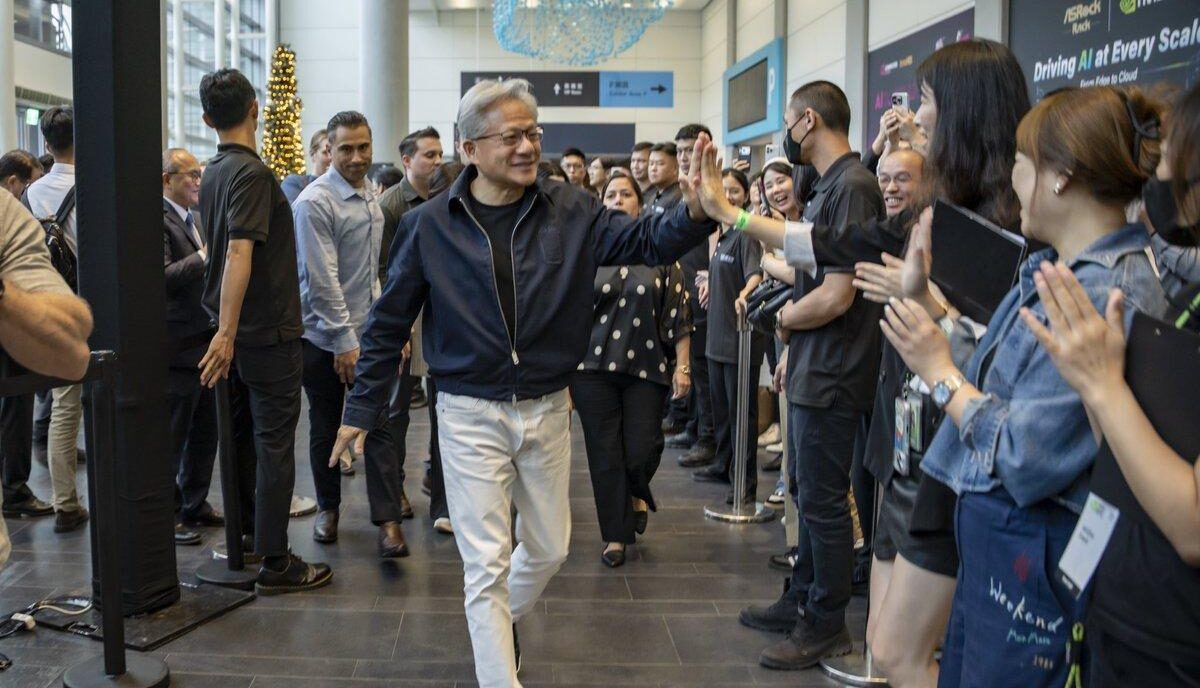
NVIDIA employees jubilant as Jensen Huang returns as CEO
A video shared by NBC News showed employees gathered at the company’s headquarters in Santa Clara, California, on Monday, cheering and chanting Mr Huang’s name as he arrived.

States
Kogi bandits killed in Asungwe forest ambush: Army
Troops of the Nigerian Army say they have killed two armed bandits and recovered weapons in an ambush operation in Asungwe forest in Okehi council area of Kogi.
Anti-Corruption
Former NNPC cooperative boss to be arraigned over N582 million fraud
The judge warned that the defendant would risk a warrant of arrest if he failed to appear in court on the next adjourned date.

Economy
U.S. moves to seize $1 billion in crypto assets stolen from Binance
This action is part of the government’s broader effort to help Binance recover over $6 billion in stolen assets, according to a DOJ statement on Monday.
Faith
Court summons Fountain of Life Church pastor Jimmy Odukoya over alleged contempt
Meanwhile, Mr Odukoya said during the church’s Sunday service that he had not been formally served with the court injunction.
Heading 5
Lagos assembly proposes 65-year retirement age for magistrates
The committee said the proposed extension would enable the judiciary to retain experienced judicial officers.


