

Stakeholders back Lagos assembly’s proposed bill to prohibit street begging

Stakeholders have described a proposed bill by the Lagos House of Assembly to prohibit street begging and street urchins in the state as long overdue.
Speaking during a public hearing on the bill on Tuesday in Ikeja, they cited rampant cases of beggars allegedly using knives and other dangerous weapons to force money from unsuspecting members of the public, particularly at night.
The Lagos State Chairman of the Nigerian Bar Association (NBA), Uchena Akingbade, said the menace was particularly serious along the Lekki-Epe corridor and called for urgent action, including declaring a state of emergency in affected areas.
Ms Akingbade urged lawmakers to avoid ambiguity in the proposed law and recommended stiffer penalties for beggars found with dangerous weapons.
She also called for a clear definition of the provision on the “prohibition of loitering for the purpose of begging” and urged the government to establish more rehabilitation centres.
Speaking on behalf of the traditional ruler of Lagos, Oba Rilwan Akiolu, Gbolahan Oki, a white cap chief, recalled the menace allegedly caused by area boys, particularly during the EndSARS period.
Mr Oki, a former General Manager of the Lagos State Building Control Agency (LASBCA), said some offenders were undeterred by arrest because they believed they would soon regain their freedom, alleging that drug lords could pay fines to secure their release.
He advocated reviving the Itekule concept, where offenders could serve society through productive activities, including bread production.
“The culprits don’t see arrest as anything because they know the police nets are filled up, and they know they will be out soon.
“What can curb the menace is to be subjected to two years of hard work,” he said.
Another stakeholder, Emmanuel Ikule, executive director of Elixir Trust Foundation, urged lawmakers to consider beggars suffering from mental health challenges and refer them to appropriate psychiatric and rehabilitation centres.
Mr Ikule cited areas such as Pen Cinema and Ojodu-Berger, where he said some individuals allegedly used knives at night to extort money from unsuspecting members of the public.
Speaking on behalf of youths, Adigun Olalekan expressed support for the bill, citing the daily influx of people into Lagos without proper identification and calling for measures to address the situation.
A counselling psychologist, Suliat Olaniran, also lamented the increasing embarrassment caused by street begging in Lagos, particularly at night, when some individuals allegedly resort to dangerous weapons to compel people to give them money.
Other stakeholders called for extensive sensitisation and public education to ensure that residents understood the provisions of the proposed law and the reasons behind it.
The bill seeks to establish a comprehensive framework for addressing street begging and the activities of street urchins while promoting public safety, order and environmental sanity.
It also seeks to strengthen protection against child abuse, neglect and exploitation by prohibiting parents, guardians and custodians from using or permitting children to engage in street begging or hawking.
Under the proposed framework, children apprehended under the law would be treated in accordance with the Lagos State Child Rights Law and referred to appropriate child welfare authorities.
The bill proposes a rehabilitation-centred approach, with first-time offenders to be cautioned and referred to designated rehabilitation centres, while subsequent offenders could face a fine or imprisonment of up to three months.
Serial offenders could face imprisonment of up to two years, while the rehabilitation framework includes temporary care, vocational training, literacy programmes, psychological counselling and life-skills education.
The Chairman of the House Committee on Youth, Sports and Social Development, Abiodun Orekoya, said the bill recognised that street begging and the presence of vulnerable persons and young people on the streets were not merely public order issues.
Mr Orekoya said the issue also had security, socio-economic, developmental and child protection dimensions, stressing that the legislative response must be “firm and humane.”
He said vulnerable children found on the streets should be protected rather than merely punished, adding that the bill was designed to prevent children from being exploited for economic survival.
He said the proposed legislation would provide mechanisms for the care, education, rehabilitation and possible reintegration of affected children into their families and communities.
Mr Orekoya added that enforcement must be carried out within the law, noting that enforcement agencies must respect fundamental rights guaranteed under Chapter IV of the 1999 Constitution, as amended.
According to him, the bill prohibits torture, inhumane or degrading treatment and unlawful detention, stressing that effective enforcement and respect for human dignity could coexist.
Speaker of the House, Mudashiru Obasa, said the proposed law was not intended to deprive anyone of their rights.
Mr Obasa, represented by Deputy Speaker Mojisola Meranda, also welcomed partnerships with private-sector organisations willing to support efforts to address street begging and related social challenges in Lagos.
He added that the proposed law further envisaged collaboration among government agencies, the Nigeria Police, Lagos State Neighbourhood Safety Corps, families, communities, traditional institutions, educational institutions, religious organisations, civil society groups and the private sector.
(NAN)

We have recently deactivated our website's comment provider in favour of other channels of distribution and commentary. We encourage you to join the conversation on our stories via our Facebook, Twitter and other social media pages.

More from Peoples Gazette

States
Independence: NBA urges Nigerians to expect better future
The NBA said that ordinary Nigerians should be deriving benefit from the subsidy removal rather than hardship.

Agriculture
FG tasks ECOWAS on leveraging financing strategies for agroecology
The federal government has urged stakeholders in the agriculture and finance sectors in the West Africa region to leverage financing strategies to enhance agroecology practices

Politics
Katsina youths pledge to deliver over 2 million votes to Atiku
“Katsina State is Atiku’s political base because it is his second home.”

Heading 2
Enugu secures $200 million solar investment to boost electricity supply
Mr Mbah pledged the state government’s support in removing institutional bottlenecks that could delay the project.

Heading 5
FAAN announces temporary closure of Owerri airport runway for repairs
According to Mr Agbebire, the closure was tentatively scheduled to last about 25 days.
States
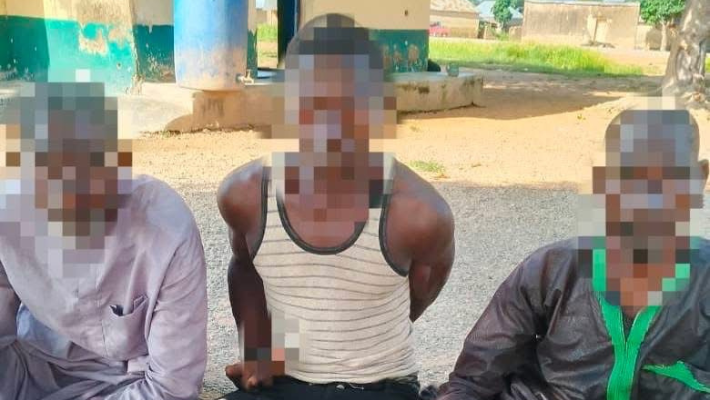
Police nab three suspects over alleged murder of 65-year-old woman accused of witchcraft in Niger
The command’s spokesperson said the incident occurred on Saturday.

Health
Lassa Fever: Nigeria records 1,115 cases, 263 deaths in 24 states
The agency urged healthcare workers and the public to maintain appropriate preventive measures.

Heading 2
Police nab 47 suspects for thuggery, drug peddling in Kano
Mr Haruna-Kiyawa stated that large quantities of illicit substances and dangerous weapons were recovered from the suspects.
Heading 5
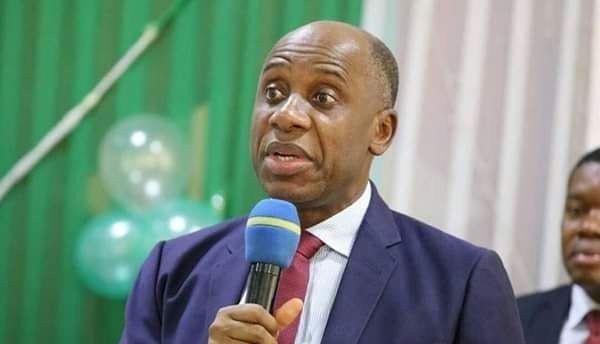
Number of votes Tinubu gets in 2027 will show number of mad people in Nigeria: Rotimi Amaechi
Mr Amaechi had recently blamed the economic hardship under Mr Tinubu for the deaths of many Nigerians, including his mother.


