

Stakeholders seek home-grown democracy model to address Nigeria’s political challenges

Stakeholders and political analysts have advocated for a “home-grown” democratic system for Nigeria that reflects the country’s historical evolution, socio-cultural realities and development aspirations.
The stakeholders made the call on Tuesday in Lokoja at a roundtable organised by the Department of Political Science, Federal University Lokoja.
Abraham Peter, the head of the Department of Political Science, said Nigeria had made remarkable progress in sustaining constitutional rule and expanding political participation.
Mr Peter, however, noted that the country’s democratic process continued to face significant challenges.
Orunyomi Orungbami, a lecturer in the department, said the multiparty system was widely appreciated for its competitiveness, the provision of alternative ideas, and wider choices for the electorate.
He noted that Nigeria had largely operated a multiparty system throughout its democratic history, adding that the system encouraged political participation and accountability.
Olubumi Ajayi, the provost of the College of Postgraduate Studies, FUL, said Nigeria remained a multiparty state because the constitution guaranteed freedom of association and provided for the existence and participation of political parties.
Mr Ajayi, who was the lead discussant, said Nigeria’s democracy had undergone several transformations from the colonial era through independence to the post-independence period.
He explained that while liberal democracy underscores inclusion, openness, citizens’ participation and periodic elections, radical democracy questioned the adequacy of such values in addressing societal challenges.
Mr Ajayi expressed concern that Nigeria appeared to be drifting towards a dominant-party system, noting that opposition parties were increasingly being weakened.
Hamza Aliyu, the executive director of Initiative for Grassroots Advancement, identified a disconnect between the theory and practice of democracy in Nigeria.
Mr Aliyu stressed the need for the country to identify democratic principles and practices that best suited its peculiar realities.
Discussants identified the lack of ideology among political parties as one of the major challenges confronting Nigeria’s democracy.
Representing the chairman of the Kogi State Inter-Party Advisory Council, Ibrahim Itodo, said most political parties were driven by personal interests rather than ideological convictions. He noted that the trend has encouraged frequent defections among politicians and weakened party loyalty.
The stakeholders also observed that internal democratic values necessary for effective governance were lacking within political parties.
Ahmed Muazu, an administrator, noted that citizens’ participation in governance was often limited to election periods.
On the way forward, Aishat Adaranijo, a discussant, said Nigeria’s lived experiences should guide the development of its democratic model.
The stakeholders recommended that the Independent National Electoral Commission be relieved of non-electoral responsibilities, such as voter education, to enable it to focus on conducting credible elections.
They also advocated the development of ideological political parties, clearer roles for INEC and security agencies during elections, and the strengthening of civic and political education.
The participants further stressed the need to improve political consciousness through sustained sensitisation, noting that civic education should be given greater prominence in schools.
(NAN)

We have recently deactivated our website's comment provider in favour of other channels of distribution and commentary. We encourage you to join the conversation on our stories via our Facebook, Twitter and other social media pages.

More from Peoples Gazette

Agriculture
FG tasks ECOWAS on leveraging financing strategies for agroecology
The federal government has urged stakeholders in the agriculture and finance sectors in the West Africa region to leverage financing strategies to enhance agroecology practices

Politics
Katsina youths pledge to deliver over 2 million votes to Atiku
“Katsina State is Atiku’s political base because it is his second home.”
Africa
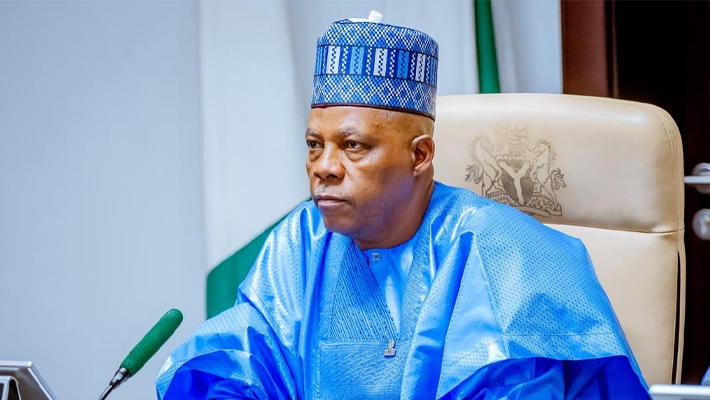
Shettima tasks new ECOWAS leadership on regional integration
Mr Shettima assured Mr Diop of Nigeria’s continuous cooperation and support.

Africa
Police discover tenth female corpse in South Africa
The ENCA news reported that the body was found inside the Mooifontein Cemetery in Tembisa near an Informal Settlement.

NationWide
Yeni Kuti unveils activities for 2026 Felabration
Ms Kuti spoke during an interview on Saturday in Lagos, ahead of the 2026 edition of the annual festival.

Heading 1
Choose credible leaders in 2027; nobody forcing candidates on you, Kukah tells Nigerians
The cleric urged Nigerians to vote to stay alive.

States
Robbery suspect nabbed with pistol during stop-and-search operation in Oyo
The police said the firearm and ammunition were immediately secured as exhibits.
Heading 3
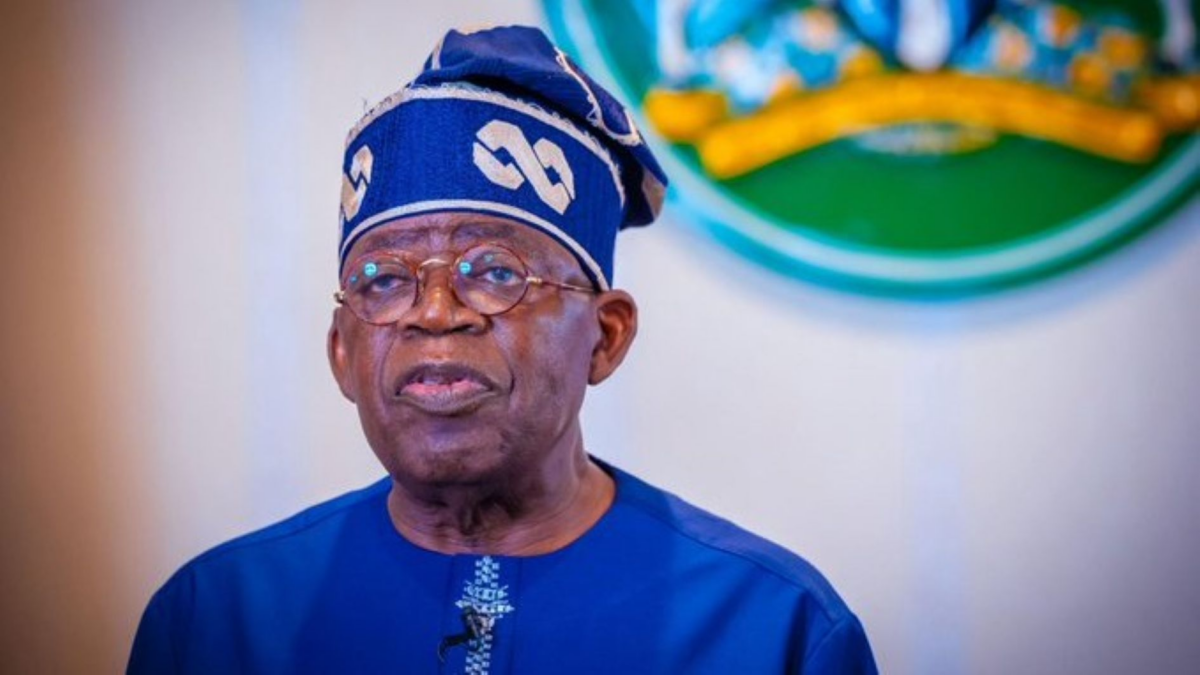
Re-elect me to complete good works my govt started, Tinubu begs Nigerians
Mr Tinubu assured that said peace and development were gradually returning to the country.


