

Stakeholders seek more silos amid Nigeria’s $3.5 million post-harvest losses
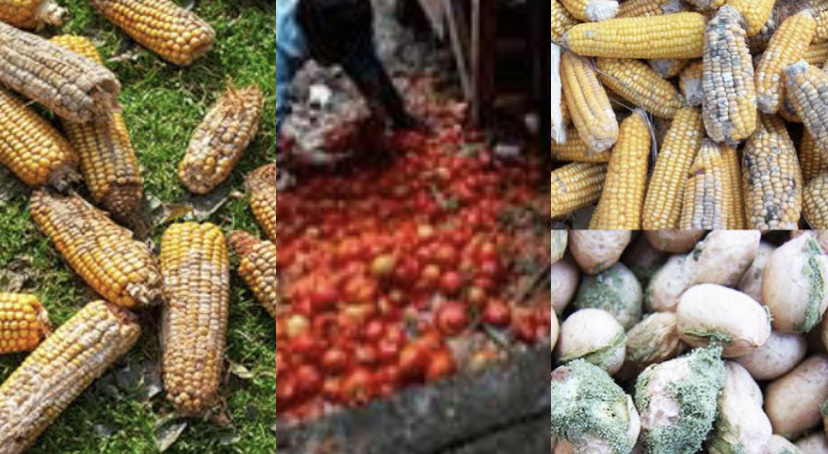
Stakeholders, especially farmers in the South-South, have called on the federal government to urgently build more silos across the states to reduce annual post-harvest losses in the agriculture sector.
They made the call in separate interviews following the recent disclosure that the country’s economic cost of post-harvest losses was N3.5 trillion.
The Minister of State for Agriculture and Rural Development, Mustapha Shehuri, at the presentation of the International Standard Organisation (ISO) Certification for Nigerian Stored Products Research Institute, Abuja, noted that the losses in fruits and vegetables could be as high as 50 to 60 per cent.
Concerned about the huge annual post-harvest losses, the stakeholders said the situation, if not quickly reversed, could worsen Nigeria’s food insecurity.
The chairman of the All Farmers Association of Nigeria (AFAN) in Delta, Richard Asenime, said with adequate food preservation facilities, farmers’ capacity to produce food would increase.
He added that with silos, farmers would make more money by regulating their produce’s supply and ensuring price stability.
In Calabar, Bassey Edet, programme manager, Cross River Agricultural Development Programme (ADP), regretted that successive governments consistently borrowed from the World Bank for different agricultural projects without sustainable plans, adding that such programmes died soon after the administration left office.
“The lack of reserve is one of the reasons why IDPs are suffering in their camps; we need to have these food banks to preserve food and also generate income,” he said.
Festus Ebozele, managing director, TA Commodity Producers Co. Nigeria Limited, Benin, noted that the federal government should invest more in food processing to reduce post-harvest losses in the country.
Mr Ebozele said such an investment could be through a partnership with local farmers and other private investors.
Ogbeiwi Odihi-Ogiamien, Edo coordinator of the youth wing of the Nigerian Association of Chambers of Commerce, Industry, Mines and Agriculture (NACCIMA), called for partnership among all levels of government in preserving farm produce.
Mr Odihi-Ogiamien said since the federal government seemed to have its hands full, state and local governments could partner farmers in preservation to reduce post-harvest losses.
A commercial farmer in Bayelsa, Fidelis Alaowei, said farmers faced the challenge of the absence of storage facilities in the state primarily for grains, hence the high post-harvest losses annually.
He said food losses and waste were either due to ineffective functioning or the absence of food storage systems.
Uyo-based agronomist, Nsikak Edidiong, explained that ”a fortified food reserve system will help to guarantee food supply all year round and ensure food security.”
A farmer, Nsima Jacobs, said establishing strategic food reserves would encourage farmers to grow more crops and earn more.
In Rivers, Bright Okere, director, Ministry of Agriculture and Natural Resources, Andoni local government area, said over 50 per cent of agriculture produce in the state was lost due to a lack of silos.
“Fishermen lose much of their catch due to lack of electricity, cold rooms and other storage facilities at fishing ports,” he said.
Mr Okere urged the government to establish strategic fish storage outlets in the state to curb post-harvest losses.
A cassava farmer, Clement Gosu, also urged the government and agriculture investors to establish more cassava flour mills and storage plants in the southern part of the country. He said the move would check the shortage of cassava flour in the country and encourage the export of the produce.
Similarly, Athens Owo, an agriculture extension officer in the Rivers Agriculture Development Programme (ADP), said establishing silos would support risk reduction in farm investment.
(NAN)

We have recently deactivated our website's comment provider in favour of other channels of distribution and commentary. We encourage you to join the conversation on our stories via our Facebook, Twitter and other social media pages.

More from Peoples Gazette

States
Independence: NBA urges Nigerians to expect better future
The NBA said that ordinary Nigerians should be deriving benefit from the subsidy removal rather than hardship.

Agriculture
FG tasks ECOWAS on leveraging financing strategies for agroecology
The federal government has urged stakeholders in the agriculture and finance sectors in the West Africa region to leverage financing strategies to enhance agroecology practices

Politics
Katsina youths pledge to deliver over 2 million votes to Atiku
“Katsina State is Atiku’s political base because it is his second home.”

Heading 3
UBEC begins distribution of two million packs of sanitary towels to improve school attendance
Ms Garba said the initiative was designed to address barriers to girls’ education.

States
Police nab six armed robbers, recover weapons in Oyo
The police boss reaffirmed the command’s resolve to sustain intelligence-led operations against criminals.

Heading 2
FBI seizes about $17 billion, arrests hundreds in raid on Ghana Yahoo Boys enclave
The operation was described by Mr Patel on social media as part of the agency’s efforts to combat fraud.

States
Gombe: Pantami threatens legal action over omission from INEC’s governorship list
His lawyers described the omission of Mr Pantami’s name from the governorship candidates’ list as unlawful.
Heading 5
French supermarkets hit by cyberattack, causing freezers to heat up
Reports noted that the full extent of the cyberattack remained unclear.

World
McKinsey demotes consultant over LinkedIn comments
The company distanced itself from Mr Bradley’s remarks.


