

Stakeholders seek review of NJC’s role in Supreme Court appointments
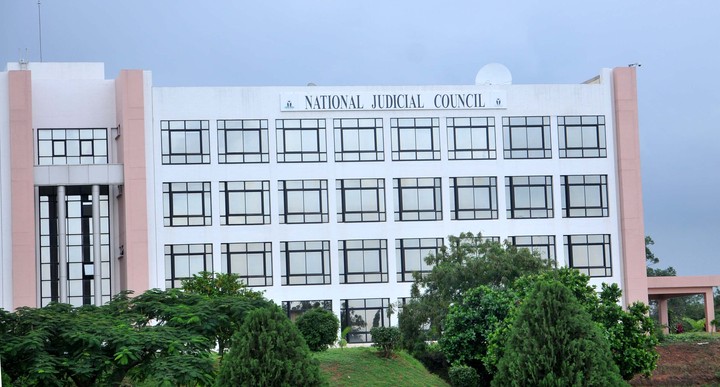
Stakeholders have called for a review of the role of the National Judicial Council in making appointments into the Superior Courts of record.
This is contained in a communiqué presented by the Chairman of the Joint Planning Committee, Dr Babatunde Ajibade, SAN, at the end of a two-day National Summit on Justice.
The theme of the summit was “Repositioning the justice sector in Nigeria: Constitutional statutory and operational reforms for access and efficiency.’’
The stakeholders expressed concern over the fact that the Chief Justice of Nigeria, who is the chairman of the NJC, is also the chairman of the Federal Judicial Service Commission; the body that initially reviews proposals or lists of candidates by appointment into judicial office.
The summit pointed out the seeming inconsistency between the CJN playing both roles, as it would appear that he is recommending candidates to himself being chairman of both bodies, and being the person who appoints a significant number of the members of both bodies other than those who are statutory members.
There’s a general consensus by the summit on the need to reconstitute or propose reconstitution of both the NJC and the FJSC.
On the role of the state Judicial Service Commission in judicial appointments, the summit concluded that there was a significant need to ensure that the composition of the SJSC is more diverse, that it reflects the interests of the users of the justice sector.
Stakeholders noted the fact that the current NJC guidelines may have subverted the intent of the constitutional provision, empowering the SJSC to make judicial appointments, rather than authorising the SJSC to prepare a shortlist of potential candidates for judicial appointments, appear to address that responsibility solely in the chairman (Chief Judges of states).
Participants also proposed interventions in areas such as human rights protection, fair trial mechanisms, alternative dispute resolution, and technological advancements for a more efficient system.
On funding, budgeting and administration for the judiciary, the summit resolved that the current process for funding the courts was totally deficient.
They noted that it was evident that the provisions of the constitution as amended by the Fifth Amendment, authorising that funding for the state courts should be a joint effort carried out by the executive and the judiciary was not being implemented in any shape or form in the majority of the states.
Recommendations were made that this was something that needed to be pursued and dealt with decisively, as the summit stated that funding of the judiciary at the federal level was much better than what obtains in the states of the federation.
Participants noted the need to professionalise the administration of the courts and appoint persons with clear administrative experience to be selected through a transparent process to administer the courts, and separate the administration of the courts from the administration of justice.
On eradicating delays in the administration of justice agenda for leveraging the rules of procedure and effective case management in Nigeria, they considered the importance of limiting the jurisdiction of the Supreme Court, and ensuring that matters that would go to the Supreme Court would only be matters of significant national importance.
The summit also stated the need for clarity as to who has the authority to discipline legal practitioners and also issues on how to improve the efficiency of the disciplinary process for legal practitioners.
It was agreed that significant steps needed to be taken in these areas to enhance the quality of justice delivery in Nigeria and increase the confidence of members of the public in the justice sector.
Participants noted the commitment by the Attorney General of the Federation and by stakeholders.
They stressed the need to quickly engage the resolutions into draft legislation that would be presented to the National Assembly for inclusion in the ongoing constitution review process, and also for non-constitutional related legislation to be implemented almost immediately.
(NAN)

We have recently deactivated our website's comment provider in favour of other channels of distribution and commentary. We encourage you to join the conversation on our stories via our Facebook, Twitter and other social media pages.

More from Peoples Gazette

Agriculture
FG tasks ECOWAS on leveraging financing strategies for agroecology
The federal government has urged stakeholders in the agriculture and finance sectors in the West Africa region to leverage financing strategies to enhance agroecology practices

Politics
Katsina youths pledge to deliver over 2 million votes to Atiku
“Katsina State is Atiku’s political base because it is his second home.”

Africa
Guterres demands Africa’s minerals create jobs, backs permanent UN seats
António Guterres has demanded an end to the plundering of Africa’s mineral resources, insisting the continent’s wealth must create jobs and prosperity for Africans.
Economy
Nigeria push for end of exploitation of Africa’s mineral resources at UNGA81
President Bola Tinubu has called for a fresh continental push to end the exploitation of Africa’s critical mineral resources.
Heading 4
Lawyer Ikeni Mbako-Allison suspended after being found guilty of harassing woman in UK
“Ikeni Mbako-Allison, a barrister, behaved in a way which is likely to diminish the trust and confidence which the public would place in him or in the profession,” the BSB said.

Abuja
Dangote Refinery: Abuja motorists, commuters decry delay in petrol price cuts
Motorists and commuters across Abuja have decried petrol stations’ failure to reduce petrol prices following the Dangote Refinery’s latest N25 per litre cut.

Anti-Corruption
Crown Medical Solutions, owners reach agreement with U.S. govt over fraudulent billing scheme
Crown and its owners, Michelle and Philanzo King, have agreed to pay $825,000 to resolve allegations of submitting false claims to Medicare for payment.
World
UK govt charges Vincent ‘Bajinya’ Brown with crimes linked to Rwandan genocide
The UK police, in a statement on Monday, said Mr Brown was the first to be charged in the UK over a link to the 1994 genocide against the Tutsi in Rwanda.


