

Studies examine if existing vaccines can protect against Bundibugyo Ebola virus
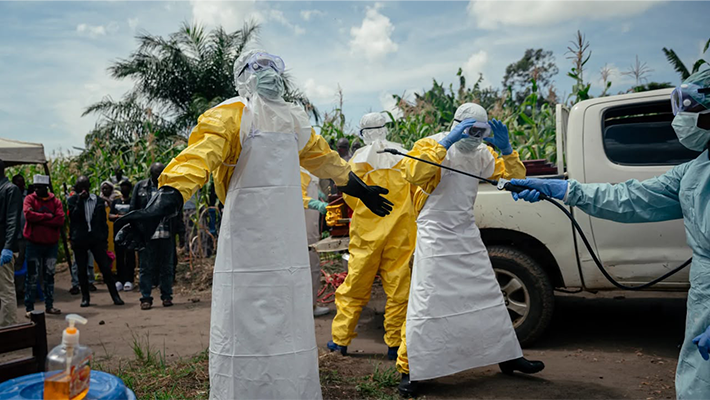
Four studies will examine whether existing or previously licensed Ebola vaccines can elicit immune responses against Bundibugyo ebolavirus, responsible for the rapidly escalating outbreak in the Democratic Republic of Congo (DRC).
This is contained in a statement by the Coalition for Epidemic Preparedness Innovations (CEPI) on Thursday in Abuja.
The studies, backed by CEPI with $4.17 million, would analyse thousands of stored blood samples from people who previously received vaccines against Zaire ebolavirus.
The research is expected to provide urgently needed evidence on whether vaccines such as Ervebo, which was developed against Zaire ebolavirus, could trigger antibodies capable of recognising Bundibugyo virus.
The development is significant as there is currently no licensed vaccine specifically against Bundibugyo ebolavirus, with the outbreak raising concerns over the availability of effective countermeasures.
CEPI said that the studies would be led by research teams from the UCLA Fielding School of Public Health in the U.S., the Institute of Tropical Medicine in Antwerp, the University of Oxford and the MRC-University of Glasgow Centre for Virus Research.
The CEPI Chief Executive Officer, Dr Richard Hatchett, said existing vaccines against the related Zaire ebolavirus could potentially provide an important tool while Bundibugyo-specific vaccine candidates were still under development.
“There is no licensed vaccine against Bundibugyo virus,” Mr Hatchett said.
He explained that though CEPI was supporting the development of Bundibugyo vaccine candidates, it would not be available during the earliest phase of the current outbreak.
He said the new studies would therefore help determine how existing vaccines could be used while more targeted vaccines were being developed.
“The researchers will assess vaccine-induced immune responses and specifically examine whether antibodies generated following vaccination against Zaire ebolavirus can cross-react with Bundibugyo virus.
“The studies will also help researchers develop and standardise tests for detecting antibodies against Bundibugyo virus and understand how long such immune responses persist.
“The UCLA-led study, supported with 2.05 million dollars, will draw on more than 1,700 participants and about 1,800 stored serum samples from people who received either Ervebo or the Zabdeno/Mvabea vaccine regimen.
“The Institute of Tropical Medicine in Antwerp will receive 1.02 million dollars for a study involving more than 600 participants whose samples were collected through an earlier CEPI-supported vaccine trial,” Mr Hatchett said.
He said that the first antibody results from the Antwerp study could be available within two to six months.
“The University of Oxford project, funded with 975,000 dollars, will analyse samples from people who received Ervebo as well as survivors of Zaire ebolavirus disease.
“The MRC-University of Glasgow Centre for Virus Research will receive 120,000 dollars to examine samples from vaccinated healthcare workers and close contacts in existing cohorts.
“The studies come as health authorities consider how best to use available vaccines in response to the Bundibugyo outbreak,” he said.
The CEPI CEO added that recent evidence prompted the WHO Technical Advisory Group on Candidate Vaccine Prioritisation to recommend that Ervebo also be evaluated in a Phase 3 clinical trial, alongside Bundibugyo-specific vaccine candidates when they become available.
He said that the DRC authorities and Africa CDC had also announced plans to deploy Ervebo to priority groups under a protocol-governed expanded-use approach.
He said findings from the new studies would help close knowledge gaps and support decisions on the use of existing vaccines during the current outbreak and future outbreaks caused by related filoviruses.
According to him, the research can also provide information for the development and evaluation of vaccines capable of providing broader protection against different Ebola virus species.
(NAN)

We have recently deactivated our website's comment provider in favour of other channels of distribution and commentary. We encourage you to join the conversation on our stories via our Facebook, Twitter and other social media pages.

More from Peoples Gazette

Agriculture
FG tasks ECOWAS on leveraging financing strategies for agroecology
The federal government has urged stakeholders in the agriculture and finance sectors in the West Africa region to leverage financing strategies to enhance agroecology practices

Politics
Katsina youths pledge to deliver over 2 million votes to Atiku
“Katsina State is Atiku’s political base because it is his second home.”

States
Ex-NOSDRA director advises young civil servants on personal development
Mr Nkangwung stated, “This life is not about what you get now. Invest in yourself and be patient with God.”

Lagos
Group advocates coordinated conservation framework for Badagry’s heritage
Mr Ijinla said heritage conservation and tourism could complement each other when properly planned and managed.

World
British singer Ed Sheeran cries on stage over tour fallout
Mr Sheeran described the situation in the region as a “systemic injustice” in the West Bank.

Sport
NPFL: Pillars thrash Doma United 4-1 in Kano
Speaking after the match, Pillars coach, Daniel Ogunmodede, commended his players for their performance.

Sport
Fortune FA remain unbeaten as Idowu U-16 League records 19 goals
The victory lifted Heritage out of the relegation zone and boosted their hopes of turning around their campaign.

Agriculture
Kwara targets 1,000 cattle for artificial insemination Pub
The Director of TGB Farms, Ishola Peace, commended the government for extending the programme to the farmers.


