

Surgeons transplant pig’s kidney into patient in major medical breakthrough
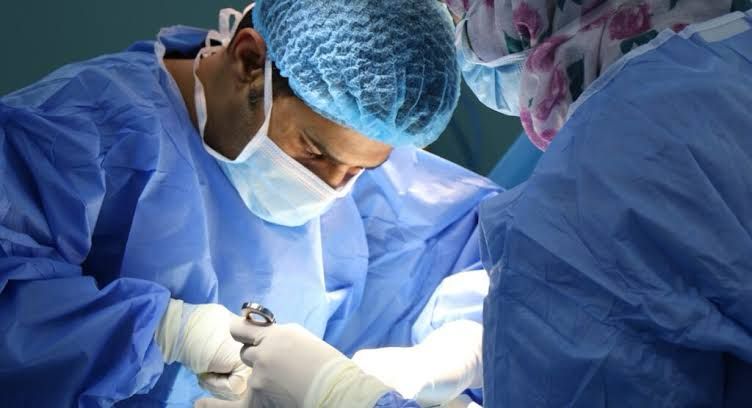
Doctors at the Massachusetts General Hospital in Boston, U.S., transplanted a pig’s kidney into a 62-year-old patient in a groundbreaking medical breakthrough that has recorded zero complications so far.
Urine started to flow from Richard Slayman’s new kidney, which came from a genetically altered pig, not long after his surgery on March 16, medical professionals said.
The kidney is an integral body organ that filters waste from the blood and, by extension, the body.
For decades, medical experts have proposed xenotransplantation, the implantation of animal organs, cells and tissues into a human being, as an alternative to replacing damaged organs of ailing patients.
However, the issue of incompatibility stood as a barrier since the human immune systems rejected the foreign organs, preventing them from functioning in the expected capacity.
Doctors at Mass Gen found a way to circumvent the barrier by modifying the animals to make their organs more receptive to the human body. In this instance, the pig was modified by eGenesis, a biotechnology company that specialises in researching human-compatible organs.
The genes most likely to be rejected by the human body were removed from the pig and replaced with seven human genes to boost the pig’s compatibility with the receiving human body. It worked.
Mr Slayman, doctors said, was recuperating just fine and had begun to walk in the medical facility since his transplant surgery on Saturday.
Mr Slayman, 62, had suffered from diabetes and hypertension and had even received a kidney transplant in 2018. However, it did not take long for the kidney to fail within five years of the transplant, which compounded his ailing condition.
The patient’s case worsened in 2023 when he continued his dialysis treatment and was often hospitalised.
He was initially sceptical when offered the option of a pig kidney transplant but later went with it.
“I saw it not only as a way to help me, but a way to provide hope for thousands of people who need a transplant to survive,” The New York Times cited Mr Slayman as saying.
Leonardo V. Riella, the medical director for kidney transplantation at Mass General Hospital, said dialysis may soon “become obsolete” if Mr Slayman’s procedure can be replicated on a large scale.

We have recently deactivated our website's comment provider in favour of other channels of distribution and commentary. We encourage you to join the conversation on our stories via our Facebook, Twitter and other social media pages.

More from Peoples Gazette

States
Independence: NBA urges Nigerians to expect better future
The NBA said that ordinary Nigerians should be deriving benefit from the subsidy removal rather than hardship.

Agriculture
FG tasks ECOWAS on leveraging financing strategies for agroecology
The federal government has urged stakeholders in the agriculture and finance sectors in the West Africa region to leverage financing strategies to enhance agroecology practices

Politics
Katsina youths pledge to deliver over 2 million votes to Atiku
“Katsina State is Atiku’s political base because it is his second home.”
Economy
Tinubu’s economic reforms paving way for prosperity: Minister
The minister explained that the reforms were deliberate and courageous, aimed at addressing longstanding structural weaknesses.

Health
Kaduna expands last-mile health supply project to 1,000 facilities
Ms Isyaku said four zonal warehouses in Ikara, Sabon Gari, Zaria and Kafanchan, established under the project, were operational.

Anti-Corruption
EFCC freezes bank account over alleged N1.06 billion theft
EFCC said the account was allegedly linked to the transfer of N1,065,500,000 from Renmoney Microfinance Bank.
Economy
NICA to convene stakeholders on expanding Nigeria’s credit economy
Mr Onalo said limited access to credit constrained businesses’ capacity to expand.
Heading 4
Female Ebola patient in Nigeria is Uganda-born, travelled to Uganda since September 16: Africa CDC
Uganda’s health ministry on Tuesday denied exporting Ebola to Nigeria, insisting the patient only passed through the country.

World
Ilhan Omar denies brother-marriage allegation amid federal investigation
In an interview with Fox News on Wednesday, Ms Omar said she was unaware of any familial connection to her ex-husband, Ahmed Nur Said Elmi.


