

Terrorists took them from school; 56 days later, they came home changed
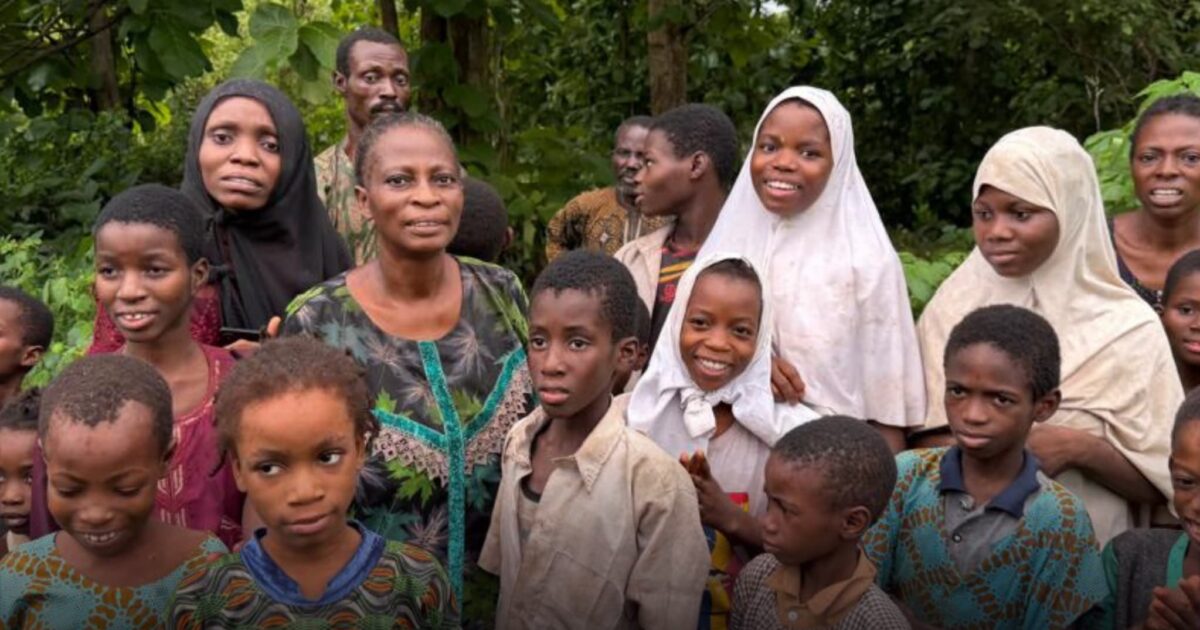
For two days, menstrual blood flowed into her underwear and trickled down her legs as she and other women roamed a forest without bathing.
The teacher asked not to be named.
The teacher, from Oriire Local Government in Nigeria’s western Oyo State, who was among many captured and held for 55 days by militants from Ansaru, a faction of Boko Haram, told the Peoples Gazette that the blood dried on her body and stained her dress. The dark fabric helped mask the stains, but without access to water, she began to smell, she recalled.
She felt “lucky” one night when the militants camped near a puddle. She dipped her tights into the muddy water to rinse out the blood, wrung them out and hung them on tall weeds to dry before dawn.
Before daybreak, she slipped back into the still-wet tights and continued walking. She did so before the terrorists began their morning prayers.
Multiple teachers said the Boko Haram fighters never missed any of the five daily Islamic prayers and even forced Muslim children to pray alongside them.
At the time of abduction, the teacher was breastfeeding her 11-month-old baby, whom she had left in the care of family members in nearby Ogbomosho town before going to work on that fateful Friday.
On May 15, dozens of Ansaru militants launched a coordinated attack on three communities in Oriire, targeting schools and kidnapping 43 teachers and students, including toddlers.
The victims were taken from Baptist Nursery and Primary School, LA Primary School, and Community Grammar School and held in captivity for nearly two months.
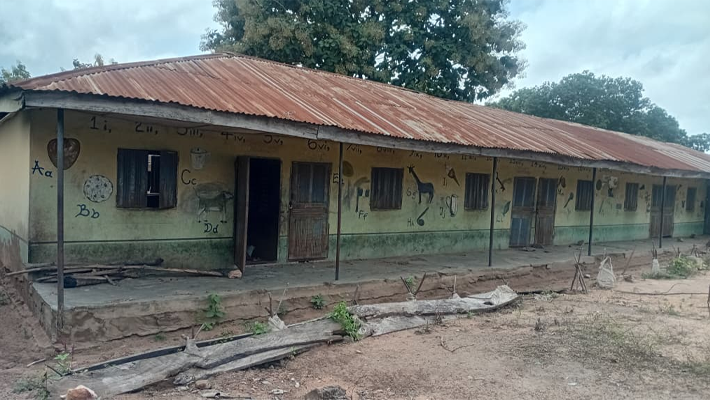
The militants sought to use the abducted children as bargaining chips for the release of senior Boko Haram commanders Mahmud Usman, popularly known as Abu Bara’a, and Abubakar Abba, also known as Mallam Mahmuda.
The mass abduction sparked outrage across the country, with citizens taking to the streets in protest.
The kidnappers were hoping public anger would pressure the government into accepting their prisoner exchange demand. But the Tinubu administration declined.
On July 10, the Nigerian army and other security agencies secured the victims’ release, saying it was achieved without concessions.
The Gazette interviewed nine victims to understand what they endured in captivity and what justice would mean for them.
When the body shuts down
For Mary Akanbi, a teacher who was among those abducted, the ordeal affected even her menstrual cycle.
Her menstruation stopped during captivity, except for occasional spotting.
“It(menstruation) didn’t come at all. It was as if my body knew I was kidnapped and adapted accordingly,” she said.
After her release on July 15, Ms Akanbi said her period returned.
Dr Duromola Michael, a gynaecologist at Deda Hospital in Abuja, explained that severe stress can temporarily disrupt menstruation.
Ms Akanbi said the militants forced her and other captives to trek for hours each day to avoid Nigerian military forces, which regularly deployed drones to the area.
Whenever a drone flew overhead, the militants ordered the children and teachers to lie flat on the ground, warning that the aircraft was programmed to kill them if it detected them.
Once the drone passed, the captives were forced to move again, often trekking for hours to a new location. It became a daily routine – one that Ms Akanbi said was completely foreign to her body.
Asked whether the children witnessed the killing of Michael Oyedokun, the math teacher whose murder video was shared on social media, Ms Akanbi responded in the negative.
But she said the terrorists took him aside, carrying shovels, but did not return with him. She said the teachers and older children heard a faint scream which was later understood to mean his demise when the militants returned without him.
Birthdays lost in captivity
At least two children spent their birthdays in captivity. Ojo Joseph turned eight on June 20, while Waliyah Bello turned four in a forest surrounded by armed terrorists and regularly monitored by drones.
Joseph’s mother recalled holding a picture of her son on his birthday and weeping because she did not know whether he was still alive or being tortured.
“I didn’t know what to do with myself on that day. I cried and cried,” she told The Gazette as she recalled her son’s birthday was exactly one month and five days from when he was captured. “I prayed with all my heart.”
Waliyah returned with a scar near her right eye. Her father said other abducted children told him that a militant struck her with the barrel of a gun after she cried loudly.
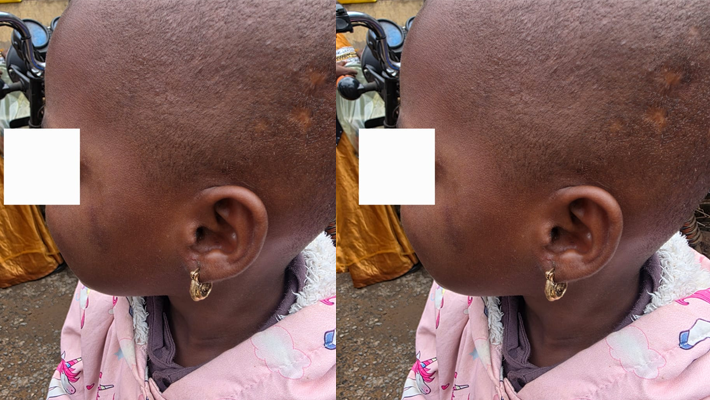
She bled heavily, he said, and the militants stuffed clothes into her mouth to silence her.
The children and teachers said they eventually lost track of the days and could no longer tell one day from another, let alone keep track of birthdays.
They were too young to keep track of such significant days without their parents to remind and celebrate them.
Waliyah also returned with sores and bald patches on her scalp. She spoke little when The Gazette attempted to interview her under her father’s supervision.
Her father said she had become withdrawn since returning from captivity.
He said he did not know whether the marks on her head were caused by insect bites or beatings. He recalled reports that the terrorists often flogged the children on their heads with fresh canes cut from the forest.
He also did not know whether her hair would grow back.
He, however, said he was grateful to be able to hold his daughter again after nearly two months of anxiety and sleepless nights.
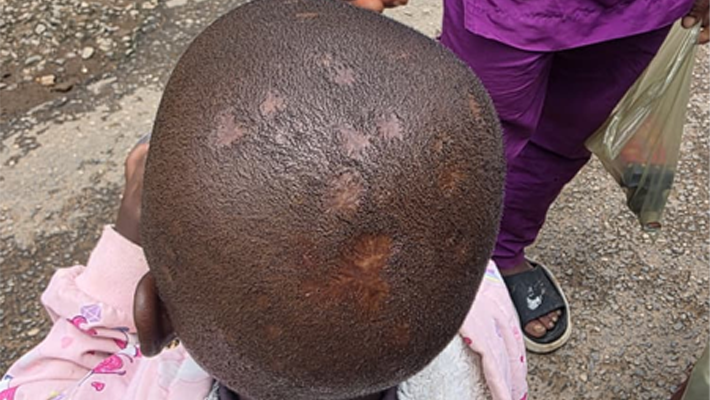
A hair expert from Vinci Hair Clinic said the patches looked like classic Alopecia areata, which can sometimes be triggered by stress in a person genetically prone to the autoimmune condition that results in hair loss.
The expert said he couldn’t speak further until tests are performed on the patient to ascertain the disease.
Food, hunger and survival
“We were fed something black that looked like amala but wasn’t.”
Parents told The Gazette that their children had become emaciated and looked like “skeletons” when they were released from captivity on July 15. Their clothes had also become oversized.
One parent said her 13-year-old son, Joshua Adeleke, was so thin that she struggled to recognise him when he returned.
Adeleke said the militants fed the captives only once a day, leaving them hungry until another 24 hours passed.
Another parent, Aminatu Abioye, said some of the children had become so thin from malnutrition that they looked like “worms.”
Joseph’s father said his eight-year-old son has had a voracious appetite since his return and “could eat 10 times a day,” including at odd hours such as after midnight.
“He was just eating and eating,” he said.
The children told The Gazette that the militants fed them what they described as “Amala and Obe luru,” a dark soup made from herbs. They sat in groups of 10 and ate from 25-litre groundnut oil kegs slashed into equal halves, using their bare hands.
Their water, often filled with particles, came from puddles in the ground – “the same water that cows walked on and drank,” eight-year-old Ahmed Ramoni said.
Ms Oladeji, a teacher who was also captured, recalled that while the swallow pudding looked like amala, it tasted completely different. She said the militants used wild herbs and plants from the forest to prepare their meals, but she could not say whether the ingredients were safe to eat.
Ms Oladeji sought to be identified only by her last name.
“We were fed something black that looked like amala but wasn’t. It was God who sustained us,” she said. “We survived only by the mercy of God.”
When they were not served the dark meal, the militants gave them plain white rice. On a few occasions, they added palm oil as a substitute for stew, Adeleke said.
Those were the only meals the captives received throughout the 56 days in captivity, The Gazette learnt.
Anyone believed to be eating too much could be flogged on the head with canes to slow them down, the teacher said.
56 days without a bath
For eight-year-old Ahmed Ramoni, hygiene became secondary to survival. He said the militants, who often spoke in the Hausa language and sometimes pidgin, flogged him repeatedly for breaking their rules, including talking to other children, crying or eating too much.
According to Ramoni, the captors ordered the children and teachers to lie flat on the ground and hide under large trees whenever they heard drones approaching.
He said he became increasingly fearful for his life and stopped worrying about bathing, even though his body constantly itched.
Ramoni said he did not bathe once during the 56 days in captivity. The militants washed his clothes only twice during that period.
Narrating their sleeping conditions, Ramoni said the militants laid a thick nylon for them on the ground in the forest where they were often bitten by mosquitoes and other insects.
A community left exposed
Residents said the lack of basic infrastructure and communication networks aided the militants’ ability to operate in the area.
Yawota, a remote community in Oriire LGA, lacks electricity and reliable telecommunications coverage. Everyone knew each other in the community, and the military was rarely present.
They said the militants, who arrived in pairs on about six motorcycles, were able to operate freely in the area for about an hour in broad daylight without fear of being caught. They rounded up the children and teachers and forced them to trek for about 40 minutes to a meeting point, where they joined other abductees from Alawusa and Ahoro-Esinele.
The lack of a functioning telecommunications network meant residents had no reliable way to alert security forces. The nearest police station was at least an hour away by motorcycle, residents said. Only one tree opposite the Baptist Church had a faint MTN signal. To make and receive calls, MTN users in Yawota had to stand beneath the tree.
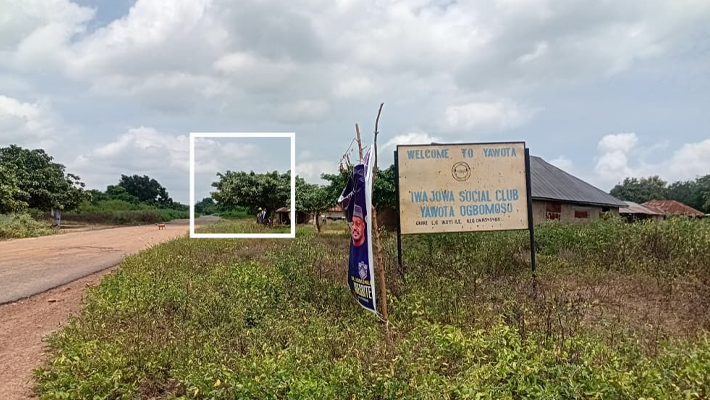
Residents urged telecommunications companies to build masts in the communities and called on the government to provide electricity.
The Gazette reached out to MTN, Glo and Airtel for comment on whether they planned to establish or expand their presence in the communities. The Gazette also contacted the Ibadan Electricity Distribution Company for comment on plans to provide electricity to the communities.
Life after captivity
Eight-year-old Sodiq Farouq and seven-year-old Precious Adetutu were among the pupils of Baptist Nursery and Primary School in Yawota who jumped out of classroom windows when they saw the militants approaching on motorcycles.
The men wore balaclavas and army camouflage and carried weapons.
Seeing men in camouflage with their faces covered and weapons strapped around their bodies was like an action film happening in real time, Sodiq told The Gazette.
He jumped from his classroom window without waiting to find out why they had come.
Precious, who was in the next class, did the same, while other older pupils fled the school, which has no gate.
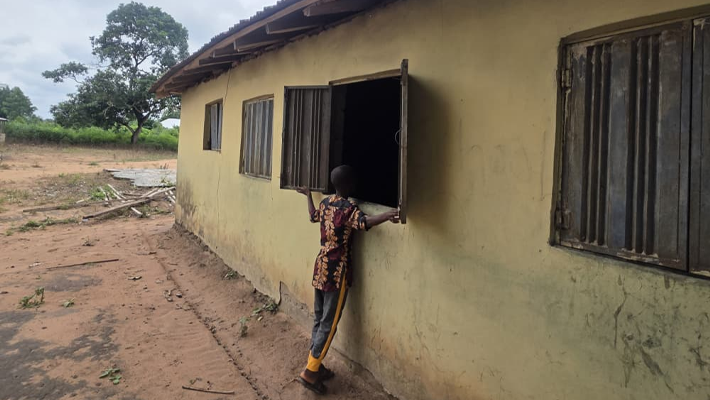

The attack turned deadly outside the school. A motorcycle rider, who was waiting to collect his fare from a teacher he had transported to Yawota, was shot in the head, residents said.
The children who escaped later saw his body and his severe head injuries. One resident likened it to a “burst watermelon”.
“I don’t want to go to school for now,” Farouq said given what he had witnessed.
Other families share his fear. At least six parents told The Gazette that their children would stay at home until they could raise enough money to relocate to Ogbomoso, the nearest town, where they planned to enrol them in school.
They said education was important, but staying alive was now the priority.
For the children who were taken, however, the effects of the 56 days in captivity have followed them home.
Parents said they had noticed unusually large appetites and withdrawal among their children since their return.
Damilola Adebowale said her daughter sometimes chanted words she could not understand that sounded like Quranic verses. She would remind her that they were Christians.
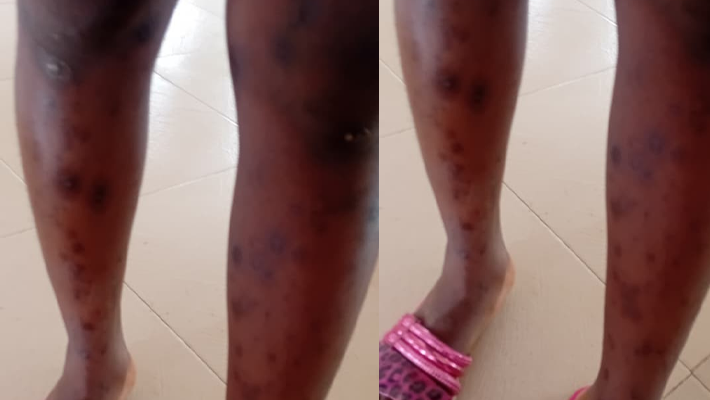
Ms Adebowale said her daughter has not recovered from her time in captivity, noting that a loud thud from her neighbour’s slammed door still causes her to shiver from time to time. She said her daughter mutters words in her sleep.
In Yawota, residents also noticed some of the abducted children reenacting their time in captivity. They would gather under a tree and role-play scenes from the forest, using sticks as guns.
“Some of the children would pretend to be soldiers carrying sticks like guns and threatening to shoot if any child disobeyed them,” said Iya Yomi, a resident of Oriire.
For some parents, those changes have reinforced their fears about sending their children back to school.
“A living child is the one that can go to school,” Ms Adebowale, whose five-year-old daughter was among those captured, said. “My daughter will stay at home for now.”

We have recently deactivated our website's comment provider in favour of other channels of distribution and commentary. We encourage you to join the conversation on our stories via our Facebook, Twitter and other social media pages.

More from Peoples Gazette

States
Independence: NBA urges Nigerians to expect better future
The NBA said that ordinary Nigerians should be deriving benefit from the subsidy removal rather than hardship.

Agriculture
FG tasks ECOWAS on leveraging financing strategies for agroecology
The federal government has urged stakeholders in the agriculture and finance sectors in the West Africa region to leverage financing strategies to enhance agroecology practices

Politics
Katsina youths pledge to deliver over 2 million votes to Atiku
“Katsina State is Atiku’s political base because it is his second home.”

Heading 1
Trump offers $1 million reward to anyone reporting voter fraud
On Monday, 48 foreign nationals were charged with illegal voting and other election-related crimes.

Education
OAU resumes new academic session November 1
The school noted that registration for newly admitted students would begin on November 2.

Heading 5
Apple’s first foldable iPhone draws complaints over cracked screens
Apple released the iPhone Duo, its first foldable phone, earlier this year.

Sport
Lamine Yamal wins ‘Men’s young talent of the year’
The Spanish and Barcelona star played a key role in Spain’s World Cup victory.
Heading 3
2027: INEC makes preliminary voter register available online
The commission explained that it was continuing to process claims and objections arising from the exercise in accordance with the Electoral Act, 2026.
Heading 2
Human remains discovered along Switzerland-Germany border
Investigators suspect that it was a homicide.


