

Tinubu govt inaugurates poverty intelligence lab to strengthen interventions

The Minister of Humanitarian Affairs and Poverty Reduction, Bernard Doro, says the newly unveiled National Poverty Intelligence Lab (NPIL) will strengthen effective response to ultimately reduce poverty in the country.
Mr Doro stated this on Wednesday in Abuja at the NPIL Project Kick-off and Monitoring, Evaluation and Learning (MEL) and Data Systems Diagnostic Workshop.
The workshop, organised by the ministry in collaboration with Innovations for Poverty Action (IPA), focused on the use of data and intelligence systems to address poverty challenges more effectively.
According to the minister, the NPIL will accelerate ongoing reforms that will transform how Nigeria understands, responds to, and ultimately reduces poverty.
“I am super excited to witness the beginning of the operationalisation of what we have long envisioned: a truly integrated national system for poverty intelligence and humanitarian response.
“What this moment demands is not more of the same. It demands systems, intelligence, evidence-driven leadership, and above all, coordinated and accountable action. That is exactly what today’s event is about,” he said.
Mr Doro said Nigeria’s poverty challenges had accumulated over decades and required deliberate, data-driven policies to achieve meaningful results.
According to him, the federal government is committed to ensuring that programmes and policies targeted at poor and vulnerable Nigerians deliver measurable outcomes.
“The Renewed Hope Agenda calls us to a higher standard. We are moving from palliation to pathways, fragmented projects to integrated systems, measuring spending to measuring outcomes, and from dependency to dignity.
“Every household we reach through the One Humanitarian-One Poverty Response System (OHOPRS) is a household we intend to graduate from vulnerability, not just today, but permanently. That is the ambition. The NPIL is the engine that will tell us whether we are getting there,” he said.
The minister said poverty could not be addressed through assumptions, fragmented interventions or weak accountability mechanisms.
He explained that the OHOPRS was designed to provide the systems and intelligence needed to move Nigeria from fragmented interventions to coordinated outcomes and from vulnerability to prosperity.
According to him, the establishment of the NPIL is not merely a technical initiative but a governance, accountability and poverty-reduction reform.
On why the OHOPRS required the NPIL, Mr Doro said it was founded on a fundamental realisation that poverty and vulnerability do not exist in isolation.
He noted that humanitarian assistance, social protection, resilience-building and poverty reduction must function as one coordinated system rather than separate interventions.
The minister added that the NPIL would serve as the evidence and intelligence backbone of the system, ensuring that interventions under the OHOPRS are informed, targeted and measurable.
“The OHOPRS is not another programme layered onto an already crowded landscape. It is a national operating model and a governing architecture.
“It ensures that government, development partners, humanitarian actors and the civil society organisations work within a shared framework guided by common objectives, standards, integrated data, and measurable outcomes,” he said.
Mr Doro reaffirmed the commitment of the administration of President Bola Tinubu to sustainable poverty reduction and improved living standards for Nigerians.
Also speaking, IPA Country Representative, Funmi Ayeni, said the collaboration would help identify the real needs of poor and vulnerable populations while reducing duplication of interventions.
According to her, lifting people out of poverty requires collective action and evidence-based policymaking.
In a presentation titled “Understanding the NPIL within the OHOPRS”, Christopher Chinedu of the ministry said the One Humanitarian-One Poverty Response System was an initiative of the minister.
According to him, the NPIL aims to transform data into intelligence-driven prosperity, noting that while the OHOPRS is the body, the NPIL is the brain.
“The key functions of NPIL include priority mapping, vulnerability analysis, targeting intelligence, resource optimisation, impact measurement and early warning systems.
“NPIL is about embedding data, analytics and evidence at the heart of Nigeria’s social protection system and laying the foundation for the one humanitarian-one poverty response framework,” Mr Chinedu said.
Stakeholders from across the humanitarian ecosystem participated in the workshop.
(NAN)

We have recently deactivated our website's comment provider in favour of other channels of distribution and commentary. We encourage you to join the conversation on our stories via our Facebook, Twitter and other social media pages.

More from Peoples Gazette

States
Independence: NBA urges Nigerians to expect better future
The NBA said that ordinary Nigerians should be deriving benefit from the subsidy removal rather than hardship.

Agriculture
FG tasks ECOWAS on leveraging financing strategies for agroecology
The federal government has urged stakeholders in the agriculture and finance sectors in the West Africa region to leverage financing strategies to enhance agroecology practices

Politics
Katsina youths pledge to deliver over 2 million votes to Atiku
“Katsina State is Atiku’s political base because it is his second home.”

Economy
Tinubu, APC should be responsible; PDP not cause of hardship in Nigeria: Spokesman
The Peoples Democratic Party on Monday says it is not responsible for hunger in Nigeria, advising the ruling All Progressives Congress to stop the blame game.
Politics
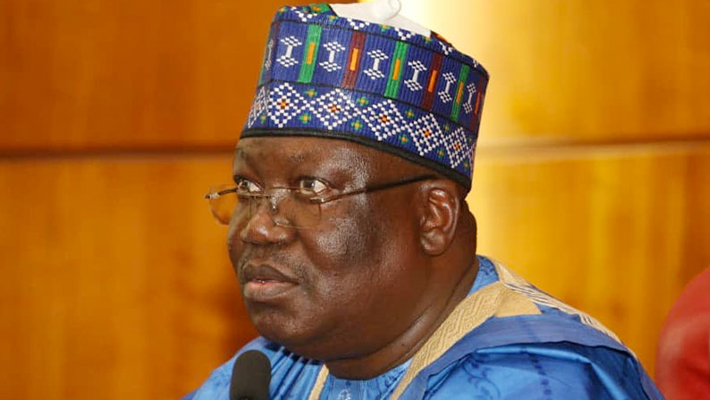
Court reserves judgement in suit seeking to void Ahmad Lawan’s senatorial ticket
Justice Salim Ibrahim said the judgement date would be communicated to parties 24 hours before delivery.

States
Nigerian soldiers kill eight terrorists, rescue three hostages
Troops killed eight suspected terrorists and rescued three kidnap victims in coordinated operations in Katsina, Kaduna and Zamfara.
Health
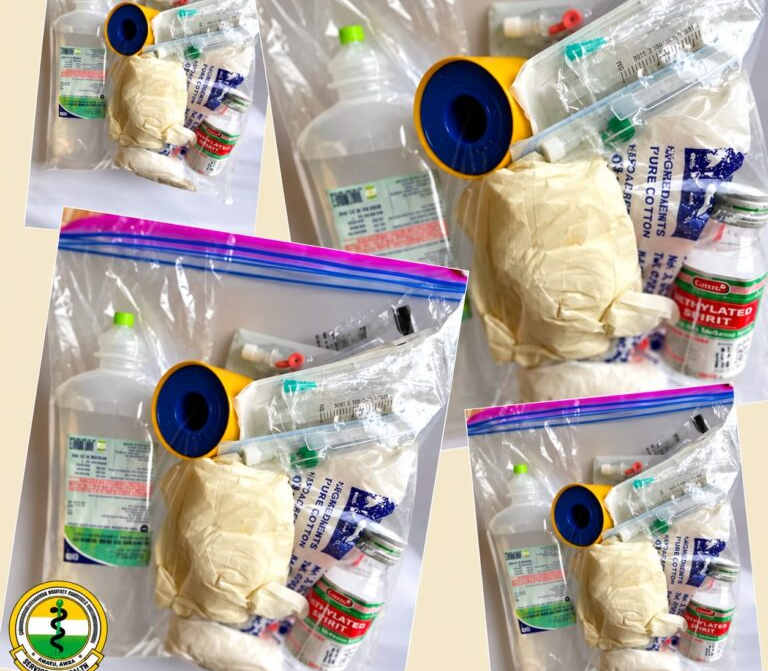
Hospital unveils emergency care pack for patients in Anambra
COOUTH has introduced an Emergency Care Pack to support prompt initial care for patients brought in during emergencies.

Economy
Moniepoint restructures engineering, product functions
Moniepoint, a financial technology company, says its restructuring of engineering and product functions will make some existing roles redundant while creating new positions.

Sport
Harry Kane wins 2026 Ballon d’Or after successful season with club, country
Kane netted 61 goals at club level in the 2025/26 season as Bayern Munich clinched the Bundesliga.


