

Tinubu govt rebukes Atiku over Nigeria’s economic growth statistics
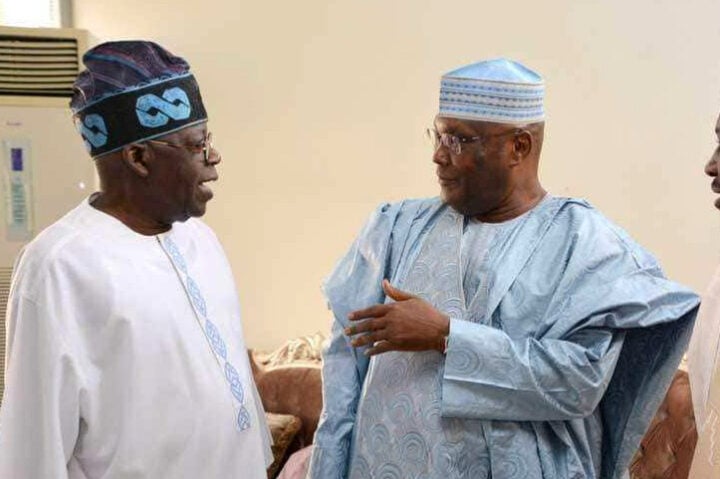
Former Vice-President Atiku Abubakar has been censured for criticising President Bola Tinubu’s economic policies. A statement on Sunday by Bayo Onanuga, the president’s spokesman, alleged that Mr Abubakar’s concerns about the Nigerian economy were not rooted in facts but in “a frozen snapshot of history”.
The statement noted that Mr Abubakar’s criticism relied on outdated 2024 data and overlooked the gains of Mr Tinubu’s administration’s economic policies and that the “reforms were never advertised as painless”.
“They were presented as necessary structural adjustments intended to correct long-standing distortions, including distortions created in the Obasanjo-Atiku years, 1999-2007. What matters are the size of the economy; our revenue-generating capacity; debt servicing costs; the purposes for which funds are borrowed; and whether borrowed resources finance productive investments or recurrent consumption. Nigeria’s debts have been acquired for productive, long-term infrastructure and investment purposes—according to the law,” said the presidency.
Dismissing Mr Abubakar’s criticism of tax reforms, the presidency claimed that the incumbent administration’s tax measures have helped protect low-income earners and small businesses, while also improving tax compliance among high-income individuals and profitable companies.
“The reforms are intended to reduce the burden on many low-income earners (people earning N1 million per annum and below) and small businesses (with turnover of N100 million and below) while strengthening compliance among higher-income individuals and profitable enterprises—many of whom had avoided or evaded taxes under the cover of informality for decades,” the presidency stated.
It pointed out that Mr Abubakar’s concern showed “analytical deficiency” and asserted that Nigeria’s revenue-to-GDP ratio remained among the lowest globally, while the country’s debt level was sustainable.
“Oil Windfall? Atiku and his handlers reveal analytical deficiency. There is no such windfall of N7.98 trillion. Any incremental revenue from higher oil prices is reflected in the monthly FAAC figures,” the statement said. “While the average price for the half-year 2026 for Brent is around $90 compared to the $64.85 benchmark, the average daily production fell short at about 1.6m bpd compared to the forecast of 1.84m bpd,” he added.

We have recently deactivated our website's comment provider in favour of other channels of distribution and commentary. We encourage you to join the conversation on our stories via our Facebook, Twitter and other social media pages.

More from Peoples Gazette

States
Independence: NBA urges Nigerians to expect better future
The NBA said that ordinary Nigerians should be deriving benefit from the subsidy removal rather than hardship.

Agriculture
FG tasks ECOWAS on leveraging financing strategies for agroecology
The federal government has urged stakeholders in the agriculture and finance sectors in the West Africa region to leverage financing strategies to enhance agroecology practices

Politics
Katsina youths pledge to deliver over 2 million votes to Atiku
“Katsina State is Atiku’s political base because it is his second home.”

Heading 4
Presidency to send State Police Bill to National Assembly in two weeks
He described the proposed legislation as the most consequential bill of Mr Tinubu’s administration.

States
FG reopens First Niger Bridge after 38 days
Mr Umahi said the intervention reflected President Bola Tinubu’s commitment to maintaining critical infrastructure.

Health
Group urges lawmakers to strengthen oversight on nutrition funding
The programme manager said accountability in nutrition financing has been lacking over the years.
Economy
Nigeria’s inflation dropped to 14.63% in September: NBS
NBS said September headline inflation fell by 0.65 per cent to 14.63 per cent, down from 15.39 per cent in August.

States
Remi Tinubu launches 50 CNG buses, ₦1 billion empowerment programme in Edo
Mrs Tinubu said the initiatives would improve transportation and create economic opportunities for residents.

Uncategorized
Alleged Fraud: Witness tells court he facilitated N1.4 billion forex transactions for Yahaya Bello’s associate
Justice Maryanne Anineh adjourned the case until October 27 and November 24, 2026, to continue the trial.


