

Tinubu seeks constitutional recognition for traditional rulers

President Bola Tinubu says traditional rulers remain the most enduring link between government and the people and must be formally recognised within the governance framework.
Mr Tinubu, who was represented by Gov. Hope Uzodinma of Imo, disclosed this at the meeting of the National Council of Traditional Rulers of Nigeria (NCTRN) on Monday in Lagos.
The meeting has as theme, “The Traditional Institution: The Imperative of Its Inclusion in the Effective and Efficient Governance in Nigeria.”
The meeting brought together royal fathers from across the country to deliberate on the constitutional relevance of traditional leadership in modern governance.
Mrs Tinubu said that the traditional institution continued to perform crucial roles in promoting peace, cohesion and stability, in spite of the absence of constitutional backing.
“Across the country, our traditional rulers carry out essential responsibilities that keep our communities united and functional; mediating conflicts, preserving culture, and maintaining order,” he said.
Mr Tinubu recalled that traditional rulers had defined roles in the country’s early constitutional order, citing the 1963 Republican Constitution, which gave them legislative presence and participation in governance.
He lamented that the 1979 and 1999 constitutions failed to restore such recognition, leaving the institution to operate informally.
“This is not a question of nostalgia but one of institutional continuity.
“Our royal fathers are still doing the work; what they need is formal recognition by law,” he said.
The president urged the National Assembly to revisit the issue, stressing that some African countries like Ghana, South Africa, and Namibia had already constitutionally entrenched their traditional institutions without undermining democracy.
He described the traditional institution as indispensable to Nigeria’s unity and stability, adding that the time had come to grant legal backing to the functions traditional rulers already perform.
“The marriage between governance and tradition is real. The only thing missing is the certificate,” he said.
He, however, advised monarchs to remain neutral in politics, saying their moral authority and public trust were crucial to sustaining their influence and dignity.
Earlier in his welcome address, Gov. Babajide Sanwo-Olu of Lagos State, said Lagos was honoured to host the assembly of cultural custodians whose wisdom and leadership continued to uphold the nation’s moral fabric.
Mr Sanwo-Olu described the meeting as timely, noting that traditional institutions had always served as the trusted bridge between the people and government.
“Long before modern governance took shape, our traditional rulers were the bedrock of stability and justice.
“Even today, no government can thrive without their support,” he said.
The governor recounted the historical contributions of monarchs who resisted colonial rule, including Oba Ovonramwen Nogbaisi of Benin, King Jaja of Opobo, and Chief Ogedengbe of Ilesha.
According to him, military intervention in governance weakened the traditional system, but democracy offers an opportunity for restoration.
“Our royal fathers must continue to push for constitutionally backed relevance. Lagos will always support this cause,” Mr Sanwo-Olu said.
He urged the traditional rulers to remain impartial and united, emphasising their role as moral compasses and symbols of peace and integrity.
“We must ensure that our traditional institutions remain inclusive, impartial, and aligned with the vision of a just and thriving Nigeria,” he added.
Mr Sanwo-Olu reaffirmed his administration’s commitment to the welfare and dignity of traditional rulers, pledging continued support for constitutional recognition of their roles in national development.
Sultan of Sokoto, Muhammad Sa’ad Abubakar III, chairman of the NCTRN, commended Mr Tinubu for his commitment to national unity and expressed optimism that the discussions would lead to stronger institutional recognition for traditional rulers.
He urged traditional rulers to sustain their efforts in promoting peace and security in their domains, while describing their collaboration with government as key to building a stable and prosperous nation.
(NAN)

We have recently deactivated our website's comment provider in favour of other channels of distribution and commentary. We encourage you to join the conversation on our stories via our Facebook, Twitter and other social media pages.

More from Peoples Gazette

States
Independence: NBA urges Nigerians to expect better future
The NBA said that ordinary Nigerians should be deriving benefit from the subsidy removal rather than hardship.

Agriculture
FG tasks ECOWAS on leveraging financing strategies for agroecology
The federal government has urged stakeholders in the agriculture and finance sectors in the West Africa region to leverage financing strategies to enhance agroecology practices

Politics
Katsina youths pledge to deliver over 2 million votes to Atiku
“Katsina State is Atiku’s political base because it is his second home.”

Heading 4
115 million Nigerians benefiting from Gavi’s solarisation of 371 health facilities
The organisation stated that solarisation provides clean, reliable and sustainable energy to health facilities.
Hot news Home top
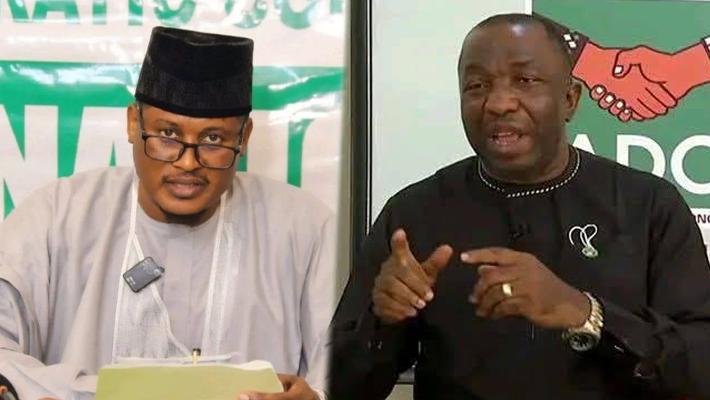
Bala used to beg for transport fare to attend ADC meetings; after going to court, he bought three bulletproof SUVs: Nwosu
According to him, Mr Gombe’s lifestyle changed after the legal dispute began.

States
NYSC members in Oyo receive October allowance after payment delay
The NYSC had attributed the delay to a technical glitch.

Heading 5
Ogun: Yayi pledges 24-hour power supply, infrastructure projects in Abeokuta
The CDC chairman described Mr Adeola as an experienced politician with the capacity to lead the state.
Education
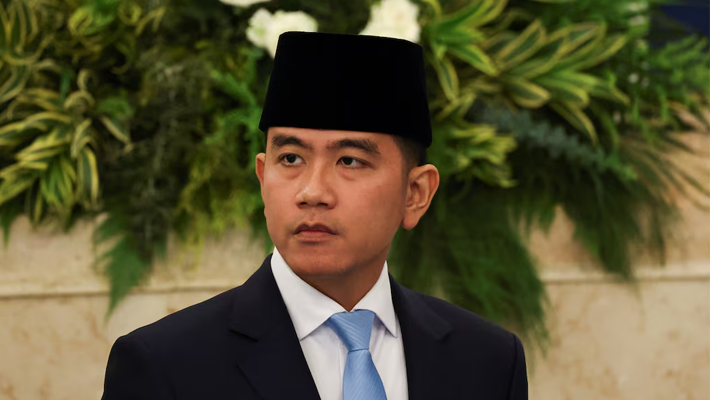
Indonesia’s VP considers resignation over education qualification scandal
Mr Gibran, 39, is the son of former Indonesian President Joko Widodo.

Lagos
Lagos targets additional 2,000MW electricity supply by March 2027
Mr Sanwo-Olu said reliable electricity remained fundamental to economic growth.


