

Tinubu urges banks to translate capital into productive investment, employment
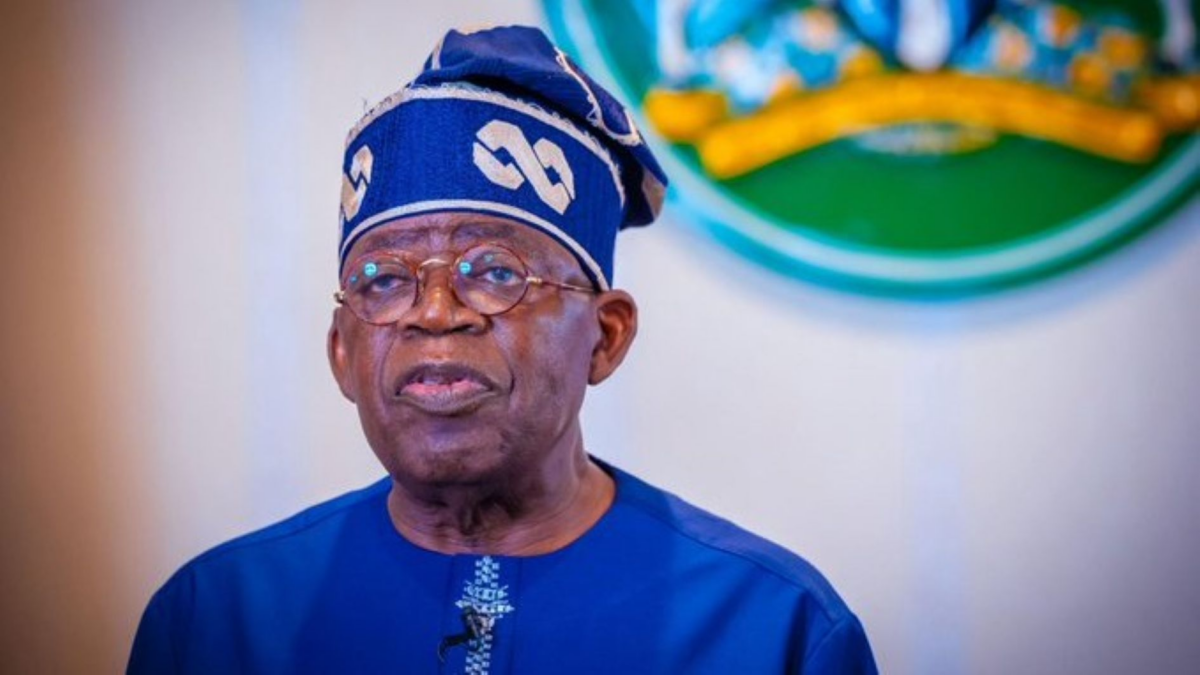
President Bola Tinubu has called on the financial services industry to translate their capital into productive investment and employment opportunities for economic growth and development.
Mr Tinubu said this at the 19th Chartered Institute of Bankers of Nigeria (CIBN) Annual Banking and Finance Conference in Abuja on Tuesday.
The president was represented by the Minister of Finance and Coordinating Minister of the Economy, Taiwo Oyedele.
He said that resilience of the financial system would not be possible where businesses do not have access to affordable credit.
He listed factors that would drive resilience in the financial systems to include growth facilitation, inclusion, technology and long-term capital.
Mr Tinubu said that various innovations, such as artificial intelligence (AI) and digital and open banking, among others, had impacted the financial system.
The president said that the government would continue to create space for more private sector credit.
”No economy can be more resilient than its financial system,” he said.
The Governor of the Central Bank of Nigeria (CBN), Olayemi Cadoso, said that the benefits of the monetary and fiscal policy reforms would soon start trickling down to impact the common man and their standard of living.
The governor, represented by the CBN’s Deputy Governor, Economic Policies, Philip Ikeazor, said the successes of the reforms had been echoed on different platforms.
He said that many citizens had queried the benefits of the reforms, adding that the dividends would soon translate positively in the day-to-day living of citizens.
“The reforms by the CBN were done in conjunction with other stakeholders,” he said.
The Managing Director of the Nigeria Deposit Insurance Corporation (NDIC), Thompson Sunday, said that the resilience of the financial system exceeded adaptation to shocks.
Mr Sunday, represented by the Executive Director of Corporate Services of the NDIC, Emily Osuji, said that building resilience required strong institutions and shared responsibility.
He urged banks to provide resources required to support agriculture and businesses, among others.
In a keynote speech, the Country Director of the World Bank, Matthew Verghis, commended the country for some of its reforms, adding that they had impacted the inflation rates and built investor confidence.
Mr Verghis, represented by the World Bank’s Lead Private Sector Development Specialist for Nigeria, Bertine Kamphuis, said that about three to four million young Nigerians enter the country’s labour force every year.
He said that one in 20 micro, small and medium enterprises (MSMEs) could access bank credit.
He said the availability of capital was not an issue in the country but the allocation of it.
Also, Chairman of the Body of Banks’ Chief Executive Officers (CEOs), Oliver Alawuba, said that a resilient economy is one designed to adapt to shocks without transferring them to vulnerable citizens.
Mr Alawuba commended the federal government and the CBN for their commitment toward the stability of the economy.
He said the banking sector recapitalisation had better strengthen the capacity of banks to support growth in the country’s economy.
The chairman called for fiscal and monetary synergy to unlock productivity in the industry.
The Chairman of the Senate Committee on Banking, Insurance and Other Financial Institutions, Mikhail Abiru, called on banks to support the real sector and deepen the financial sector.
President/Chairman of Council, CIBN, Dele Alabi, said that disruption had become a defining feature of the global economy.
Mr Alabi said the war in the Middle East involving Israel, Iran, and the United States, together with disruption to energy and shipping flowing through the Strait of Hormuz, had intensified volatility in oil, freight, and financial markets.
He said that Nigeria was not insulated from these shocks.
According to him, MSMEs are central to employment, enterprise and local value creation, but many remain constrained by high operating costs, unreliable infrastructure, limited access to markets, low productivity, skills gaps and slow digital adoption.
He said the proposed hubs would provide shared infrastructure, business advisory services, capacity building, technology support, market linkages and easier access to finance.
”The good news is that certain policies implemented in the past couple of years are beginning to yield fruit.
”This is precisely why the next phase of reform must focus on transmission, moving stability from national balance sheets to business balance sheets and household budgets. The Institute’s advocacy for scalable SME Hubs nationwide is one practical response.
”They would help reduce operating costs, improve bankability, stimulate innovation and connect recapitalised financial institutions more effectively to the real sector. In this way, the gains of reform can travel beyond aggregate indicators to stronger businesses, better jobs, higher incomes and more resilient communities,” Mr Alabi said.
The conference brought together stakeholders in the financial system from across the country.
(NAN)

We have recently deactivated our website's comment provider in favour of other channels of distribution and commentary. We encourage you to join the conversation on our stories via our Facebook, Twitter and other social media pages.

More from Peoples Gazette

States
Independence: NBA urges Nigerians to expect better future
The NBA said that ordinary Nigerians should be deriving benefit from the subsidy removal rather than hardship.

Agriculture
FG tasks ECOWAS on leveraging financing strategies for agroecology
The federal government has urged stakeholders in the agriculture and finance sectors in the West Africa region to leverage financing strategies to enhance agroecology practices

Politics
Katsina youths pledge to deliver over 2 million votes to Atiku
“Katsina State is Atiku’s political base because it is his second home.”
Heading 4
FG releases N38.93 billion to 166 public tertiary institutions
Mrs Ovuakporie said universities would receive N28.5 billion, polytechnics N5.8 billion and colleges of education were allocated N4.7 billion.

Economy
Rising Cost of Living: FG urged to revive refineries, cut spending
Mr Oaikhenan said that decline in inflation did not necessarily mean that prices of goods and services were falling.
States
Three men remanded for dismantling car, selling components as spare parts
Mr Jimoh said the arrest followed the report of a stolen vehicle at the Idanre Divisional Police Headquarters on October 12.

World
Egypt sends over 280 trucks loaded with food supplies to Gaza
The ERC said it sent an aid convoy toward Gaza early on Sunday.

Sport
Bournemouth thrash Man United 3-0 as Carrick’s job comes under threat; Liverpool, Newcastle win
The defeat means Man United have secured only seven points from their first eight league matches this season.

Heading 1
Ebola: NCDC to provide N100,000 weekly allowance for isolated people
The NCDC boss said the allowance is an unplanned emergency measure that could be reviewed as the situation evolves.


