

Tinubu’s reforms revived collapsing Nigeria’s economy, says Oyedele

The Minister of Finance and Coordinating Minister of the Economy, Taiwo Oyedele, says President Bola Tinubu’s reforms prevented Nigeria’s economy from collapsing.
Mr Oyedele said this on Tuesday in Abuja during a plenary at the 2026 Nigeria Employers’ Summit organised by the Nigeria Employers’ Consultative Association (NECA).
Mr Oyedele, who spoke on the theme, “The Reforms in Focus: The Milestones, The Challenges, The Prospects,” said Nigeria’s economy was nearing collapse before the reforms, especially the removal of fuel subsidy.
“Before the subsidy removal, Nigeria had less than three months before a major fuel crisis. People would have had money without finding petrol because the subsidy had become unsustainable,” he said.
The minister said government had exhausted oil revenues funding fuel subsidies and resorted to borrowing against future crude production.
He said the situation left substantial national oil resources already committed.
According to him, the reforms restored economic stability after initial volatility, including higher fuel prices, inflation, transport costs and exchange rate adjustments.
“We have moved from volatility to stability.
Stability is necessary because, without it, sustainable economic growth and job creation cannot happen,” Mr Oyedele said.
He said the next phase of government’s economic agenda focused on accelerated, job-rich and productive growth.
According to him, government targets seven per cent annual real Gross Domestic Product growth across sectors which will deliver at least, five per cent per capital income growth.
“The sacrifices Nigerians have made must not be wasted. We must remain focused and consolidate these reforms to achieve sustainable economic prosperity for everyone,” he said.
Mr Oyedele said government deliberately designed the reforms to protect small businesses and low-income earners, and urged wealthy Nigerians to support the reforms through greater sacrifice and responsibility.
The minister said government could not sustainably finance social welfare by printing money.
“We cannot build sustainable welfare by printing money. Government must generate adequate revenue before redistributing resources to protect vulnerable Nigerians and strengthen economic resilience,” he said.
Mr Oyedele urged Nigerians to understand government policies before criticising them.
“You cannot effectively hold government accountable through anger alone. Knowledge and understanding are essential for constructive engagement and solving national challenges,” he said.
The minister described Nigeria’s borrowing profile as favourable.
According to him, Nigeria maintains one of the world’s lowest debt-to-GDP ratios while accessing largely concessional financing at relatively low interest rates.
He urged Nigerians to promote factual narratives about the economy.
The minister warned that persistent negative perceptions discouraged investment and increased the cost of economic progress.
Also speaking, the Director-General of the National Health Insurance Authority (NHIA), Dr Kelechi Ohiri, called for greater healthcare investment.
MrnOhiri said healthcare investments were essential to sustain productivity and inclusive economic growth and described human capital as Nigeria’s greatest asset.
According to him, wider health insurance coverage will reduce health poverty, improve productivity and protect households from catastrophic healthcare expenses.
Mr Ohiri said health insurance enrolment increased from about 16 million to 22 million Nigerians, representing a 34 per cent increase since implementation of key reforms under the NHIA Act.
“Employers must ensure their workers are covered because health insurance is not only socially responsible but also improves productivity. We have also expanded coverage for vulnerable Nigerians,” Mr Ohiri said.
He noted that more than 50,000 women benefited from free emergency obstetric care in over 270 accredited hospitals.
Mr Ohiri added that the NHIA had expanded healthcare benefits to address rising non-communicable diseases nationwide.
(NAN)

We have recently deactivated our website's comment provider in favour of other channels of distribution and commentary. We encourage you to join the conversation on our stories via our Facebook, Twitter and other social media pages.

More from Peoples Gazette

States
Independence: NBA urges Nigerians to expect better future
The NBA said that ordinary Nigerians should be deriving benefit from the subsidy removal rather than hardship.

Agriculture
FG tasks ECOWAS on leveraging financing strategies for agroecology
The federal government has urged stakeholders in the agriculture and finance sectors in the West Africa region to leverage financing strategies to enhance agroecology practices

Politics
Katsina youths pledge to deliver over 2 million votes to Atiku
“Katsina State is Atiku’s political base because it is his second home.”
NationWide
Stop seeking wealth through dishonest means, Olukoyede warns youth
Mr Olukoyede urged the youth to pursue a fresh agenda of progress, integrity, development and anti-corruption in every realm.
Africa
South Africa’s President Ramaphosa hails Navy Pillay over 2026 Nobel Peace Prize award
Mr Ramaphosa hailed Ms Pillay for serving “humanity with principle”, believing the world “can and should be a better place.”

Abuja
Wike orders demolition of illegal beer parlours in Asokoro
Mr Wike gave the order after a high-level security meeting with the FCT commissioner of police and the director of the SSS in Abuja.

Abuja
Wike says Abuja NLC strike political, threatens to enforce no-work-no-pay policy
Mr Wike said the Trade Union Congress and the Academic Staff Union of Secondary Schools had disowned the strike.
Africa
Humanitarians deliver food to communities affected by hostilities in Tigray
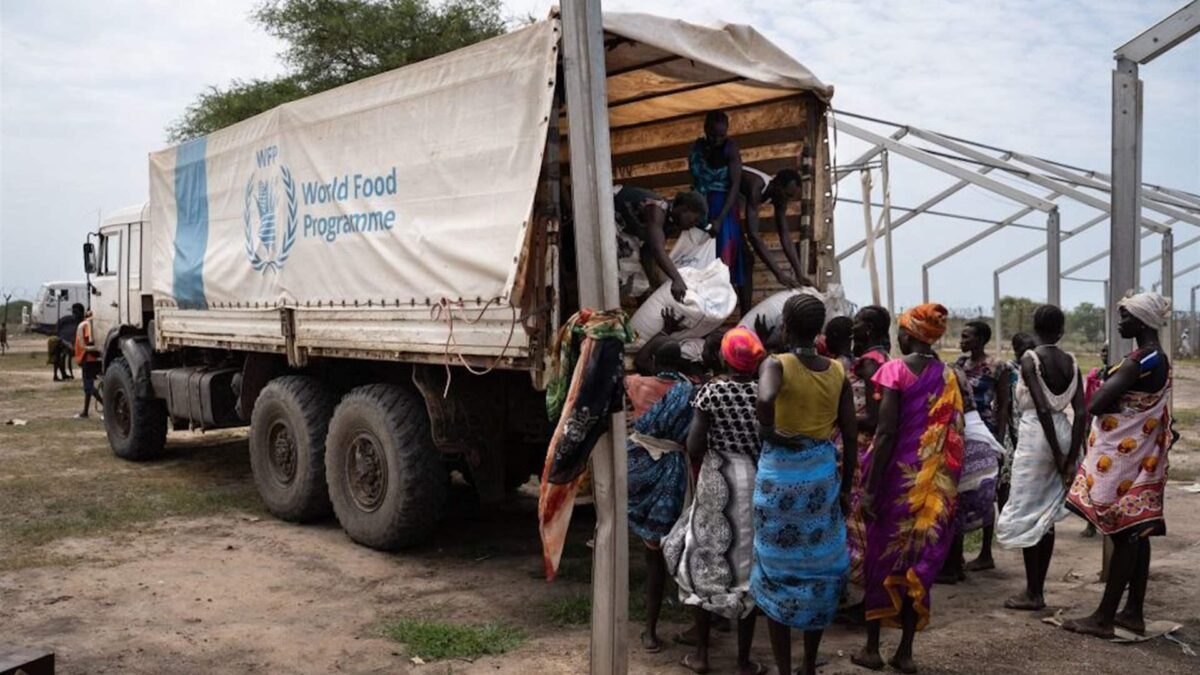
The UN said the humanitarian partners will soon deliver additional supplies to replenish stocks lost to looting.
States
Tinubu, Sanwo-Olu falsely took credit for Lekki Deep Seaport I built: Amaechi
Mr Amaechi, the running mate to Atiku Abubakar, promised to develop the Gelegele Seaport in Edo State if elected to office.


