

Uber’s exit shows Nigeria’s ride-hailing industry has hit a wall
When Uber emailed riders on September 2, 2026, to say it was winding down after 12 years in Nigeria, the first reaction from many passengers was predictable: which app next? Bolt? inDrive? LagRide?
That question misses the point. Uber is not leaving because Nigerians stopped booking rides. It is leaving because the economics of ride-hailing in Nigeria broke, and they broke for the whole industry, not just one brand. The real issue is not whether Bolt or any of the thousands of other apps can “fill the gap”. It is whether the gap itself can be filled under the current model.
I have spent years speaking with drivers in Lagos, Abuja, Port Harcourt, Kano and across the country. Not in boardrooms, but at fuel stations, malls, late-night vehicle inspection centres, in WhatsApp groups where drivers post screenshots of their daily earnings, and at union meetings where AUATON tries to explain to thousands of driver-partners why take-home pay keeps shrinking. From that vantage point, Uber’s exit reveals three uncomfortable truths.
1. Volume is not profit, and Nigeria proved it
Nigeria is Africa’s largest market, with congested cities, a young population and weak public transport. On paper, it should have been a goldmine.
In practice, ride-hailing here is a three-way squeeze. Passengers want cheaper fares. Drivers want higher earnings. Platforms need sustainable operations. Nobody gets what they want.
Fuel, inflation, currency volatility and vehicle maintenance costs have all risen. At the same time, intense competition has pushed fares down. In March 2026, drivers in Lagos and Ogun switched off their apps and protested against unsustainable fares and high platform commissions.
The plain fact is this: volume is not the same as profit. Nigeria can generate a huge number of trips and still fail a global return-on-capital test. Uber operated for 12 years, helped create the market, and still could not make the numbers work. If Uber, with its scale, data and capital, could not, expecting smaller local apps to succeed by magic is wishful thinking.
We have seen this film before. Oga Taxi, Smart Ride, Gudride, Alpha 1, GLT, RideMe, Tripz, Go247, T-Cab, Taxigo and many others came and went. More than 2,500 apps have tried to enter the market since 2014. The overwhelming majority failed to scale or shut down. The market’s history is becoming less a story of digital disruption and more a record of attrition.
2. The cost has been pushed entirely onto drivers
Talk to any driver and you hear the same arithmetic. The platform takes 25 to 30 per cent
commission. Then fuel. Then maintenance. Then insurance. Then the occasional fine.
What remains is barely enough to feed a family, let alone save for the next repair. That is why so many drivers told us, as a union, that they had already migrated to Bolt and inDrive, or gone offline to negotiate cash trips simply to survive.
Uber’s model was built on independent contractors bearing almost all the cash costs. In markets with stable fuel prices and accessible vehicle financing, that can work. In Nigeria, where the cost of
a full tank can swing by tens of thousands of naira in a month, it does not. Drivers become the shock absorbers for the macroeconomy.
That is why other platforms will not automatically fill the gap. Bolt can onboard Uber’s drivers tomorrow. inDrive can offer “name your price”. LagRide can roll out state-backed cars. But unless someone changes who pays for fuel and vehicle depreciation, drivers will keep churning. You cannot build a stable supply side on people who lose money on every trip.
3. The market is fragmenting, not consolidating
Uber’s exit will intensify competition as rivals chase drivers and passengers. In the short term, riders may see promotions. In the long term, fragmentation makes things worse.With fewer disciplined operators, there is less control over surge and base fares. We saw it at the airports: when app access was restricted, conventional cabs pushed prices up sharply.
What Nigeria needs is not 2,500 apps, but two or three platforms with sustainable unit economics.
That means driver financing so partners can own vehicles without resorting to loan sharks. It means dynamic pricing that actually covers costs. Riders hate surge pricing, but surge is what keeps cars on the road at 2 a.m. in the rain. And it means local operations that understand cash, agents and offline dispatch. Pure app-only models struggle where data is expensive and digital payments are uneven.
State players such as LagRide show one path: public subsidy to keep fares low. That is not scalable nationwide. The other path is consolidation, in which Bolt, inDrive and perhaps one local player survive by accepting tighter margins, higher volumes and better driver retention.
So, can other channels fill the gap?
Yes, in the narrow sense. Rides will still happen tomorrow. Bolt is already picking up market share.Drivers will switch apps within a week.
No, in the structural sense. If “filling the gap” means restoring the 2016 to 2019 experience, with cheap, reliable, Uber Black-style service everywhere, that era is over. The economics do not support it.
What will fill the gap is a messier mix: app hailing in core cities, WhatsApp groups for trusted drivers in estates, bike and keke apps for short trips, and street cabs for everything else. That is already happening.
What Uber’s exit really tells us Uber’s retreat from Nigeria, Uganda, Tanzania and Côte d’Ivoire is not a verdict on Africa. It is a verdict on a specific business model exported without enough adaptation.
The industry globally sold a story: technology plus scale equals cheaper rides and better livelihoods.
In Nigeria, technology arrived and scale arrived. The livelihoods did not. Drivers still carry the risk. Platforms still burn cash chasing growth. Riders still want prices that do not reflect real costs. Uber leaving exposes that contradiction. It forces a choice: do we want mobility as a subsidised tech product, or as a real transport service in which drivers earn, platforms can profit and riders pay the true cost?
Until that question is answered, no app, however Nigerian or well-funded, will fill the gap. It will onlyb be the next one to learn the same lesson.
Nigerians will keep moving. But the era in which a Silicon Valley app could arrive, flip a switch and transform how a city moves ended on September 2.
We also believe that the International Labour Organization’s Convention on Decent Work in the Platform Economy, 2026 (No. 193), would do justice to the gig ecosystem if the Nigerian government ratified it and built policy to that international standard.
Ayoade Ibrahim is co-founder and General Secretary, Amalgamated Union of App-Based Transporters of Nigeria (AUATON).

We have recently deactivated our website's comment provider in favour of other channels of distribution and commentary. We encourage you to join the conversation on our stories via our Facebook, Twitter and other social media pages.

More from Peoples Gazette

States
Independence: NBA urges Nigerians to expect better future
The NBA said that ordinary Nigerians should be deriving benefit from the subsidy removal rather than hardship.

Agriculture
FG tasks ECOWAS on leveraging financing strategies for agroecology
The federal government has urged stakeholders in the agriculture and finance sectors in the West Africa region to leverage financing strategies to enhance agroecology practices

Politics
Katsina youths pledge to deliver over 2 million votes to Atiku
“Katsina State is Atiku’s political base because it is his second home.”
World
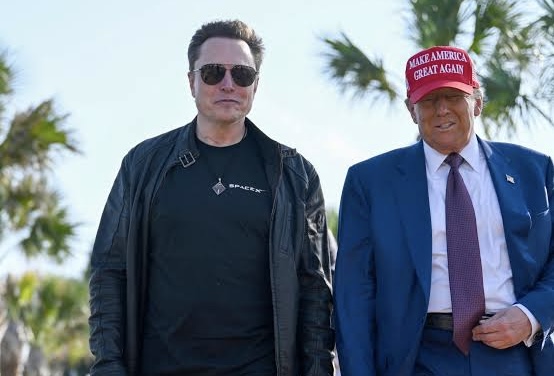
Trump awards Elon Musk National Medal of Science; calls him modern-day Thomas Edison
Lauding Mr Elon as a modern-day Thomas Edison, Mr Trump highlighted the impact of his innovations in different human endeavours.

Heading 1
NLC gives Tinubu govt two-week ultimatum to cut petrol price, renegotiate minimum wage
Mr Ajaero demanded that the federal government commence renegotiation of the minimum wage before the end of October.
Heading 4
Power generation utilisation hit 81% in September: NERC
NERC said that average hourly generation stood at 4,089MW, representing an average load factor of 81 per cent of the available generation capacity.
States
Gov Oyebanji presents N490.74 billion 2027 budget proposal to Ekiti assembly
Mr Oyebanji presented the appropriation bill, christened the ‘Budget of Sustained Progress and Prosperity’, at the assembly chamber.

World
U.S. accuses Venezuela’s Maduro of torturing U.S. citizens in revised indictment
The Trump administration accused Mr Maduro and his wife of partnering with narcoterrorists to flood the U.S. with cocaine.

States
Two suspects arrested over machete attacks in Uyo
The police said weapons and stolen items were recovered from the suspects.


