

UK, PAU push for stronger media independence against misinformation

The British Deputy High Commissioner, Jonny Baxter, has said strong, independent and evidence-based journalism is critical to safeguarding democracy and countering the rapid spread of misinformation in Nigeria.
Mr Baxter said this on Wednesday in Lagos at a media training workshop on advancing press freedom through science and technology journalism, organised by the British High Commission in partnership with the School of Media and Communication, Pan-Atlantic University (PAU).
He described the initiative as part of sustained UK engagement with Nigerian journalists over the past two years, with similar capacity-building sessions held in Lagos, Abuja and the United Kingdom (UK).
According to him, the programme reflects a shared commitment to strengthening journalism and reinforcing its role in promoting accountability and informed public debate.
He stated, “In an age of rapid technological change, accurate, ethical and evidence-based reporting has never been more essential.
“You all know how quickly unsubstantiated information can spread and shape perceptions. This is why your role as journalists is so important in ensuring credible information reaches the public.”
Mr Baxter noted that the media not only informed citizens but also compelled institutions and governments to remain accountable.
He added that the UK regularly engaged media stakeholders to understand perceptions, improve communication and strengthen cooperation across key areas such as economic growth, investment, migration and security.
The envoy recalled recent collaboration with the Nigerian media during the state visit of Nigeria’s president to the UK, noting that journalists played a key role in communicating government commitments and holding stakeholders accountable.
He encouraged participants to engage actively, ask questions and contribute meaningfully to discussions, stressing that open, honest and challenging conversations were essential to effective journalism.
In his keynote address, the Dean of the School of Media and Communication, PAU, Ikechukwu Obiaya, said journalism must go beyond the traditional “five Ws and H” to fully address issues of relevance, audience, timing and ethical responsibility.
Mr Obiaya said that while the foundational questions of who, what, when, where, why and how remained central, they were no longer sufficient in today’s complex media environment.
“We must also ask who the story is for, why it matters, when and where it should be told, and how it should be presented. These are critical to defining good journalism,” he said.
He described good journalism as one that was accurate, fair, ethically responsible and guided by principles of accountability, transparency, independence and impartiality.
The dean, however, expressed concern that many of the standards were increasingly absent in parts of the media landscape due to the rise of untrained content creators and ideology-driven reporting.
According to him, technological innovation has democratised information sharing, enabling anyone to publish content, but it has also weakened professional authority and increased the risk of misinformation and bias.
He added, “Today, there is a free-for-all flow of information, where professional journalism competes with unverified and sometimes misleading content.
“This has led to distortions, bias and narratives shaped more by ideology and ownership interests than by truth.”
Mr Obiaya emphasised that journalism remained a public service, with the responsibility to guide citizens and provide clarity in an increasingly complex information environment.
He added that the media must not only highlight problems but also report solutions to give the public a balanced understanding of societal issues.
Also speaking, an associate professor at PAU, Silk Ogbu, said press freedom, freedom of expression and access to information were interconnected and fundamental to democratic development.
Mr Ogbu noted that while the rights were recognised in international, regional and national laws, they were not absolute and must operate within legal frameworks.
He urged journalists to critically assess their level of independence, questioning the extent of state influence, ownership pressures and self-censorship within the profession.
Mr Ogbu also highlighted persistent challenges in accessing public information despite the Freedom of Information Act, noting that resistance from institutions continued to hinder transparency.
He further called on journalists to strengthen accountability mechanisms within the profession, stressing the need to uphold their role as watchdogs in society.
The workshop brought together journalists from across Nigeria to examine issues of press freedom, ethical reporting and the impact of technology on journalism practice.
Participants were encouraged to share experiences and develop strategies for promoting credible, independent and responsible journalism in the digital age.
(NAN)

We have recently deactivated our website's comment provider in favour of other channels of distribution and commentary. We encourage you to join the conversation on our stories via our Facebook, Twitter and other social media pages.

More from Peoples Gazette

Agriculture
FG tasks ECOWAS on leveraging financing strategies for agroecology
The federal government has urged stakeholders in the agriculture and finance sectors in the West Africa region to leverage financing strategies to enhance agroecology practices

Politics
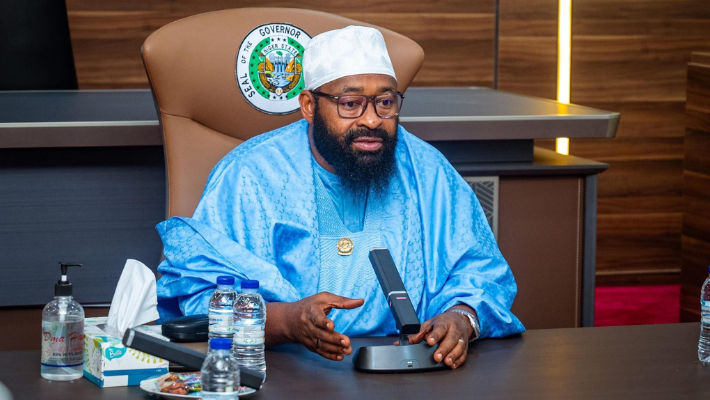
Katsina youths pledge to deliver over 2 million votes to Atiku
“Katsina State is Atiku’s political base because it is his second home.”
Education
IBBU strike to end soon, says VC
The VC said the state government has shown strong commitment to ending the strike and has paid N300 million of the outstanding N800 million so far.

States
Pupil missing, nine rescued in Anambra flooding: Police
Police said a pupil went missing after heavy rain and flooding in Awka, Anambra State.
Heading 2
Flutterwave convenes global leaders at UNGA 2026 to power Africa’s next decade of growth
The exclusive executive forum connects global capital, multinational enterprises, DFIs, and governments to accelerate continental trade and investment.
NationWide
NPC director Facah elected to NIMCA board
Ms Facah was elected at NIMCA’s inaugural assembly and second annual general meeting in Johannesburg, South Africa.

States
Osun assembly endorses state police
Osun House of Assembly passed a resolution supporting the establishment of state police to complement existing security agencies.

Heading 5
Power outage hits Abuja communities as TCN begins repairs on Kubwa substation
TCN says its maintenance crew is repairing a fault on the 33kV NIPP feeder at the Kubwa transmission substation.


