

UN Security Council renews sanctions against Central African Republic entities
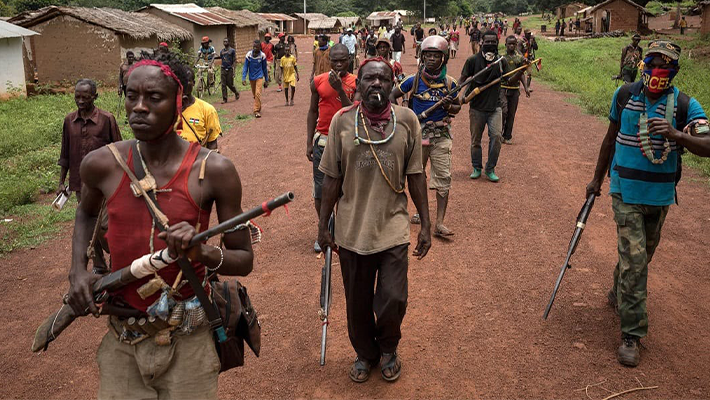
The UN Security Council on Wednesday adopted a resolution to extend for a year the sanctions against non-state armed groups and other individuals undermining peace in the Central African Republic.
The 15-member council unanimously adopted Resolution 2827 in its 10204th meeting held in New York, extending the mandate of the panel of experts assisting in the implementation of the sanctions until August 31, 2027.
The council said that, under those terms, member states are required to take the necessary measures to prevent the direct or indirect supply, sale, or transfer of arms and related materiel of all types to armed groups and associated individuals operating in the country.
The sanctions also include a travel ban and asset freezes targeting individuals undermining peace in the country.
Permanent CAR representative at the meeting, Hoja Nzessioue, lauded the adoption as necessary to provide clarity on the challenges confronting the country.
“This adoption also provides us with an opportunity to consider the road we have travelled and the challenges that remain,” Mr Nzessioue stated.
While urging member states to abide by the renewed sanctions, the representative requested the council to consider sanctions against the financiers of those groups and their beneficiaries.
“The question is not about the armed groups themselves, but about the wider ecosystem. Collective Council action can yield results,” he added.
CAR remains highly volatile and trapped in a state of pervasive insecurity as armed groups—and notably, the cross-border supply networks that fuel them—pose a serious challenge.
The renewed sanctions, which were first established in 2013 amid widespread armed conflict, grave human rights abuses and severe political instability in the country, were intended to restrict the flow of weapons, deter individuals and entities undermining peace and the political transition.
They were also designed to hold accountable those responsible for violence, attacks against civilians and violations of international human rights and humanitarian law.

We have recently deactivated our website's comment provider in favour of other channels of distribution and commentary. We encourage you to join the conversation on our stories via our Facebook, Twitter and other social media pages.

More from Peoples Gazette

States
Independence: NBA urges Nigerians to expect better future
The NBA said that ordinary Nigerians should be deriving benefit from the subsidy removal rather than hardship.

Agriculture
FG tasks ECOWAS on leveraging financing strategies for agroecology
The federal government has urged stakeholders in the agriculture and finance sectors in the West Africa region to leverage financing strategies to enhance agroecology practices

Politics
Katsina youths pledge to deliver over 2 million votes to Atiku
“Katsina State is Atiku’s political base because it is his second home.”
Entertainment
Family confirms gospel artiste Toluwanisings’ demise
The family said funeral arrangements for the gospel artiste would be communicated later.
Heading 2
Golden Eaglets lose 2-1 to Niger Republic in WAFU U-17 AFCON qualifier
The result means Niger Republic top the group with four points after two matches.
States
Human Trafficking: Police rescue Congolese nationals in Oyo
Mr Olayinka said the suspect was not found at the hotel during the operation.
Heading 5
NAFDAC raids Aba market, seizes fake packaging materials worth N200 million
NAFDAC stated that an invitation had been extended to the market union chairman.

States
Osun police nab man for allegedly defiling 15-year-old girl
Mr Ojelabi explained that the suspect used his closeness to the family to perpetrate the act.
States
Troops nab five ISWAP collaborators, rescue kidnap victim
The report that the suspects and recovered items were in military custody for further investigation.


