

UNICEF, HiLWA brainstorm to bolster girl-child education

UNICEF has engaged the High-Level Women Advocates (HiLWA) to ensure sustainable ways of increasing adolescent retention, transition and completion in secondary schools.
HiLWA, an NGO, works with UNICEF to assist the girl-child in possessing relevant educational qualifications.
UNICEF’s education specialist in Sokoto, Francis Elisha, said participants at a two-day national HiLWA meeting on Thursday in Kaduna were drawn from 12 states in the North.
He explained that the identified women have excelled in their professional endeavours, where some have attained the positions of directors, permanent secretaries, and commissioners, among others.
He added that women greatly influence issues around improving adolescent education and out-of-school children.
The UNICEF chief in Kaduna, Gerida Birukila, said every child has the right to education. This right, she said, was a principle upheld by global agreements like the Universal Declaration of Human Rights, the Convention on the Rights of the Child and the Convention Against Discrimination in Education.
Ms Birukila lamented that despite the persistent efforts of the Federal Government, various states and development partners still faced significant challenges with out-of-school children in Nigeria.
Citing recent data, Ms Birukila said Nigeria was facing a 26 per cent out-of-school for primary school-aged children and 25 per cent for junior secondary school-aged children.
“When we break this down further, we see a regional disparity. For example, in the North-East, nearly half of the primary school-aged children are out of school.
“This is being followed closely by the North-West with 40 per cent, while in the South-East, about nine per cent are missing from classrooms. This uneven distribution highlights the urgent need for targeted solutions,” she said.
Speaking further, Ms Birukila said the gap between urban and rural areas was very wide, up to 25 percentage points more, with the rural children facing much higher out-of-school rates than their urban peers.
She said data shows that among the poorest families, 57 per cent of primary school-aged children and 58 per cent of junior secondary school-aged children are out of school.
(NAN)

We have recently deactivated our website's comment provider in favour of other channels of distribution and commentary. We encourage you to join the conversation on our stories via our Facebook, Twitter and other social media pages.

More from Peoples Gazette

States
Independence: NBA urges Nigerians to expect better future
The NBA said that ordinary Nigerians should be deriving benefit from the subsidy removal rather than hardship.

Agriculture
FG tasks ECOWAS on leveraging financing strategies for agroecology
The federal government has urged stakeholders in the agriculture and finance sectors in the West Africa region to leverage financing strategies to enhance agroecology practices

Politics
Katsina youths pledge to deliver over 2 million votes to Atiku
“Katsina State is Atiku’s political base because it is his second home.”
Abuja
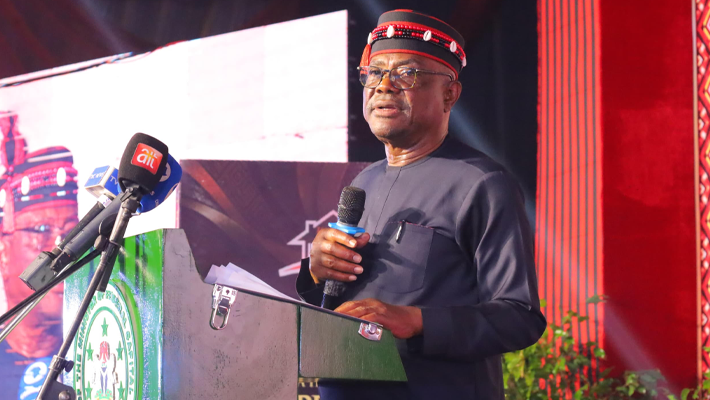
Prioritise competent leaders over interest- seeking politicians, Wike tells Nigerians
The minister said, “One of the enduring difficulties of our political life is the tendency to convert public power into private possession.”

Anti-Corruption
Alleged $1Billion Fraud: Court acquits Aliyu Abubakar, Malabu Oil
The judge stated that the EFCC failed to discharge the responsibility placed on it,
States
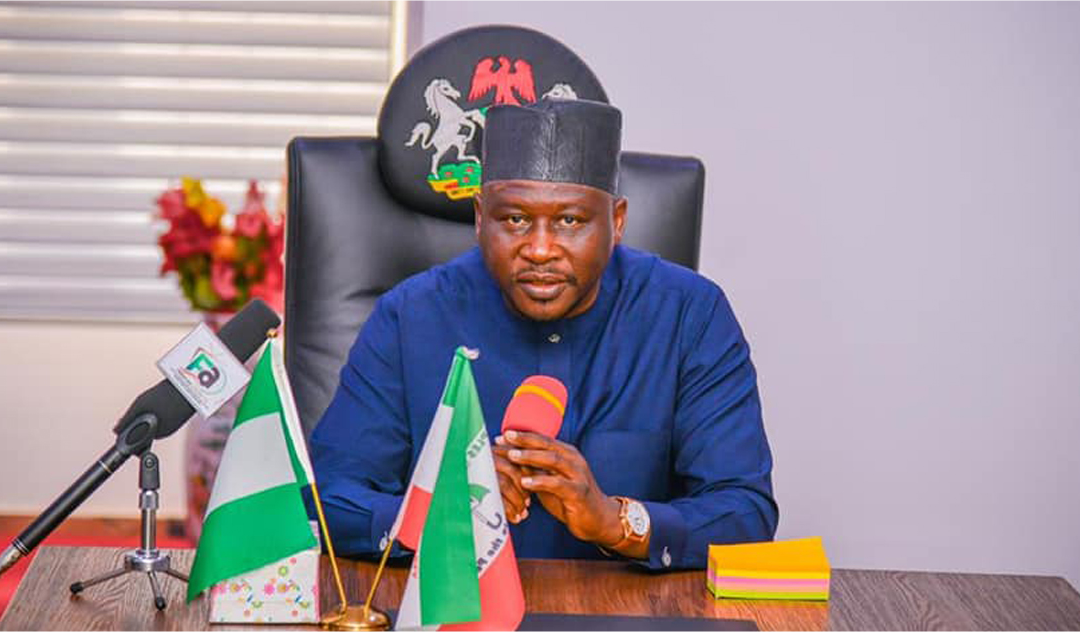
Gov. Fintiri suggests cogent solutions to Nigeria’s security challenges
practical solutions to Nigeria’s security challenges.

States
Gov. Sanwo-Olu tasks 1,800 law enforcement officers on responsible conduct, impartiality
The governor also urged residents to cooperate with law enforcement officers.

Agriculture
WAF advocate investment in technology, storage to strengthen food security
Mr Isong urged stakeholders to translate their commitments into practical projects, measurable outcomes and sustainable investments.

States
CDHR advises activists against selective rights advocacy
Mr Ogundipe called for evidence-based advocacy, accountability and stronger institutions.


